advertising, awarding, celebrating, co-creating, collaborating, content creating, creating, marketing

Crafted to Win: Four Approaches That Delivered Media Lions at Cannes 2025

In my most recent post I shared some thoughts on the vibe from last week’s Cannes Lions festival, and noted that: “Along La Croisette and in the Palais and everywhere in between was an industry grappling not with the future to come, but with a future that now lies behind us. The current source of unfair advantage is being able to marshal your resources – be they marketing, agency, creator, or anything in between – to leverage better than your competitors the world around you.”

That idea of marshalling what’s possible to gain unfair advantage was on full display in the awards category perhaps closest to my heart – media.

Cannes 2025’s Media Lions recognized 66 pieces of work from over 2,000 entries, with the Grand Prix awarded to Dove’s “Real Beauty Redefined for the AI Era” from Unilever. The campaign tackled AI-driven beauty standards by retraining Pinterest’s algorithm to prioritize inclusive representations, delivering brand lift and widespread engagement.

Beyond the Grand Prix, twelve Gold Lions were awarded to campaigns that the jury believed best demonstrated what’s possible with media – showing contextual understanding, innovative media thining, and platform-native creativity.

My personal highlights include Streaming Bars by Heineken, which turned Netflix ads into real-time bar experiences; Coupon Rain for the formidable Mercado Livre by the equally impressive Gut, São Paulo, which transformed news coverage into shoppable coupon moments; and the Redditor Edit for Skoda by agencies including PHD (hurrah), which co-created car features with Reddit superfans. As well as Vaseline’s Verified campaign which co-opted creators to be part of the brands marketing by verifying and rewarding their hacks, and Waitrose’s Sweet Suspicion, by agencies including MG OMD (hurrah again), which leveraged some festive whodunnit storytelling to cut through the Christmas foodie clutter.

Overall, 2025’s winning media work signals a shift toward media experiences that blur entertainment, utility, and advocacy – where effectiveness is derived from earned engagement, tech-enabled storytelling, and brand bravery in reimagining how media is planned, shaped, and shared.

Across the Grand Prix and Golds, four themes emerge. They don’t just tell us where media thinking is now – they hint at what’s possible for brands and agencies aiming to gain competitive advantage by understanding and leveraging platforms, content, and communities.

So, let’s talk about

  1. Native Platform Innovation
  2. Media-as-a-Service (MaaS)
  3. Culture Hacking
  4. Collaborative Storytelling

Native Platform Innovation

This year’s highest-awarded Media Lions work didn’t just use media space – they re-engineered the platforms they were using.

Dove’s Grand Prix-winning campaign didn’t run ads on Pinterest; it partnered with the platform to rebuild its algorithm around inclusivity. Skoda used the upvote mechanic on Reddit, enabling users to collaboratively and collectively design a car. Heineken made Netflix ad breaks contextually relevant by mirroring the show you were watching.

What these ideas all have in common is that they don’t just think of platforms as media – but as media environments with logic, language, behaviours, and levers to be understood and hacked.

Dove Real Beauty Redefined for the AI Era (Grand Prix)

Redditor Edit for Skoda by PHD, London and Leo, London

Streaming Bars for Heineken by LePub, São Paulo

Want some of the action? Don’t think in terms of ‘placements’ but in terms of ‘platform logic’. Winning in contemporary media means understanding how people behave within platforms, and building the interventions that leverage, shift, or enhance those behaviours. If the media plan doesn’t ask, ‘What can this platform uniquely do for the idea?’ – there’s a danger that you’re undercooking the opportunity.


Media-as-a-Service (MaaS)

Many of the Gold Lion winners this year didn’t just run communications – they used those comms to deliver functional value. Coupon Rain transformed football coverage into real-time discount delivery. Ziploc dynamically revalidated expired coupons if the product was in a shopper’s cart. Tata’s Rewards Bag doubled as a QR-enabled shopping assistant.

In all cases, media wasn’t a message – it’s a service, a utility layer. These campaigns served value, solved problems, and made the experience deliver something of tangible value.

Coupon Rain for Mercado Livre by Gut, São Paulo

The Rewards Bag for Tata by VML, Montevideo

Preserved Promos for Ziploc by VML, New York

https://www.vml.com/work/preserved-promos

So, some ways in to building MaaS. Media that does something is more persuasive than media that just says something. Especially in an attention-fragmented world, marketers should treat media as a delivery system for value – not just as visibility for a message. Ask yourself: how can your media plan reduce friction, add convenience, or embed utility? Consumers increasingly reward brands that solve, not just sell.


Cultural Hacking

From Heinz’s Deadpool x Wolverine mashup to Skol’s retroinfluencer Instagram hack, many of this year’s big media winners didn’t wait for cultural permission – they inserted themselves into it. These campaigns exploited timing, tone, and trends to become instantly relevant and shareable. They were less about crafting traditional narratives, and more about inserting brands into the stories that culture was already telling, and cared about.

Can’t Unsee It for Heinz Ketchup & Mustard by Rethink, Toronto

Retro Influencers for Skol by Gut, São Paulo

https://gabimarcatto.work/retro-influencers

Sweet Suspicion for Waitrose by MGOMD, London and Saatchi & Saatchi, London

So, how to hack into culture? The opportunity here is no longer in owning the narrative – but in engineering and earning relevance. How can you build teams and approaches that pay attention to, are curious about, and have a point of view on culture? Ensure that your thinking and activities are explicitly reacting to or riffing off the current vibe. Equip teams – as well as senior leadership decision-makers with the tools and confidence to listen to and react to communities and ideas.


Collaborative Storytelling

Some of the strongest Golds this year weren’t broadcast ideas – they were co-performances. Vaseline co-opted into their marketing over 450 content creators who had created Vaseline hacks. Rocket Mortgage turned a Super Bowl ad into a live singalong experience. In Colombia, an insurer let viewers buy insurance for fictional characters – with real-world policy results. These ideas weren’t passive; they required something of the audience, and rewarded participation with narrative ownership or tangible rewards.

Vaseline Verified for Vaseline by Ogilvy, Singapore

First Ever Live Commercial Crossover for Rocket by Zenith, New York, Mirimar, Los Angeles

Fictional Insurance for RCN/Prime by DDB Colombia, Bogotá

So, how to you encourage collaboration with audiences and communities? The key is in building out engagement architecture. Brands that unlock collaborative storytelling build media experiences that invite audiences in, not just push messages out. Ensure that your approach includes moments where the audience can ‘play their part’, and are rewarded for doing so.


Awards are, of course, always subjective. You might agree with this year’s juries – or see things differently. Let me know in the comments below. Ultimately, it’s part of an important process that I once described as the industry’s ‘engines of objectivity’.

Because what matters is not so much what wins what (there, I said it), but rather that we are able to collectively surface and celebrate the thinking and ideas that inform, inspire, and empower us to do the best work we can. That’s the work of Cannes.

Standard
co-creating, collaborating, community-building, content creating, creator-ing, realtiming

Streaming’s Next Decade: From Ads to Audiences – and Why Creators are Set to Win

I evaluated in my previous post some media and marketing predictions I made in late 2014. Netflix had announced their arrival in Australia for the following March. My expectation that content would win out over channel, that ability to deliver on desire for choice on-demand would determine growth, and that programmatic would swallow huge swathes of the industry – have all proved I think, largely, true.

My prediction however that the industry would largely fall out of love with the ‘ad’ didn’t come to pass as expected. Adverts have remained the predominant unit of currency for paid branded messaging.

Instead, the group that capitalised on the opportunity as I saw it – to create “platform-neutral content strategies that can adapt to platform and context more quickly – generating more relevance for brands’ comms” were not brands, but creators. The “native content in video form” that I foresaw becoming predominant in video did come to pass, but with a generation of content creators – rather than brands – at the helm.

For many brands and marketers, success is now dependent on engaging and fuelling this generation of content creators – who intermediate between products and services on one hand, and customers and consumers on the other.

Last week saw two awesome examples of this now established marketing model in practice.

How Capcom Inspire an Army of Creators to Fuel Monster-Hunting

Monster Hunter Wilds, which released worldwide on February 28, has had a great launch. Within the first three days, the game sold over 8 million copies (it’s now over 10m), setting a record as Capcom’s fastest-selling title. On Steam it attracted more than 1.3 million concurrent players shortly after launch, securing a position among the platform’s top 10 most-played games by concurrent users.

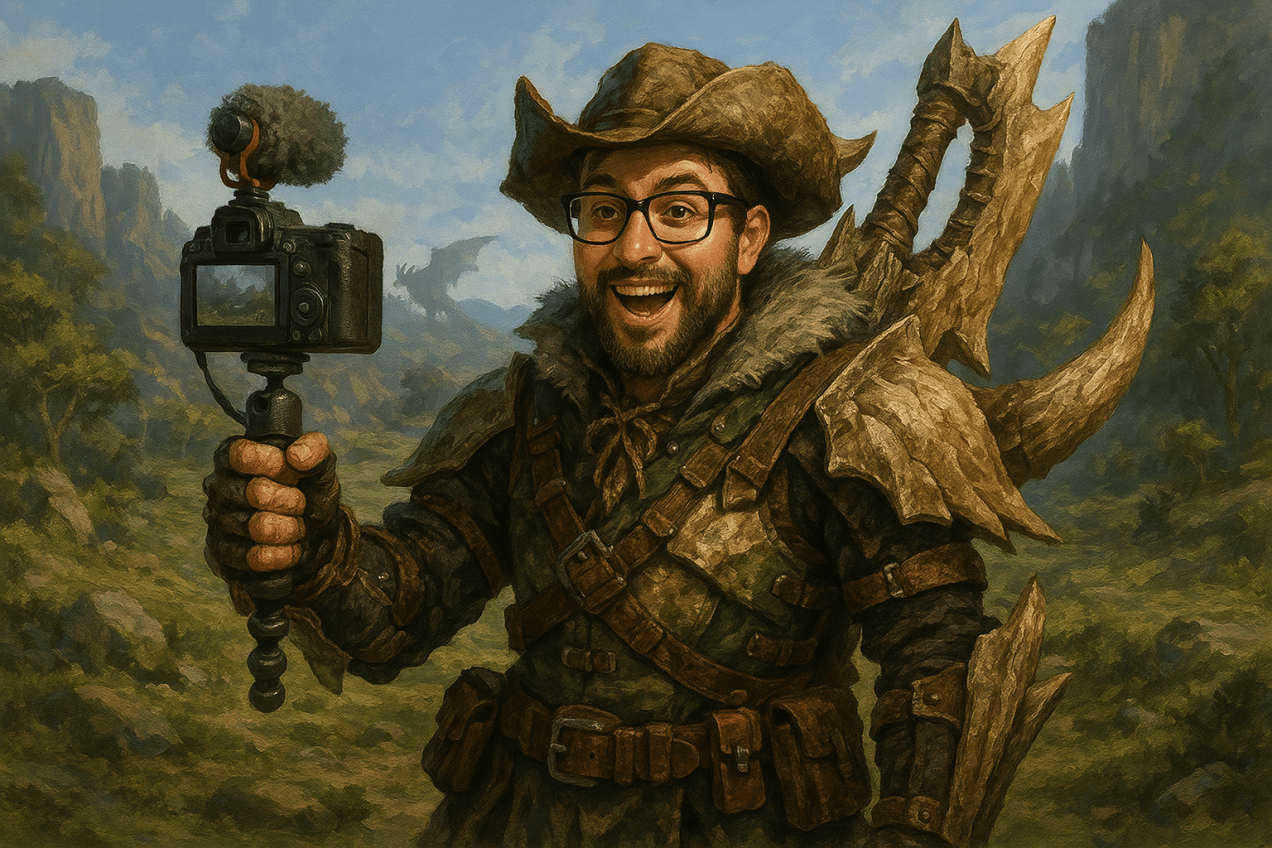
Whilst this success wouldn’t be possible without a great product – Wilds has been critically well-received, earning 90 out of 100 on Metacritic with reviewers praising engaging combat, impressive creature design, and innovative gameplay features – its success is also down to a determined effort to engage audiences thru the game’s affiliated army of creators.

Last Tuesday’s Monster Hunter Wilds Showcase, hosted by producer Ryozo Tsujimoto, revealed the first free update, which is scheduled for this coming Friday. The content is relevant of course for people who play the game (declaration: I’m 49 hours in and counting), but I’d suggest that’s not the primary audience for this content.

Rather, Tuesday’s content was designed and deployed not primarily for the game’s 10m players, but for creators. The update had more than enough new information to fuel new content, but enough details held-back and teased to allow room for all-important speculation and prediction. This video from the awesome Khraze Gaming channel is a great example.

There’s now a very established – and mutually beneficial – relationship between the Monster Hunter Wilds dev team and the game’s content creators. The game’s owners are supporting their community of content creators, who in turn are producing content to build their community of subscribers.

This isn’t all one-way. There’s been plenty of pushback from hardcore fans of the series, critical that the game is too easy. But the devs aren’t shying away from this. They are embracing this community feedback, in an open letter this week announcing that:

“We would also like to thank you for the many comments, thoughts and feedback we have received since the game was released.

The development team has been reading your feedback, and we are encouraged by it. We are also using the comments and feedback we have received to help us plan our future actions.

Future updates will see more Tempered Monsters (★8) added to the game … And for even more of a challenge, Arch-tempered monsters will make an appearance. These are even stronger versions of tempered monsters.”

Another masterful example of a marketing team engaging and fuelling content creators was from Marvel.

How Marvel Inspired Creators to Create with a Five-Hour Plus Livestream

In this even more astonishing and finely-tuned example of the marketing-to-creators model, Marvel revealed the cast of the now-in-production Avengers Doomsday via a five hour plus live-stream – with a new cast member being revealed on the back of a director’s chair every 12 minutes. The announcement concluded with Robert Downey Jr. – who will play Doom in the strategically crucial film for Marvel – walking out to sit in the final chair and asking the audience to be quiet on set.

Just to reiterate in case you read that quickly – the Avengers Doomsday cast reveal announcement video was a panning shot of 27 director’s chairs … which lasted five and a half hours.

This clearly is content designed not to be watched by audiences. Rather – just like Monster Hunter Wilds – its content precision-made for creators. Content machine-tooled to be poured-over in crazy detail in real-time by an army of creators (many of whom are of course huge fans).

Creators like The Breakroom team, who scrambled into their studio to livestream their discussions and reactions to the Avengers announcement video, in real-time. A livestream of a livestream. Marvel designing and deploying content for creators.

This is the new and now established model. Content from brands tailor-made for creators, designed to fuel the production of content for their audiences. Creators are the intermediaries and amplifiers of brand messaging. Communities are maintained and managed not directly by brands, but by a team of creators the literal job of who is to drive engagement with audiences for brands; either because they are fans, or their income depends on it – and in reality, usually and probably both.

This is what will underpin brand success over the next decade of video.
This is a model about to be supercharged by next-generation AI production capabilities.
This is what marketing precision at scale really looks like.

Standard
collaborating, gamifying, gaming, pioneering

The Great Game: Of Paradigms, Creativity and Intrinsic Rewards … Lessons and Musings on the Joys of Gamification

the above awesome video is Jane McGonigal’s presentation to Cannes this year, at which Jane explored how we can harness the power of games to solve real-world problems and boost global happiness. Jane is introduced by PHD’s very own Mark Holden, who was inspired by Jane’s book to add a game layer to our global operating system, Source.

it’s been a genuine pleasure to have been involved in not just the development of Source over the last two years, but more recently being able to help lead the charge for the great gamification in the Australia. we’ve written a book called Game Change (available on Amazon from January) which explores the background, history and current context of gamification … and at the start of this month in conjunction with Mumbrella we facilitated a Gamification masterclass …

the amazingness of Colin Cardwell of 3rd Sense and Marigo Raftopoulos of the Strategic Games Lab led sessions which walked the assembled masterclass crowd through approaches, strategies and tactics for gamifying their own businesses or marketing efforts. whilst Colin and Marigo were talking I was struck by several things:

first up, and this is a point made brilliantly by Jane in the above presentation, gamification is genuinely a new paradigm in how we work. in his book The Play Ethic, Pat Kane suggests that “Play will be to the 21st century what work was to the Industrial Age – our dominant way of knowing, doing and creating value” … the potential is huge – if we unlock even a fraction of the engagement currently spent on play to create shared human value the effects could be genuinely transformative.

the second though that occurred to me is that like any great project a problem well defined is a problem half solved. similarly when gamifying (I’ll call it G from here on in) a process, you need to be crystal clear on what your business and / or marketing objective is … applying G shares many of the same considerations and questions that a conventional approach to tackling a brief requires – don’t forget the basics.

Marigo and Colin both made clear the point that the process of G comprises around 10% design and 90% iteration. I was struck by the parallels in the efforts of game design and how marketing efforts work in a post-digi, content socialised age. in a reversal of the broadcast model (90% effort crafting the message, 10% effort towards shouting it as loud as possible), G requires that your projects have a beta sensibility (PHD’s Source is still in beta despite being live for almost a year) – think always on, always listening, always redeveloping, always creating, always deploying.

focus on what the ‘desired target behaviours’ are … what do you actually want people to do as a result of your gamification efforts? being really clear on this helps you navigate the mechanics that you look to bring to bear on a project or process.

G isn’t a replacement for an idea. the best examples of G often have an awesome, smart, idea at the heart of them. think the speed camera lottery or Jay-Z’s decoded (below) … in both these cases G isn’t a replacement for two awesome ideas – rather it was the approach that allowed the ideas to flourish. creativity counts.

http://www.youtube.com/watch?v=XNic4wf8AYg

the final thought that occurred to me was that when you think about the rewards you offer when gamifying a process, intrinsic beats extrinsic. always. perhaps it’s the Spotify Christmas playlist that I’m listening to as I write this, but G is a reminder that we are generally much more motivated by intrinsic forces (for the love of doing something) than we are by extrinsic rewards (eg payment) … yeah we can offer some dollars here or a prize there, but what really gets us humans going is a cause or task – no matter how audacious – that we can care about.

which gives us something to ponder between the mice pies and sprouts … whether its adding value rather than demanding attention (or as John Willshire would say ‘making things people want not making people want things’), designing utility, or creating communications that are as responsive and relevant as each and every user they reach – what does intrinsic thinking … intrinsic marketing look like when its radically embraced by marketing and communications.

speaking of intrinsic rewards, I’ll leave you with the first seven seconds of the below Mumbrella Hangout with me, Tim and Mark Holden. wait for it … “and we’re live”.

Merry Christmas everyone

Standard
collaborating, IPA|ED:three, Mediated

Clients versus Agencies Round One Results: Clients 1 – Agencies 0 … and why some independent mediation may be required

sir-clive-woodward-via-Wales-online

Clive Woodward … Coach supremo – it will make sense later on (pic via WalesOnline)

something of a war or words seems to have broken out on the pages of Adnews of late. on one hand we have David Morgan of Nestlé (let’s call him the ‘client’) and on the other a range of voices including Leigh terry of Omnicom Media Groupe, Travis Day of Vizeum and Peter Grenfell of VCCP (let’s call them the agencies).

here’s a few samples of the debate:

“We’re getting stuck in the middle, stuck in operations, stuck in process management … we’re spending so much time doing things that are not core to our trade of marketing, that it’s taken up our ability to do our trade of marketing. Today, our guys are managing eight, nine, 10 different agency groups – digital groups, media groups, creative groups, strategy groups. It takes up a lot of time to talk to them, coordinate them, project manage them.”

David Morgan, Nestlé director of corporate communications and marketing services, speaking at ADMA Conference two weeks ago

“Managing relationships is easier when agencies are treated as strategic partners … modern agencies of all disciplines are recognising this and pouring significant effort into ensuring that they have a partnership role with all clients; that they are trusted advisor and, most importantly that their reporting and admin are streamlined”

Travis Day, general manager of Vizeum Melbourne

“Agencies can be guilty of getting caught up in their own world … agencies need to open up and be more collaborative with each other. Creative agencies need to not be sniffy because they lead the strategy and media agencies need to not be sniffy because they hold all the money.”

Peter Grenfell, MD VCCP

it’s been an interesting debate not just because it comes at a time when tensions across a whole range of agency / client issues are coming to the fore – remuneration and transparency, the pitch merry-go-round and the protection and respect of IP, and most recently the time and agency effort spent on entering awards – but also because there doesn’t seem to be any kind of logical or constructive response or solution to Morgan’s assertion.

the frustrations on both sides or more than understandable. unfortunately (or fortunately depending on your POV) media went and fragmented. fact.

non of which is new news … back in 2008 I wrote a piece as part of my IPA Excellence Diploma (module three if you’re wondering) in response to the question: what approach should a client take in terms of who does communications planning on a brand? my observation at the time was that the agency response to “media fragmentation … has been twofold. Firstly, diversification into a multitude of different and varied operations; secondly, generalisation …historically all props had to do was scrummage; now they expect themselves to run, catch, pass and lift in the line-out too”

I know … I resorted to a sporting analogy, but bear with me.

I explored the idea that the players (agencies) on the pitch were now so diverse and the necessary roles so specialised that coordination was a full time job (the latter point was perhaps the very one that David Morgan was making at the ADMA conference that sparked this debate). it seemed to me at the time that there were to solutions, the client coordinates or the agencies do, and observed flaws with each:

“One, individual agencies can never know enough about other disciplines to ensure communications planning they derive consider every perspective. It’s like asking prop-forward to plan a game strategy incorporating the nuances of the role of fly-half; the knowledge required is too broad and getting broader all of the time.

Two, Buckminster Fuller’s principle: “If all you have is a hammer, every problem looks like a nail” (as quoted in John Grant’s After Image). A player will never take themselves off the pitch; the very concept that any one agency can comprehensively and without bias write comms planning that excludes themselves is fundamentally compromised.” (source)

I suggested that there was a third way. that some clients may want to employ a coach (and the sporting analogy is complete) who is neutral, independent and can coordinate and allocate roles and responsibilities for agencies whilst the client focuses on marketing and ultimately business objectives.

as Clive himself said:

“My role isn’t to do players’ jobs for them. My job is to ensure that every player performs to their potential and as part of a team”.

Clive Woodward, BBC Interview

that sound’s like exactly the kind of role we need to me.

it’s perhaps not entirely right for every client, and there are flaws – not least of which is that its another outsourced role and relationship for a client to manage; but its a constructive suggestion … and I can’t help but observe that some of the agency response to Morgan’s challenge is at best smart observation of the problem, and at worst a claim (bordering on a whine) that agencies aren’t respected enough as ‘strategic partners’.

I fear that statements like “Creative agencies need to not be sniffy because they lead the strategy” do less rather than more to win the respect of a client who posed a reasonable and clearly present issue to the agency community.

this round’s result: Clients 1 – Agencies 0

we explore this is a ton of depth on last week’s PHDcast which you can enjoy listening to here:

player not working? click here to listen on Audioboo

featured image is Clive Woodward (the coach, gettit) via WalesOnline

Standard
collaborating, experiencing, partnering

Collaborations We Love #129: [Man of Steel x Google Earth] @ Galeries Victoria = whoo hoo

Man_of_Steel_Google_Mapsso jumped out to grab a smoothie this afternoon and caught some awesomness happening at The Galeries Victoria at Town Hall. the Galeries have teamed up with Warner to promote Man of Steel by letting people fly over Sydney like Superman, courtesy of Google Earth technology.

simple, cool, and fun for all involved.

lovely.

Standard
collaborating, content creating

Collaborations we love #173: [Tropical North Queensland Tourism + GoPro] x Amplification = Awesome

so I jumped to the cinema not too long ago with Dan (hey Dan) to see Gatsby (awesome but started to dread someone saying “let’s go to New York” as eight minutes of pointless car shots would follow … amazing soundtrack though) and caught the above trailer. its a great example of a perfect collaboration that produces relevant content, yet doesn’t fall into the trap of failure to amplify.

Australia’s tourism communications are consistently some of best the country produces. they have to be. in 2010/11 tourism represented 2.5% ($35bn) to the national economy (source), and getting a share of that is a serious business. the domestic competition is feisty enough, add to that cost-efficient South East Asian holiday options on our doorstep, and you get a situation where you need to stand out from the crowd.

that was the challenge to Sapient Nitro, the agency from whence previously emerged the ‘best job in the world’ idea back in 2009.

“The challenge to 20 of Australia’s most exciting filmmakers was to create quality content and authentic human stories that engage and create desire, and redefine what it means to be in ‘paradise’.”

Ralph Barnett, creative director SapientNitro

as collaborators go, GoPro are a perfect choice for the tech and attitude to showcase the region – they’re no strangers to content themselves, their website is a masterclass in how to use and integrate YouTube into a brand’s own site.

but the real smarts is in the amplification … playing a trailer for the project in cinemas may seem obvious in retrospect but never-the-less represents a smart marriage of audience targeting and the cinema environment and format; and with pop up screenings planned for the eastern seaboard, there’s plenty of amplification yet to come.

awesome stuff. you can view all the videos here:

featured image credit David Gulliver via Mumbrella

Standard