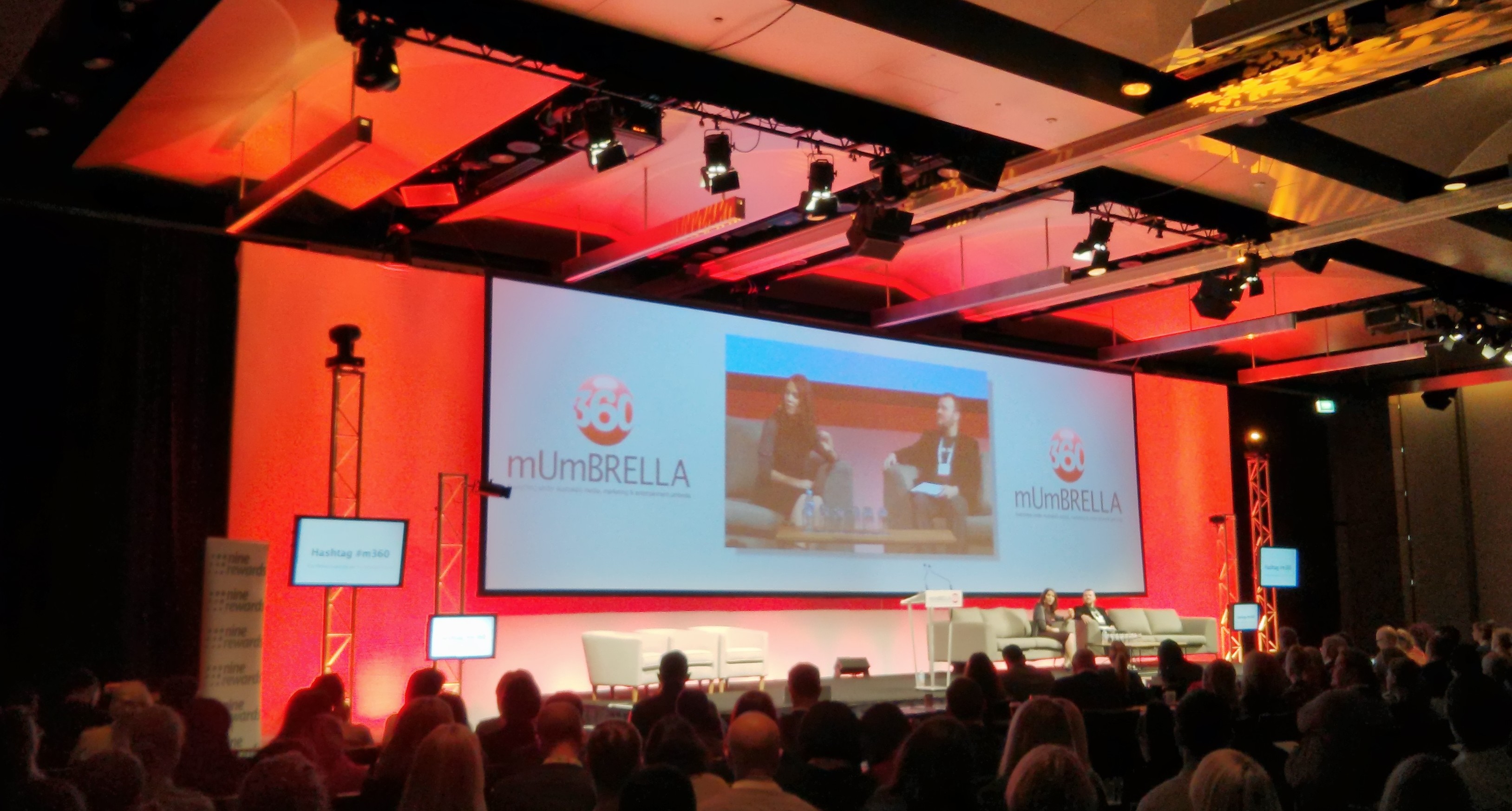
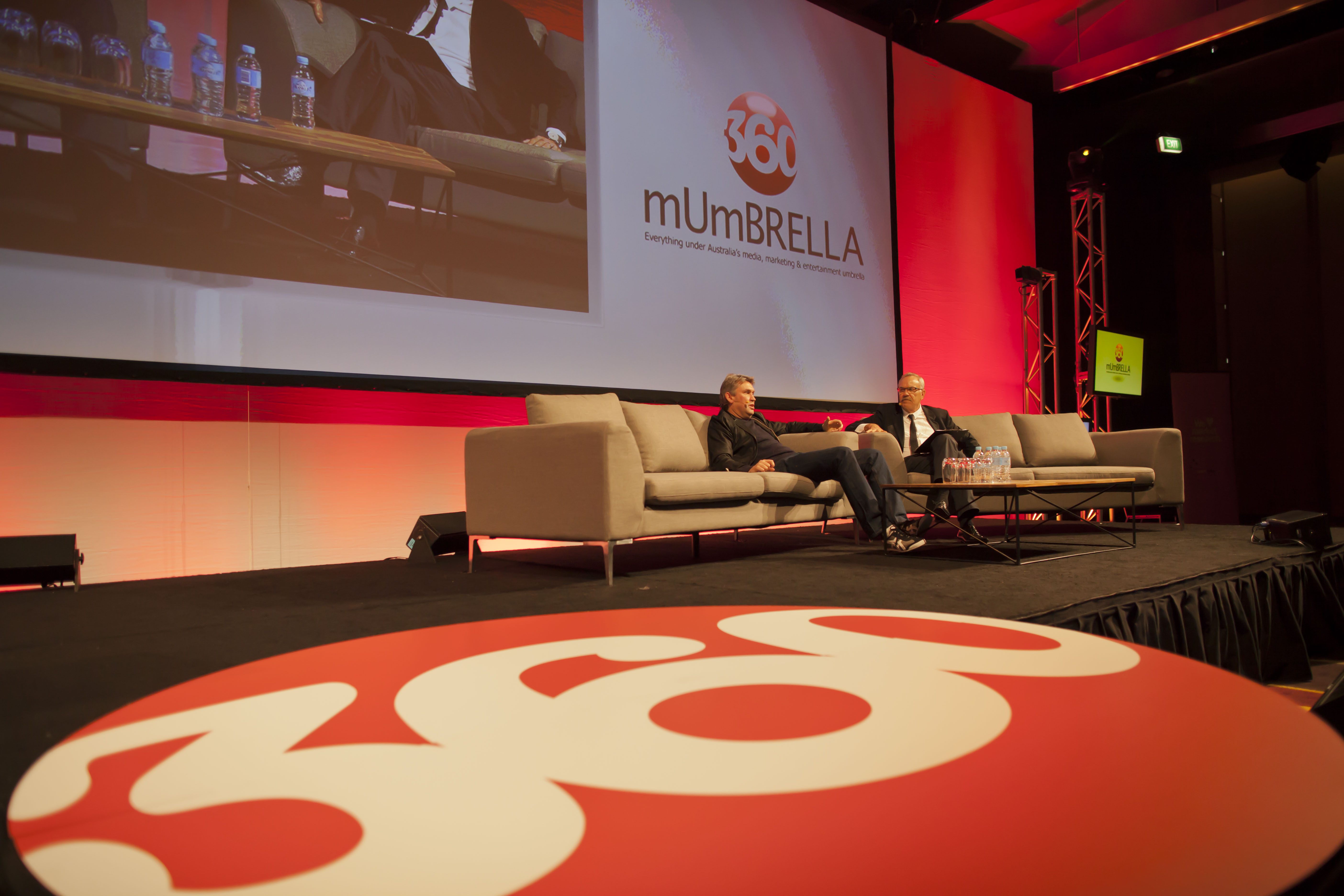
so big day two of Mumbrella360 kicked off with an awesome presentation from Twitter’s Head of Agency and Brand Advocacy Melissa Barnes.
essentially a ‘best of’ how brands are using the Twitter platform, Barnes more than delivered on her job title, as I suspect there were a great many more advocates for Twitter in the room at the end of her session than there were at the start.
I’ll save the content and examples up for a separate post, but its worth capturing here one of the key points that Barnes was making – that you have to approach and use Twitter differently, and with an understanding of what the platform offers and what its users expect.
she noted that she see’s lots of brands approach Twitter with a ‘display’ mentality, which just doesn’t work. the best examples on offer were cases where a brand had something to say, something entertaining and / or interesting to share, or, interesting, a crisis to manage. one fascinating chart in particular showed how a calm, human, humourous individual in chart of a mobile phone company’s Twitter account in the aftermath of a network outage was able to mitigate the anticipated ‘hate’ emotion you would typically see in sentiment analysis of an outage event.
… as an aside, huge thanks to Melissa who was generous enough to pop into PHD last Friday and share and discuss some of the examples with the agency … we loved the session, and I think someone may have actually swooned 😉
up next was the less swooney Hamish McLennan on turning around Network Ten
in a frank and fascinating discussion with the Burrowes, the boss of the struggling network discussed a strategy designed to focus on an older demo and live TV (as the latter is more easily and readily monetised) … saying that what the channel most wants to be known for is ‘the home of great event TV’.
he was frank that Ten was hurt by the advent of digital channels, and should have launched ist digital channel (11) earlier than in did, and arguably before launching One. the strategy is designed to get a fair(er) share of FTA’s $2.8bn by getting a fair(er) share of an aging demographic.
this would seem to represent nothing short of a full-scale retreat from a younger audience who, in McLennan’s own words “aren’t engaging with TV as much”. the network is looking to beat Seven and Nine by joining them in a fight for an older and more easily monetised audience. the strategy is to back off from digital channels, let alone digital platforms – which are (I suppose not wrongly) seen as the place for programme marketing more than anything else.
PHD Chief Exec Mark Coad asked about the network’s digital strategy, given the NBN (national broadband network) roll-out, but not much was forthcoming. it took a second delegate to ask a similar question to elicit the response that McLennan saw post-NBN as a “big opportunity”, the citing of the example of creating subscription channels evidence that there’s more than a little NewsCorp left in this boy yet.
I jumped into a session on The Encore Score and after lunch joined the debate on the State of the Media.
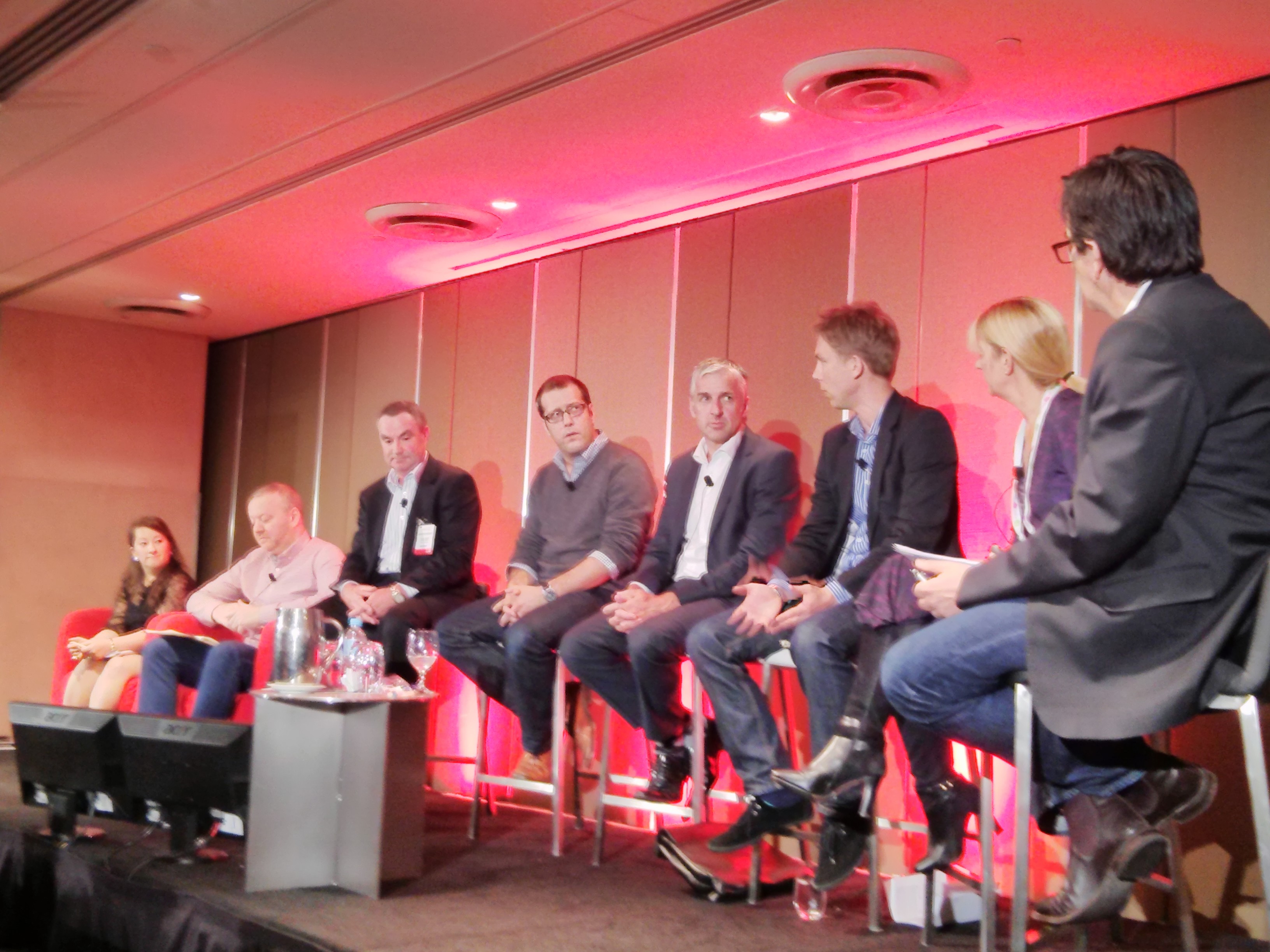
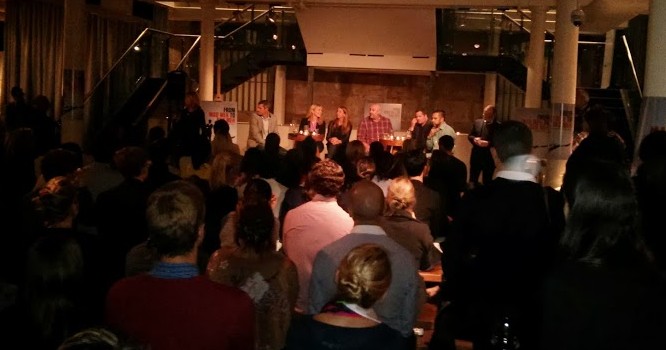
Moderated by Darren Woolley, MD at TrinityP3 and Denise Shrivell, MD of MediaScope (on the right above), the panel consisted of (left to right) Lynda Pallone, marketing services and integration manager, Blackmores; Rob Dingwall, media & marketing operations manager, Kellogg’s Australia; Chris Mort, CEO, TMS Australia; Toby Hack, MD Australia, PHD Media (woop); Tony Kendall, director of sales, Bauer; and Zac Zavos, co-founder and managing director, Conversant Media.
this was the first of two plus ça change sessions, with the debate eventually getting to some of the elephants hovering in the back of the room.
On industry relations, TH said that “industry collaboration has improved” with ZZ adding that [media owners] “don’t get enough feedback from clients and campaigns”. CM was clear that “it’s a high pressured business … If you can’t do the job with the tools you have you need to step up” [or get out]. TH on people development noted that have “a choice … to invest in people or not.”
a debate on programmatic buying led to some predictable places, most notably concern from ZZ that automation leads to commoditisation of media (which it does, because much of the time media is a commodity). TH described the two emerging centres of gravity in agencies around creativity / innovation and automation / analytics – which RD slightly misinterpreted as an agency split, which admittedly at this stage would seem a rather drastic solution.
this session also saw the revelation that industry-wide plans for a move to electronic trading have been shelved. this was first debated at last year’s 360 conference, with a panel consisting of senior agency and media owner representatives debating the subject of automation.
whilst the panel wasn’t the most warmly received (media man unmasked commented that “When you put 9 of the most senior executives in our industry in front of a room full of people who look to them for inspiration and leadership and all you get is a school yard argument it doesn’t bode well”), the point was that something was being done.
this now doesn’t seem to be the case.
one suspects that the shelving was brought to you by the letters M F and A and the numbers 7, 9 and 10 … but I won’t pre-judge. I’ll do some digging and write up anything I land on.
anyhow, back to the state of the media session … where there were a many more questions than answers. so much so that I was moved to ask a question of my own – specifically after this debate is over what happens next? who’s responsibility is it to drive the necessary change?
Darren Woolley reiterated his Golden Rule … that “the man with the gold makes the rules” … and what is the rule made by those with the gold? in a refreshingly honest comment Kellogg’s Rob Dingwall illuminated us with the admission that “ideas may not be paid for but they are valued – if you are valuable you will see money coming.”
and this is essentially the muddle we are now in … media is commoditising but clients won’t (generally) pay for the skill of planning and innovating with media. it’s seen as added value. but there’s less and less value because client procurement teams are driving down margins, so agencies seek additional revenue streams which leads to accusations of lack of transparency. and on we go.
in perhaps the most disheartening comment of the session, Blackmore’s Lynda Pallone actually said “see you all next year for the same conversation” …
… I really rather hope not.
to lift one’s spirits and to finish I’ll share some of the awesomness that is some of the great work coming out of Asia at the moment. in a session entitled ‘Unleashing the Tiger’, Peter Wilson, the retail planning director at Cheil Australia, discussed how “there is a massive step-change taking place in our industry … a new trend, where agency groups based in non-traditional markets lead the new paradigm, led by technology rather than traditional advertising.”
Wilson described the idea of Tu Hon, I’ll let the video do the talking …
Wilson suggested that central to Asia’s current creative success is down to tapping into emotion, and shared three examples. the first genuinely moved me, the second one actually elicited a tear, and the third one made me very jealous that I didn’t come up with it when I was working on a similar project a few years back:
SAMSUNG CAMERA video coming soon 😉
all brilliant examples of how, in Wilson’s words, “a happy marriage between creativity and technology are becoming the norm” … lovely stuff.
another year and another gathering at Mumbrellaland (I still think they should call it that) for the annual 360 conference. I’ll sum up later but for now just capturing the notes and the content from the sessions I jumped into during day one.
up first was Simon McDowell of Coles, them of the down down, Status Quo, Dawn Frenchness and now biggest-boyband-in-the-world-ness.
Simon McDowell at Mumbrella 360, picture source: Mumbrella
McDowell discussed the approach to marketing at Coles, describing it as “a bit of a creative hot spot, a melting pot … we’ve got a thousand ideas a day and we’re going at this hard.” by this he means making life better for Aussie Families, a picked this up because he mentioned the phrase ‘Aussie Families’ about forty three times, that’s almost one a minute. this seems to mean (1) bringing prices down and (2) making ads for them, and not adland.
he repeated asked us not to “be fooled by the sizzle on the sausage … we’ve invested hundreds of millions of dollars in bringing prices down … It’s a fundamental part of what we’re about … But how do people know you’ve done it when sales [messages] are everywhere? … Is all just blah … Were really trying to be unique.”
Tom Donald asked about the negative response in the industry to some of the Coles ads. “Do I care what adland thinks? Not a bit. The Coles business is in a turnaround, we have more customers spending more money [with us] than ever before. Were trying to build the most famous and compelling brand in Australia.” (and, wait for it) “… we’re trying to create something that resonates with Aussie families”. cue One Direction …
on the more serious matter of supplier pressure, McDowell was firm but clearly less comfortable. asked if Coles was doing the right thing by farmers, he replied that “[all the] discounts are funded by Coles, the more milk we sell the better off farmers are. Prices are too high in Australia, we have to take care of Aussie families … at the end I’d the day we have to look after Aussie families where the cost of living is going up … we want to sell more. it’s a serious business looking after Aussie families and that’s what we’re about.”
just in case you’re not clear, its about Aussie families.
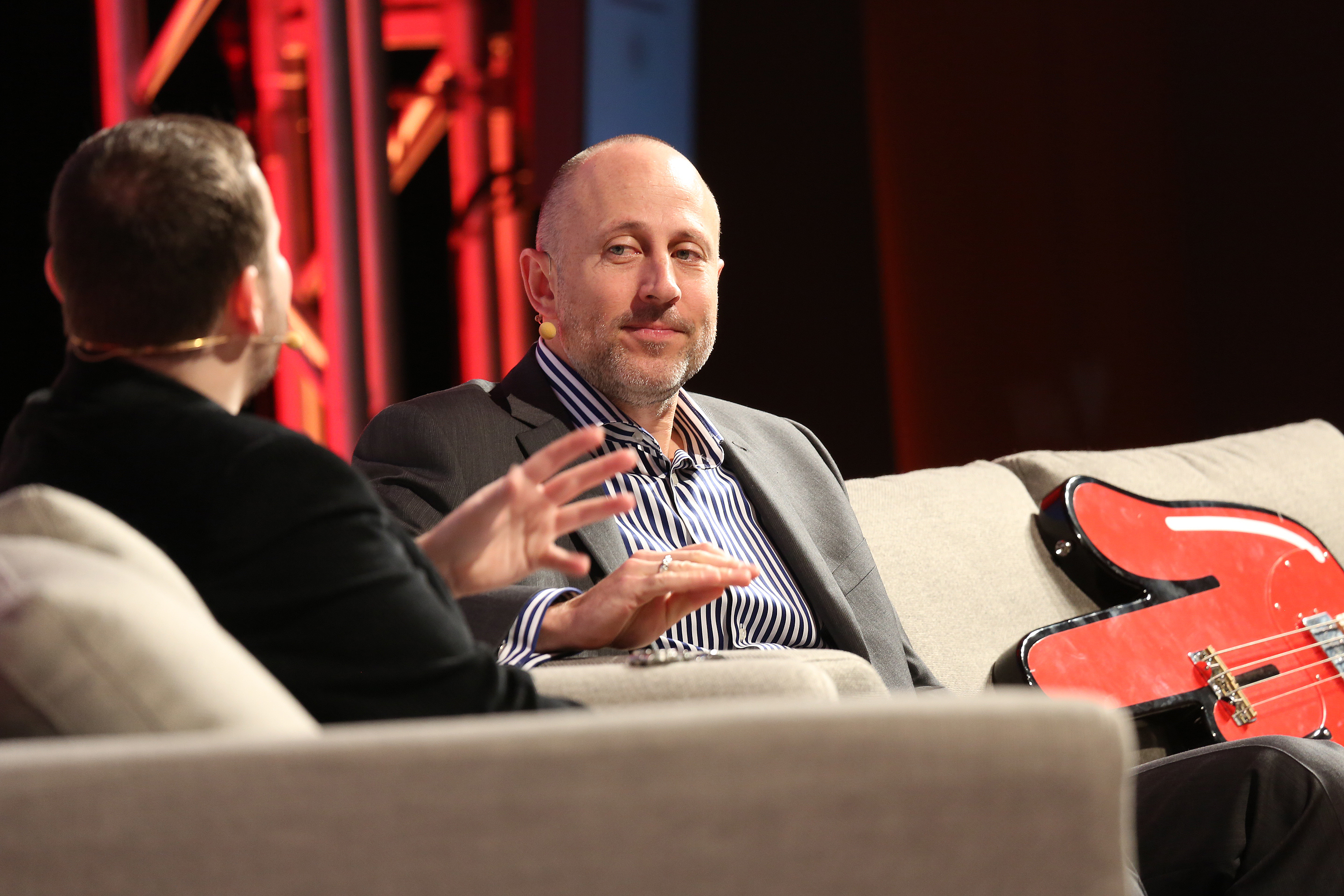
next up was Group M’s John Steedman in discussion with Nine’s CEO David Gyngell
its been a big year for the network, and the discussion covered a range of subjects …
on positioning Nine and investment in drama: “You have to stand for something. your audience has to know what you stand for … we’ll keep investing in Australian drama, [it] delivers against an audience that will watch linear TV for a long time to come”
that investment is based on an optimism about the future, saying that we are “heading into a purple patch for Australian drama – expect production to double.”
on the evolution of media, and the sale of the magazine business to Bauer, Gyngell was clear, saying that newspapers and magazines “won’t be as profitable as they were. quality magazines won’t go anywhere. the magazine business will be smaller and more nimble. newspapers will go online – less profitable but just as relevant. the fin review may lose $10m a year but you couldn’t buy it for $100m because its relevant.”
as far as digitisation of Nine goes, when asked when will Nine become a digital first company, he answered when you can make more on digital than we can at the moment. “we’re still nimble enough to be able to move when we want to. we’re not a digital company, we’re a marketing and content creation and distribution company.”
on advice for Seven and Ten: “Tim knows what he’s doing, and has Stokes around him. Seven won’t break because Tim won’t let it. Hamish is an accomplished marketer. if he gets a good programme he’ll know what to do with it. they need to get lucky … keep your head down and pray for some luck.”
its fair to say that Steady gave him a pretty easy ride as interviews go … it was left to a delegate to bring up Tom Waterhouse and the recent over-stepping the mark on programme integration and live odds. to which he commented that Nine, and broadcasters per se, have “a moral compass to provide to the country, but we’re not in the businesses of telling people what they can and can’t do. Tom Waterhouse was a lightning rod. we have a government that reacts quickly to any negative press. his competitors had a go – when the mafia start saying how bad the triads are you know what’s going on. we pushed it too far – we know that. did we overstep the mark? perhaps at the start when Tom was with the commentators. we’ve pulled back from that now and its the right balance.”
after that went to a cracking session with Rob Pyne of X or Y Decisions, about why businesses, and marketing teams in particular, make bad decisions. great insights and advice based on understanding and mitigating biases we inherently have when we’re making decision.
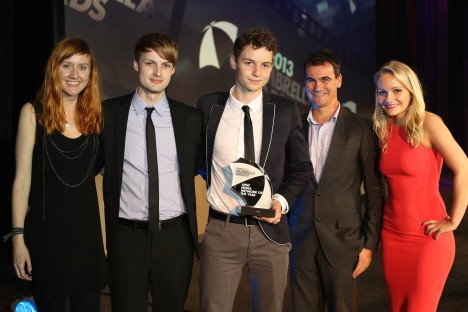
then Coady and I presented to a judging panel for Network Agency of the Year (which we won – yey!) … after which I jumped into Tom Donald‘s brilliantly fun session on fads – of which I hope there will be a future download / follow-up. and that (PHD’s session on gamification and evening drinks aside) was day one. here’s a pic of the guys collecting that Network of the Year award. whoo hoo.
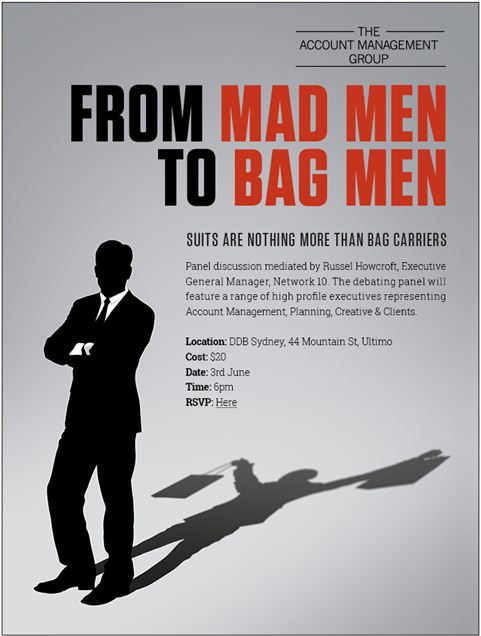
have advertising agency suits become nothing more than bag carriers?
this was the somewhat provocative proposition of last night’s inaugural Account Management Group meeting.
the panel, kept in order by Russel Howcroft, were Ian Perrin CEO ZenithOptimedia, Chantal Walker marketing director Foxtel, Nitsa Lotus GM TBWA, Steve Back CCO Ogilvy Australia, Bryan Jones technology director R/GA and Sudeep Gohil CEO of Droga5.
a degree of Howcroft-style order-keeping was necessary, as the debate ranged from a pocket history of agency evolution (“The main thing that happened is that having one agency wasn’t good enough so we split it up … the account people, who were the glue, have been diminished and no one is managing the business” – Perrin) to more sporting analogies than I can recount.
much debate centered around two issues … selling the work and understanding clients’ business.
Back’s accusation that Account Management have “an inability to sell work” was countered by Lotus assertion that Account Managers were the driving force in getting great work out of the door; “great ideas have died and suits pumped the life back into them.” Gohill made the astute observation that the role of Account Management is “not about selling ideas [because] great ideas sell themselves.”
Gohill went on to add that “what’s changed is that agencies are fragmented and [there’s] no understanding of what keeps clients awake at night”, a sentiment echoed by the client on the panel, with Walker adding that “everyone needs to understand my business … clients want someone, anyone, who understands what the pressures are.”
don’t we all Chantal, don’t we all?
this was all followed by a quick foray into process, with Perrin making the (very correct IMHO) observation that “there’s so much focus on quality control that we’ve lost the ability to move quickly … we over-engineer everything in this industry. it takes six months to get a campaign out, the world has probably moved on by then.” … to which, hilariously (if I captured this correctly – and huge apologies if I didn’t) Lotus replied “it does take a long time but you need processes that protect the process.” genius.
some of the habits of awesomely successful Account Management according to the panel (who referenced the best account people they’d worked with):
Perrin, who worked with a geek who understood the tech that IBM were trying to sell, cited fit of skill sets and passion for a clients business. Walker noted great AM was “resilient and persistent, always calm, trust them to be calm when I (the client) wasn’t.” Lotus noted that great AM doesn’t sell ideas, rather they sell bravery, and added that they’re new businesses and people- focused.
commenting in B&T today, the AMG NSW chairman, Naren Sanghrajka, said: “The volume of interest goes to show that this group and our focus is both needed and appreciated among the NSW community … the role of account managers has undoubtedly changed but, as last night proved, there is still a lot of confusion and contention around what that new identity is.”
quite. and this is perhaps what lies at the heart of the matter.
implicit in the Madmen to BagMen assertion is that the very discipline of Account Management has eroded – and I do suspect that this is the case. a lot of last night’s debate felt like a lot of rather self-satisfied justification for the existence of Account Management in ad agencies.
There is of course a genuine and real value in having people who understand clients’ business and galvanize action, but in which other industry would you have the indulgence of a whole bunch of people who’s job it is just to sit between the agency product and the client?
the industry has changed more than a bit since the invention of Account Management. this may be the most obvious of suggestions, but perhaps we should all of us take responsibility for understanding our clients’ business and selling our work. plenty of other industries, including very creative ones, manage without a layer in the business to ‘manage an account’.
I say this with full respect (some of my best friends are Account Management), but perhaps the elephant in the room last night was Account Management itself?
big thanks to everyone who organised last night and made it happen – after all, its having the debate in the first place that counts.
we've been warned: Paul Gilding, Naomi Oreskes, Curt Stager discuss acting on Climate change as Sam Mostyn facilitates
so Friday evening was spent at the brilliant Sydney Writers Festival at Sydney's Town Hall. the two sessions, 'who's afraid of Wikileaks?' and the climate-change-themed 'you've been warned' had illuminating things to say on a diversity of subjects but I was particularly struck by what they had to say, explicitly or otherwise, on the subject on media.
a key element in the first session was a specific question posed to the panel on whether Wikileaks is a media organisation or a political organisation. the panel were agreed in the main that Wikileaks is a media organisation… that they exist to aggregate, organise and make available information for distribution.
the panel were of the opinion that Wikileaks is non-political in the sense that what happens as a result of the information they release is up not to Wikileaks but rather to those who consume its content. Wikileaks were, the panel argued, political only in the sense that Assange is a fervent believer in transparency of information, and its ability to hold corrupt organisations and governments to account.
it occured to me that the idea of 'becomng a media organistion' wasn't limited to Wikileaks… the model – of aggregating useful information and then distributing it – is essentially an owned and then earned media combo. and any organisation could adopt it…
The greatest sneaker archiving project is about to begin; Footlocker's SneakerPedia
there are parallels to what Footlocker are doing with the rather glorious Sneakerpedia; aggregate information – with utility – into an owned media space. then use that to stimulate earned media (3,300 Twitter followers and counting) … bought media could come later – amplifying Sneakerpedia's greatest hits or rarest items in print ads, or short form sneaker documentary content on TV, but it doesn't necessarily have to. Sneakerpedia, like Wikipedia, is an owned and earned media combo – and that's all it has to be: the mechanics of media now not only permit that but in many ways favour it…
because bought media is developing a serious credibilty issue. the rise of owned media and emergence of tangible earned media has put bought media – as exemplified by the ad – into the spotlight, and the glare seems to be hurting it…
in the second session of the writers festival, a wonderful panel consisting of Paul Gilding, Naomi Oreskes, Curt Stager, Sam Mostyn discussed the hard choices we have to make now to preserve our planet. Oreskes described how the climate change movement had been undermined (like the anti-smoking lobby before it) by an argument of credible doubt. the proponents had used bought media to amplify their message to a broad audience.
Oreskes was asked why the pro-climate camp hadn't adopted the same tactics? her response was stark: "advertising exists to sell people things they don't need, scientists reject that [advertising] can be used to sell climate solutions" … the message is clear, bought media lacks the credibility of owned and earned.
this should come as no surprise to anyone familiar with our industry – the reality is that we have shouted our messages to people for over half a century. we have created as a result several generations of ambivalence towards our branded messaging, the result of which is now not only passive resilience from audiences, but outright rejection of not only the message but the media delivery channels themselves…
this point is important. Channel 4 Chief Executive David Abraham noted in his RTS speech this week that according to Channel 4 research, "about two-thirds of all 'TV audiovisual content' viewing time – across TV, PC and mobile – will be 'tracked intelligently' in some way by 2020"… our working assumption should be that such tracking will only be able to be utilised if people permit us to use it. if they are similarly minded to Oreskes, that may set up a tricky negotiation between our industry and our audiences.
so this is a little bit exciting. the above is me chatting to Tim Burrowes of Mumbrella about a project for the Mumbrella360 conference in June. it came about as a result of conversations over the course of last year with lovely and amazing Rob and Uma about how everyone knows that what we do is getting tougher and more compromised but we just seem to be able to act collectively on what to do about it.
so hopefully we can change that… you can read the full write up of what the ambitions are via the article on Mumbrella, but I wanted to capture why it’s so important to me here … because I genuinely love this industry. I genuinely love what great connections planning thinking can do for brands and businesses. I love the creativity, and the embracing of technology, and the social observation, and the meeting of art of science. and I love the people, who give a damn beyond reason about what they do and how they do it.
but in ten years of doing this I worry that I’ve watched a world change faster then we have. I fear that I’ve seen the commoditisation not only of what we plan, but of how we plan it. I’ve watched as brands cling to a belief in the ‘tried and tested’ way of doing things as it crumbles around them. and I’ve listened to a thousand people ask questions about the future without offering a solution for the present.
that’s why I’m asking us to create this manifesto. a manifesto for change. one that we all agree on. one that we can signal to everyone who works in our industry. one that we can signal to clients. one that frames the conversations between agencies and media owners. a manifesto that galvanises our industry, defends our margins and energises our people.
I hope that I’m not alone. I hope that there are enough people who give enough of a damn about what we do to work with me over the next eleven weeks to galvanise us into action… because the commoditisation, marginalisation, and lack of automation and cooperation won’t change unless we want them to. our present, let alone our future, is in our own hands…
Josh Spear is "from the internet". no really, he is. he put everything owned in the Internet and now has much of his possessions stored in the cloud.
his website, JoshSpear.com emerged in 2004 from the back of a Journalism 1001 class in which he was disappointed with the way academics ignored blogs as an emerging media. Josh describes his home as "a daily source of inspiration for marketers, brand managers, advertising executives, and a wide range of everyday people from around the world who love to stay ahead of the curve"…
which I guess more than qualifies Josh to be talking to us at Circus. his theme was 'the Fringes of the Internet', and the way the internet is affecting people and businesses.
he described how shortly after starting his blog he was approached by businesses who wanted to put ads on his site, this turned out to be a fine way to made money, and led to a conversation with advertisers about how effective the ads on his site were. very effective it turns out … they were seeing click-through rates of 2%…
two percent? asked Josh. yes, they replied. that's a 98% failure rate, said Josh. yes they replied, impressive isn't it!
Josh guessed then that the internet would have a major impact on businesses, and co-founded Undercurrent, a digital strategy firm that applies "a digital worldview to the challenges and ambitions of complex organizations"
"It's about the human behaviour we're going to talk about not the specific websites"
4chan is bad place on Internet but it's also important. it's anonymous. people respond to photos with photos. [it's a bit like the Abyssal plain of the internet; a deep, unexplored region rich in biodiversity that influences the rest of the ocean in ways that we're only just understanding] … it's where 'I can haz cheezburger?' began … the LOL-CAT meme. a meme which now results in tens of thousands of cats created every day. like this one:
the misuse of worlds isn't an accident, it's very deliberate. and globally consistent and understood. it's a language called LOL-Kitteh. the Bible has been translated into LOL-Kitteh.
Rick Rolling began on 4chan. in fact "anything funny that's unexplainable starts on 4chan". to the extent that a Time Magazine poll ranked Moot (4chan's creator) as the web's most influential person. only later was it noticed that the first letters of the ranked online poll spelt out a phrase. an incredibly sophisticated and advanced work of electoral engineering / hacking.
Time Magazine's 2009 online poll results. the first letters of the top 21 names spell out "marblecake also the game". marblecake is the name of the IRC channel where Anonymous started their campaign against Scientology, and "the game" is a reference to "The Game" meme source: Wikipedia
the rabbit-hole, it would seem, goes very deep indeed. "4chan is 'the bottom billion' pageviews on the Internet". Spear points out that two things consistently happen to Moot (who is called Charles) (1) he is forced to dump 4chan's data every 12 hours due to hard drive space and (2) every week he is served a subpoena for the information he holds (before it's dumped).
[this is all pretty mind-boggling I'd have thought for the average brand marketing manager, and you can see how they would be queuing up for the elvish Spear to safely have them gaze down the rabbit hole without falling down.] things used to be simple. then there was digital. which disrupted. everything. this is such a familiar phrase that it's beyond cliche, but Spear asks a very interesting question:
"is there a unit of disruption?' … and how do you stay on top of the disruption? which happens all around you all of the time and increasingly finds ways to impact on your sensory sphere. much as this blog discussed in a January 2010 post, Spear describes Tweetdeck as one way to control the disruption. he has "become an air traffic controller of my disruption"
we are our social graph. we're made up of our disruptions [connections], a point made wonderfully and elegantly with this map of the world, a map formed by nothing but the connections on Facebook.
What happens to a generation of people growing up in the world as drawn by this map and 4chan? a world populated by cat memes and Rick Rolling? a world in which gifts are given virtually. Spear pointed out that thousands of dollars are spent on things that don't exist. virtual economies are springing up everywhere. Farmville makes $50m a month. when Bear Stearns collapsed, a friend of his at Facebook didn't contemplate the collapse of the further banks but rather was promted to think that Facebook should start a bank.
Virtual economies are being used by brands – for example the number of tweets Uniqlo products received affected their price – a fascinating dance between buzz and value.
Radiohead invited people to pay what they thought their album was worth, an invitation that made more money than all other record sales combined. People's idea of money is changing.
the same goes for people's idea of location… take Foursquare, which introduced game mechanics in the form of mayors and badges. Foursquare also allowed tips to by left inside the check-ins, inside the game. tips linked to location so that they're readily available to those who enter the space. Foursquare allows reviewing in realtime on a geographical basis… Spears asked why people share all this information, and showed a slide outlining three reasons why we share adapted from MIT research and Henry Jenkins:
Strengthen my bond – you are what you share in your social graph
Define collective identity – you are based on the five people you spend most time with
Give me status
Viral = a bad thing, something you catch
Spears notes that 'pass-along' is made not of viral, it's made of people sharing something with more than one of their friends, and so on. reaching people is about tapping into cultural resonance. to test this, Spear's office put an image of a funny(ish) joke about Tiger Woods on the web. the pic got 30,000 views in first 48 hours, created a 'microblip' of cultural resonance … a map of interest, which could then be observed. so how, in Spear's opinion do you create cultural resonance?
group of people + unique culture = amplify to affect society
it's about tapping into a shared interest online because you can't rely on time and space, as shared interests are a way of creating cultural resonance. connect your brand to this. or don't. these interests are being shared whether brands get involved or not.
but be careful brands – angels fear to tread where P Diddy TV trod with Burger King. the video has long been removed, but fortunately for us Lisa Nova's spoof lives to remind us how it want down (nb Nova is now working in TV comedy – she got noticed because she understood the rules of the internet)
in Spear's opinion the fringe of the internet has a novelty scale:
the fringe's novelty scale, as presented by Spears
Spears says that agencies who want to use things like crowd sourcing or 'the fringe' to do their work need to either be the lowest cost option, or the best. if you're neither, you're stuck in the middle, and the middle is not a great place to be.
Spears asks what is the Internet good for? advertisers and agencies may answer that it's good for awareness [incremental] and persuasion. but Spear observes that this is not what the Internet is meant for. the internet is meant for sharing, cooperating and collective action. the latter of which is, in Spear's words, "the holy Grail of humans using technology"… at the fringe are the beginnings of these kinds of great examples…
the Copenhagen wheel collects data from your bike. one person doesn't generate enough data to paint a picture of a city, but eveyone's data does … and allows the aggregation and interrogation of usable data to generate insight and utility.
Ushahidi encouraged free and fair elections in Zimbabwe, and in the aftermath of Haiti and Christchurch interactive maps directed resources in realtime to where help was most needed. the US state dept now relies on this kind of information to coordinate relief efforts. crowd sourcing is used to collect and sort data. organisations no longer ask for money but for a little bit of time and effort. Alive in Egypt transcribes voice messages into tweets, allowing people to deploy messages and information even when access to the internet is being blocked.
So what has 4chan guy got to do with the fringe?! well what if all the people sending cats around every day gathered intelligence instead? they already have, it's called WikiLeaks, and "we can't yet imagine how this will affect the world"
Some challenges for brands:
how do you change from interrupting people into adding utility for people?
How can brand engage with born digital consumers in their language?
If you take a brand into the universe of the internet, ask yourself if you are following the rules of that universe?
Are you surrounding yourself with enough people that speak digital?
the contents of this post [unless in square parenthesis] is the content of a talk given by @JoshSpear at Sydney's Circus in February of 2011, thanks to Josh for his input in writing this post
yesterday saw the first day of Sydney's first Circus – a festival of commercial creativity for the advertising, media and communications industries. and a rather cracking event it was too. a series of speakers took us through what creativity was to them, how it was under threat, how it is thriving and how a changing world places ever incresing demands on those to work to use creativity to commercial ends.
despite starting rather dubiously – we were invited not to tweet, and to only ask questions if we thought that they'd be relevant for everyone (not the most encouraging of starts for a festival aiming to – in part – explore an evolving communications landscape) – it turned out to be a rather inspirational day…
this was how the first session of day one went down…
first up was Jeffrey Cole who eleven years ago founded the Centre for Digital Future at USC. his talk was on surveying the digital future – and in particular the impact of the Internet on our behaviours.
he introduced himself as a TV guy, and observed that we 'blew' TV – in that we knew it was going to be a mass medium, but didn't track audiences to see how it was changing their lives. important questions like where did the time to watch TV come from? what did it displace? …went unanswered.
emerging media are way more powerful than TV. in 1988 for the first time kids were watching less TV in the US, the result of the rise of computers and the web. where Cole believes that we lost the opportunity on TV, we can make up for it with online, and eleven years ago set up a research programme to track a panel over time as the internet changes their life…
key findings from the research are around teenage behaviour and in internet, but crucially, Cole seeks to make a key distinction between those behaviours and attitudes that teens do and have because they are young and have time, and those behaviours and attitudes which are permanent. what will drop off as life gets in the way? versus what do they do that is 'transformational' with regard to the society that they will grow up to form.
he observed that college students setting up home for first the time are particularly instructive. no landline and no newspapers for them. but also no cable (90% penetration in US so this is a significant trend). Cole believes that whilst we're not looking at the end of cable, we are looking at the end of the cable pricing structure as it stands.
things that teenagers abandon…
teenagers say they're not affcted by advertising. which isn't true. like all of us they are they just don't like to admit it
they believe that unknown peers are 'just like me' and can be trusted – similarly this comes to change over time as they learn the world isn't always what it seems
teenagers don't use email and claim to only need IM, texts and facebook (they go further and say that voice calling is 'an intrusion' – similarly this is an attitude that fades into adulthood
they want to know all the details of their peers' lifes in what they describe as 'ambient awareness' (a phrase strikingly similar to the continuous partial presence that Faris described in May 2007); Cole observed that Twitter works because of this … ambient awareness is a general understanding of someone's situation, and a reflection that teens want not fifteen minutes but fifteen megabytes of fame
we're not initially good at distinguishing truth from fiction. Cole argues that this is because we didn't have to question the mass media we grew up with (the Chinese for example are better at critical media assesment) …we are better at understanding amateur vs proffesional, which Cole suggested was due to beter understanding the limitations and boundaries of ugc
he talked about Murdoch and MySpace, and reflected that at the time of the NewsCorp purchase he commented that "it's a great investment but he'll never hang onto the teenage users" … an angry NewsCorp rebutted by saying "look how much money we're making" but Cole by that time already had the hindsight to see Friendster and Geocities go. to teenagers, he said, "social networks are like nightclubs", despite this, Facebook is going nowhere (yet), a fact underlined by his observation that at their last Zeitgeist, Google seemed nervous (they have no place nor role in Facebook's world)
finally, teenagers have no sense of the nature of and need for privacy. for good reason the law says you can't sign contract till 18. whilst this attitude means that kids upload potentially very compromising things to the internet, this is not a lifelong attitude, and with maturity comes a sense of what is public and what is private
which brings us to the things teenagers keep, and with them significant implications for society, brands and advertising…
teenagers have, and keep into adulthood a total control over their media. Cole cited the 17yo who first unlocked his iPhone; he didn't want to unlock it for anything in particular, he unlocked it so that he knew that he could
a huge implication for the media industry is that permanent changes in attitude mean we're seeing the beginning of the end of platforms … Newspapers, in Cole's opinion, are history. environmental reasons is one reason for teens, but furtermore the concept of owning media is in it's last days as we move to the cloud. on newspapers, teenagers not using print is a permanent shift. they are very much into news, but the internet delivers this. Cole's prediction is a stark one – because every time a print reader dies they are not being replaced, print has about 5 years in the states, and around 8-9 years in Australia (perhaps)
teenagers don't grow out of not wearing watches (the mobile is their watch and alarm clock and much else besides) – this is not a problem for Rolex, but will have consequences for more mainstream inexpensive watches
TV is not on a set top box and is not scheduled. YouTube is TV, and TV is any content you watch on your schedule
Game playing is serious business that ecourages task-oriented behaviour and is similarly a behaviour and attitude that is here to stay
"Mobile isn't everything – it's becoming every thing" – it's rapidly becoming the primary and predominant place where teenagers get media
on the iPad, Cole observes that it is NOT the fourth screen, rather it replaces the second screen (the pc), and that we're witnessing the beginning of the end of the PC as standard home device for many people
finally and most significantly, there is an emerging and permanent shift in the perception of real versus perceived empowerment. we are passive readers no more, we contribute and correct. we self-diagnose our illnesses. we negotiate on deals based on pre-research and start our negotiations based on wholesale prices … the "internet is best at shining light into dark places", giving everyone power over governments, over repression … this most important trend will emerge and very much in Cole's opinion stay with us.
Q&A
will Facebook eventually be displaced? yes, but it will continue to grow for around four more years. it will be supplanted by another more fragmented social media landscape. Facebook won't be abandoned completely, but will become more passive – an ongoing reminder of the biggest social networking site there ever was or ever will be.
2% of people drop off the internet each year… they leave because they change jobs or their PCs break. with few exceptions their back within 14 months.
advertising will remain the model for content. Cole wants to see content survive, and so wants to see digital advertising survive.
I asked about permanent vs transitory media. there was suggestion that whilst the legacy media (BBC, NBC, NYT) were permanent, emerging media (notably social networks) aren't – they are transitory platforms that people adopt for a while before moving on. will Hulu – for example – be permanent or transitory? Cole's opinion is that all platforms will need to learn and adapt. Google will adapt. as will Hulu. legacy media brands – and indeed all media brands – will be defined by their ability to evolve.
next up Agnello Dias – creative director at Taproot, who talked to the festival about the remarkable story of advertising and comms work for The Times Of India, a story that began with a brief…
a brief to celebrate India's 60th year of independence. an argument broke out in the agency about whether India was on the verge or greatness or the cusp of the abyss. the client talked about the country being at a crossroads. was India to go forward or back? Dias scribbled a paragraph describing 'India vs India' as a creative brief, but as time ran out the client ran the brief as an ad. the brief. a dat later Dias was informed that the brief wouldn't be an ad after all … it was to be the front page editorial.
the front page became audiovisual content which became a YouTube viral.
which became a debate. a debate so emphatic that The Times Of India decided to call the debaters bluff…
the response to the video was a national platform that created a parralel decision making group, bypassing party politics and supported by politicians. facilitating democracy in a nation a billion people strong.
what has any of this to do with brand and selling newspapers? nothing. to the client it's not about that. it's about building credibility – something that has huge benefit for a paper… after all who is the prime minister going to call?
the latest phase was editorial that ran on the anniversary of Mumbai terrorist attacks. The Times Of India ran a headline saying love Pakistan – a controversial position that stimulated a great deal of opposition, even people in Dias' office didn't want to work on the campaign. but the objective was to start a debate that would lead to peace, rather than perpetuate an argument for war…
the jury, according to Dias, is out on whether or not they should have done it. they will see what results. whatever happens, it's a phenomenal story … a story of a media brand acting not as reporters or observers but as instigators of change. as provocateurs of debate. as writers of the future.
next up the enigmatic Jess Greenwood of Contagious fame who talked about projects not campaigns – and a shift away from the creation of advertising to the creation of projects with no specific timespan. less say and more do, behaviour rather than talk.
Greenwood also talked about how everything is advertsing and – in a phrase of which I was particularly fond – that we need to be "less 360 in our thinking and more 365" … nice. as an example she cited how after tweeting to complain about the music in the Air New Zealand lounge in LAX, her tweet was picked up by the airline in New Zealand who called the lounge front desk in LA who invited Greenwood to choose her own music. this all took less than 60 seconds. remarkable stuff.
so how do we change, well one we put insights before advertising. no more the Mad Men model of ideas leading executions, of working out how to execute ideas generated on gut feel. two, its about engagement over reach (allelulia) – citing one advertiser who said they would rather have 100 engaged people than 1,000,000 passive ones.
the Contagious mantra is that branded communications in the early 21st Century should be Useful and or Relevant and or Entertaining. a mantra she expounded across three main themes…
ONE – Inside Out Marketing
we need to stop mindlessly pushing marketing and product into the world and instead be the change we want to see. as example is Operation Nice, which seeks to encourage people to embrace an emering sense of independence by saying that 'if you want something doing…'
her next example was Dulux who want to own colour. rather than telling people that they want to own colour they behaved like they owned colour via an urban regeneration project. they asked people which areas deseved colour, then launched Let's Colour. they went to areas around the world and added colour, areas like Tower Hamlets. the brand managers and local communities did the painting, and produced some rather remarkable content…
their sucker punch is that Dulux 'own' colour, but communicate such in a very real and credible – or inside-out – way. Greenwood talked about a smart approach by Dulux to how this thinking is deployed on a global via local level; the global mandate was to find out what colour means to your country, and make it happen through actions and behaviours at a local level.
Greenwood talked about mass media as an "iterative process", citing the example of how VW and a tiny Darth Vader 'jacked' the superbowl. the ad was deliberately released prior to the broadcast to build buzz prior to seeing it on the Superbowl screen. it is TV (advertising) but TV not just designed for TV – it's wholeheartedly designed for theiInternet.
another example from Levi's and their Go Forth organising idea (note not campign). Levi's are using this idea to generate behaviour and action as opposed to making and broadcasting hyperbole. Levi's – amongst other things – built a community centre and funded the library in Braddock. they are building infrastructure. they've opened workshops to give substance to their claim that 'Levi's makes things by hand and makes things the right way'. this makes levi's meaningful.
Greenwood talked about four pillars of convergence in media and communications:
AV experience on screen (whatever and wherever that screen may be)
Interctivity of internet (facilitation two-way engagement, converstion, debate and cooperation and cocreation)
Location-based functionality and customisation of mobile phone
Real world experience
when developing insights and ideas we need to ask ourselves if said insight or idea can work in and across these four areas. if it can, then it could work… for example T-Mobile create advertising as programming. if you're doing mass media it has to be this engaging…
"it's designed not just for broadcasting but for sharing. they are creating mass media for the Internet, for niche media".
TWO – be Prolific not Precious
'Social media makes stories' – this, in Greenwood's opinion, is the evolution of user generated content … smart brands monitor and track the stories as they emerge around them – cue Gatorade Mission controlness.
another example is reformed drug addict Ted Williams, the story of whom was picked up by a journalist who learned he had a great voice for radio. he made a film about ted's life. which went from zero to 13m views in two days. this in turn ws picked up by Kraft who used the Ted in their ad. all of which is phenomenal enough, until you consider the timescale…
Monday – upload the video Tuesday – watch the views pile up Wednesday – Ted appears on TV with ad agency Friday – Ted's voiced ad is on air
using social media to tell stories garnered 450m media impressions for Kraft. and there are a plethora of examples where that came from… Qantas flew the girl with the twitter handle @theashes to Australia for the Ashes. all because said girl / handle got messages from people wanting the cricket score … a bit of support via #gettheashestotheashes and Qantas and Virgin were fighting it out to make it happen.
Hippo snacks example of using tweets as distribution management system and saw a 76% increase in sales.
and finally on proliferation, the South African low cost airline project (not campaign) around the World Cup in aid of being the 'unofficial national carrier' of the World Cup… the best thing about this campaign was something they hadn't planned for. the airline offered free flights to anyone called Sepp Blatter, so when a dog came forward to say that that was his name the airline flew the dog around the world.
THREE - Play and Gaming
the rise of play dynamics in marketing. Gamification. adding game dynamics into marketing but also product design. Greenwood used the example of Ford who have a virtual plant on the dashboard that grows if you drive in an environmentally friendly manner.
NBC do market research not via a focus group or survey but via fanit, an initiative that I discussed in a post in May of last year.
Skittles pitched David Phoenix versus Skittles fans.
Mini gaming in Stockholm example. Steal the car.
one interesting point from Greenwood, if you're going to develop or have a game or app, make sure that you have an end to it, a climax or endpoint to which people can aim.
and finally in gameification a wonderful project called iButterfly, which uses an app that captures virtual butterflies to get vouchers to people. smart, contemporary, embedded with utility and above all fun. as Contagious as it gets.
three final suggestions from Greenwood…
ensure that your communications are Useful and/or Relevant and/or Entertaining
make sure your idea is created, developed and deployed for real people not marketing people
Be brave and make mistakes
and that was session one, post is way big enough so I'll write up the other sessions in following posts…
last week Adnews arrived on my desk. it featured a pull-out of it's 'Power 50' – a list of the top 50 "power brokers in Australian Advertising, Media and Marketing". it makes for interesting reading. it pretty much lists fifty white, male chief executives and directors, many of which have familial or other connections within the industry.
Adnews compiled the list "by taking into account a set of criteria
including budgets and staff under control; breadth of responsibilities;
levels of independence and authourity; connections; company performance;
community standing; and industry respect". and claim themselves to be
"confident the 50 who have made the cut represent the most powerful and
influential people in the industry".
but if this list represents the power and influence within our industry, exactly what does it say out our industry?
one. that they're a homogeneous bunch. predominantly white and male; only four and a half entries in the fifty (9%) are women (the half is, at #4, Harvey Norman Holdings' Managing Director Katie Page, who is married to the Executive Chairman of the same company Gerry Harvey).
two. that our industry is so old school it makes MadMen look like reality TV. John Hartigan at #2 "has led the defence of the Australian newspaper industry, forcefully arguing why mastheads here are more robust than in North America and Britain" … David Thoday (#5), Chief Exec of Telstra was wrong-footed by the decline in the use of telephone landlines, commenting that "the decline has been more severe than we realised" … Kate McKensie (at #8) is therefore the person at Telstra responsible for holding back the tide, I mean "halt the decline of Telstra's fixed-line business" … and at #31 we have Joe Talcott, who only this year was quoted as claiming that "no one sits down to 'watch the internet'".
Richard Freudenstein, CEO of The Australian and NDM at #14 commented at at recent event the that "rise of aggressive technological companies" may prove "potentially quite disruptive to professional media companies" … at the time I left readers to consider in their own time the choice of the words 'potentially' and 'quite'.
and what of those aggressive technological companies … even those on the list who it could be argued represent a more contemporary and evolving view of 21st Century media – Google GM Karim Temsamani at #12, or Facebook's regional manager of sales Paul Borrudat #21 – are there less because of their insight into a changing media ecology and rather because they're in charge.
three. a browse of the entries makes it more than apparent what, according to Adnews, power is based on… in fact it's hard to find an entry that doesn't refer to either spending, buying or selling power. money, and channeling and making as much of it as possible is, it would seem, pretty much the only name of the game that is the Australian Advertising, Media and Marketing industry right now. Adnews would have us all cast as plutomaniacs.
now not for a second I am suggesting that we're not an industry of commercial organisations, the continued existence of which is dependent on profit generation and growth. my point is that this fact is so patently obvious that it shouldn't need saying. yet Adnews says it. fifty times.
the upshot of all this is that whilst I don't have issues with any of the individuals on the list, I do have a lot of issues with the list. the advertising, media and marketing industry has never seen the pace of change we are currently witnessing. the opportunity of creating a list of this type is not the reinforce the past but point the direction to the future.
the opportunity was to invest in a supplement that gave all of us who work in this industry an indication on where the thinking, innovation and evolution of the communications industry in Australia is happening. in doing so, the opportunity was for a trade title to help set and shape the agenda for our industry. it is an opportunity very much missed.
gathering at The Four Seasons for The Australian's inaugural breakfast series
dispatches for the Sydney media world … this week saw The Australian on, yes, bullish form at it's inaugural Media breakfast series. many of Sydney's media agency kids gathered at The Four Seasons to hear Geoff Elliott chair a panel of Nick Leeder (Deputy CEO, The Australian), Malcolm Turnbull (Federal Member for Wentworth and former Leader of the Opposition), Andrew Murrell (GM Channel Market, Commonwealth bank of Australia) and Richard Eary (Head of Media and Telecommunications Research, UBS Equities) discuss convergence, iPads and a lot in between.
but it was Richard Freudenstein, CEO of The Australian and NDM who kicked things off. describing the context of the "rise of aggressive technological companies" that may prove "potentially quite disruptive to professional media companies". I'll let you digest the 'potentially', 'quite' and 'professional' bits of that quote on your own time…
Freudenstein kicked off the bullish tone in fine form… declaring that the organisation is "aiming for an increase in print circulation" and that it is "our intention to be the pre-eminent source of news at all times across all platforms" … "NewsCorp fully intends to be across all [emerging] platforms … it's cheap, current and constantly up to date"
but it was the Admiral himself who continued NewsCorp's bullish tone. Rupert Murdoch addressed the room via a recorded video, and in comments reported this week in The Guardian, heaped praise on Steve Jobs and his iPad, of which Murdoch is so fond… but the Admiral's battle charge began with comments aimed at recent adversary Google. he noted that he had "ruffled some feathers" but that "the debate needed to be had" … and, in a delightfully provocative comment that "The argument that information wants to be free is only said by those who want it for free" … lovely stuff
Murdoch described how "we are witnessing the start of a new business model for the internet" … "people are willing to pay for high quality content, as long as we deliver it how and where they want it" (Murdoch missed out the last bit of that sentence: …and as long as that content is not available for free elsewhere)
and then to the panel debate, where NewsCorp's bullish tone continued unopposed by the rest of the panel. it started OK, when Elliott asked Eary if newspapers were dead? Eary replied that "its a good question" … cue nervous laughter from the NewsCorp crowd. but it didn't last long – Eary went on to say that "there is some degree of optimism" and that "even if paywalls are put up there's a big audience to monetise" … "if you look at digital CPMs vs Press CPMs there's a big divide" – his point… that better targeting (behind paywalls) generate higher CPMs. all very on message.
and how the message continued… "You don't want to bet against yourself – we're not seeing circulation decline" … "we need to grow in both directions" … "be careful you don't import [from the US and UK] the narrative" … "the beauty of an app is that the technology goes away [the iPad is introducing] serendipity back into the browsing experience"
you were hard-pressed to find anything off what was clearly a very well constructed message to Sydney's media community. that NewsCorp and The Australian are growing and on top of emerging platforms and technologies. the only descension came from what I had considered to be the most unlikely of places… Malcolm Turnbull seemed to be the only challenge on the platform, the only voice of question.
Turnbull pointed out the "devastating loss of value" that the internet had brought about in media organisations, and raised valid and critical questions about the rise of video and the effect of new technologies on news organsations. his questions and concerns were simply brushed away, with Nick Leeder, deputy CEO of The Australian commenting that "people have to sift through the nonsense they see on Twitter" and that "YouTube is great for dogs with skate boards.
which all-in-all was a shame. being bullish is good for business, it's good for shareholders and its good for negotiations and for bravado. but it's not good for the important debate that needs to be had about the future of media and communications. it's restrictive, limiting and adds nothing to the knowledge bank of media planners and clients picking their way through an evolving communications landscape.
NewsCorp can talk all they like about Twitter's "nonsense" and YouTube's "dogs with skateboards", the revolution is coming, whether they like it or not. being Bullish will only get you so far.
and we're off… Tim Burrowes chairs MySpace's Next Chapter in Social Media
there was only one word of the day last week, when MySpace Australia hosted their Next Chapter in Social Media event in deepest darkest Alexandria. that word was Discovery. MySpace is about discovery, and being discovered. and about discovering stuff. "MySpace will be the best tool for Discovery" was the assertion of the social network's International Co-President Mike Jones, who in his keynote speech highlighted projects from the network that are "allowing people to get Discovered".
Jones made the point that 'social' is no longer a USP… every web property has or will soon have social elements as an integral part of their offering. being a network that is social isn't enough. hence 'Discovery', and MySpace's intended positioning as the internet's 'Discovery Engine'. they're nothing if not bold.
Jones discussed a range of MySpace innovations, from allowing realtime commenting on the site to integration with Twitter; and he talked about the site's new AdStream unit, which allows advertisers to "push ads into the stream", the "consumer-activated pop-up" for which delivers "incredible impact".
we have a problem here. well actually we have two.
firstly, the innovations aren't. innovative. my Twitter has been linked to my Facebook for as long as I can remember (which in realtime isn't I admit that long but long enough given the pace of change in social media network evolution). nor is commenting on content in real time revolutionary, to pretend that it is may do more damage than good. ditto MySpace Music's developing an algorithm to recommend music based on what you're listening to. we've been there and we've done that, nothing new is being brought to the table.
the second problem is of more concern because it gives visibility to the mentality behind the direction in which MySpace is going. Jones' comments – that "ads" can be "pushed" and deliver "impact" – is a broadcast mentality, a mentality that has no place as a core proposition within an online social network. while the rest of the comms community discuss engagement, content, utility and ways in which brands can make our lives more intuitive, MySpace find themselves talking about ads that deliver more impact.
there's a disconnect between the MySpace product and the role of brands here… the primary role of brands is not IMHO to fund MySpace. that comes as an important and necessary result of brands engaging with and providing utility for MySpace users. for MySpace themselves not to be leading this intellectual charge should, in the month that saw AOL give up on Bebo, be of concern.
there's a genuine sense that MySpace are playing catch-up. even the acknowledgment by Jones that "sometimes what you Discover on MySpace may not be on MySpace, and we're OK with that" sounds more like the waving of a white flag rather than a confident forging of partnerships to grow, activate and engage the MySpace user-base.
the danger is that 'Discovery' becomes nothing more than an interesting but unownable concept for which product simply doesn't follow through. Jones may assert that "Discovery is the one thing we really have to nail", but the one question that everyone at MySpace should be asking themselves… 'how do we bring utility to how people discover stuff on the internet?' doesn't seem to be being asked, at least in last week's public forum.
I Tweeted at the event #myspaceevent wondering what myspace would have done differently if they could replay the last five years over again?
Tim picked it up and put the question to Jones, who was honest and candid. MySpace couldn't keep pace with its own growth. resources were diverted to infrastructure and sales, rather than product; "for five years they [MySpace] were so busy keeping the site up that they had no visibility on what users were doing". Jones has his work cut out.
wise words from Dan Pankraz of DDB
next up at the event was Dan Pankraz, a Youth Planning Specialist at DDB who gave an overview on Generation C. the content was or should be very familiar to those of us who have been negotiating the future of media and communications for a while, but some solid observations were made:
for the 'connected collective', happiness = being part of the tribe
successful ideas aren't necessarily the biggest but the fastest moving
we need to create stuff for the swarm to pick up and run with
conversations never end
mobiles = social oxygen
82% of young people rely on peer approval for decision making
brand relevance is determined in the moment
online identities are different from our real ones; the online version being the 'wanname'
gen-C are pluralistic with sub-cultures, and avoid perceptions of one-dimensionality
one observation that caused some chatter on the day was a stat from FastCompany claiming that in 9 hours of media consumption, gen-C take in 13 hours of content. personally I thought that sounded conservative – multitasking alone potentially doubles the amount of media a content-hungry gen-C can devour, with their attention span decreasing accordingly of course.
Pankraz shared a plethora of examples of who's out there doing interesting stuff in this space… broadly aligned along three pillars; Collaboration, Purposeful Platforms and Play…
on Collaboration: "agencies talk too much about the tools and not enough about how brands can be more social and what content they have to share" … "the best brands allow people to morph ideas" … "do stuff with and for gen-C not at them" … gen-C are not a destination and can't be targeted, rather they are a partner in production.
Kypski's One Frame of Fame Project encourages all of us to be in their music video, which us updated every hour based on contributions from, well, anyone…
on Purposeful Platforms: Pankraz cited Coke's Expedition 206, for which three ambassadors take a journey to all 206 countries where Coca-Cola is sold, interestingly thats 14 more countries than are represented by the United nations…
on Play: "…a key marketing paradigm to engage audiences", Pankraz described Cabbie-oke, DDB's project for Telstra which see's Cabbie-oke cabs offering free cab rides every weekend; so all you have to do is belt out a tune for your free ride…
he described RedBull as "probably the most playful brand in the world" citing their 'secret halfpipe' project for Shaun White. they do what great brands – in Pankraz's view – should all do: experiment with and create popular culture…
in short, its not what you say, but what you do that counts. Dan blogs here.
SMO joke – Nicole Still gives the advertiser's perspective
the final speaker of the afternoon was the enigmatic J&J's Pacific Digital Director Nicole Still, who gave a candid walk through ten principles she works to at the company:
never, ever, censor… "deleting comments is not an option"
be ready for SMO (Social Media Outbreak); that thing that happens when someone replies or responds to what you've put out there. she encourages J&J marketers to just try [something new], admitting that "for companies like J&J, Social Media is like the dentist; it means well but it causes great anguish"
every brand has a right to be there [in the social space]
develop a parallel brand to deploy into the social media space – for example Neutrogena is building a OLS (one less stress) brand to deploy into the social space
prioritise and define the role of each social media channel
use a combination of paid, earned and free media (Still cited a recent campaign that split investment 75% paid, 20% earned and 5% owned, and suggested that for an investment of c.$1.3m she'd expect to generate c.$3m of total 'media')
harness alpha-influencers on third-party sites
practice on Facebook (who don't charge to have sites) – remember that "people don't take on individuals, they take on corporations" (ie always respond individually)
measure what matters: the number friends you have doesn't. 50% of the people who visit the J&J site 'fan' it. she has five key metrics: sales, reach & freq, awareness, cost effectiveness and engagement
sometimes, its about presence not participation. sometimes, just being there is enough
in the discussion after-wards, Still made some surprising comments about the client / agency relationship. "from J&J's standpoint, its the responsibility of the [digital] agency [to monitor the social space]" … "at a global [big brand] level, it shouldn't be brought in house" … and finally, "we take responsibility for training the agency". this last point in particular was interesting, Still admitted taking what is a reasonable and responsible position in ensuring her agencies are delivering what she and her company needs. ultimately "you have to give people ownership in the space to be incredible successes or colossal failures". refreshing indeed.
in the final panel discussion I asked about the elephant. the big grey one. there. in the room. there. behind you… "Australian marketing invests relatively less than equivalent digitally-enabled countries in online. PWC have stated that "traditional media 'owns' the market in Australia for a long time yet to come". so why is Australia lagging behind and what would the panel like to do to help it catch up?"
for Pankraz it was about better learning: Australian clients have had a bad education from agencyland – we need to better educate the market about digital.
Still challenged the question, citing The Best Job in the World as an example of great thinking coming out of Australia, a country which many companies want to be a testbed for innovation and marketing thinking.
only Rebekah Horne tackled my elephant, commenting that because there are no agreed metrics or online currency in Australia, traditional media is seen as less risky; less risky for agencies to recommend, and less risky for marketers to buy…
it was quite the appropriate comment from the Managing Director and Senior Vice President International of MySpace. Horne must know better than anyone the mountain MySpace now have to climb, but its perhaps no different from that which all of us negotiating the future of media and communications have to climb. MySpace may not have the answers to what the Next Chapter of Social Media looks like, but from here it looks like they're the ones who are creating a forum for the asking; and finding the answers is required learning for MySpace and the industry alike.


 so big day two of Mumbrella360 kicked off with an awesome presentation from Twitter’s Head of Agency and Brand Advocacy Melissa Barnes.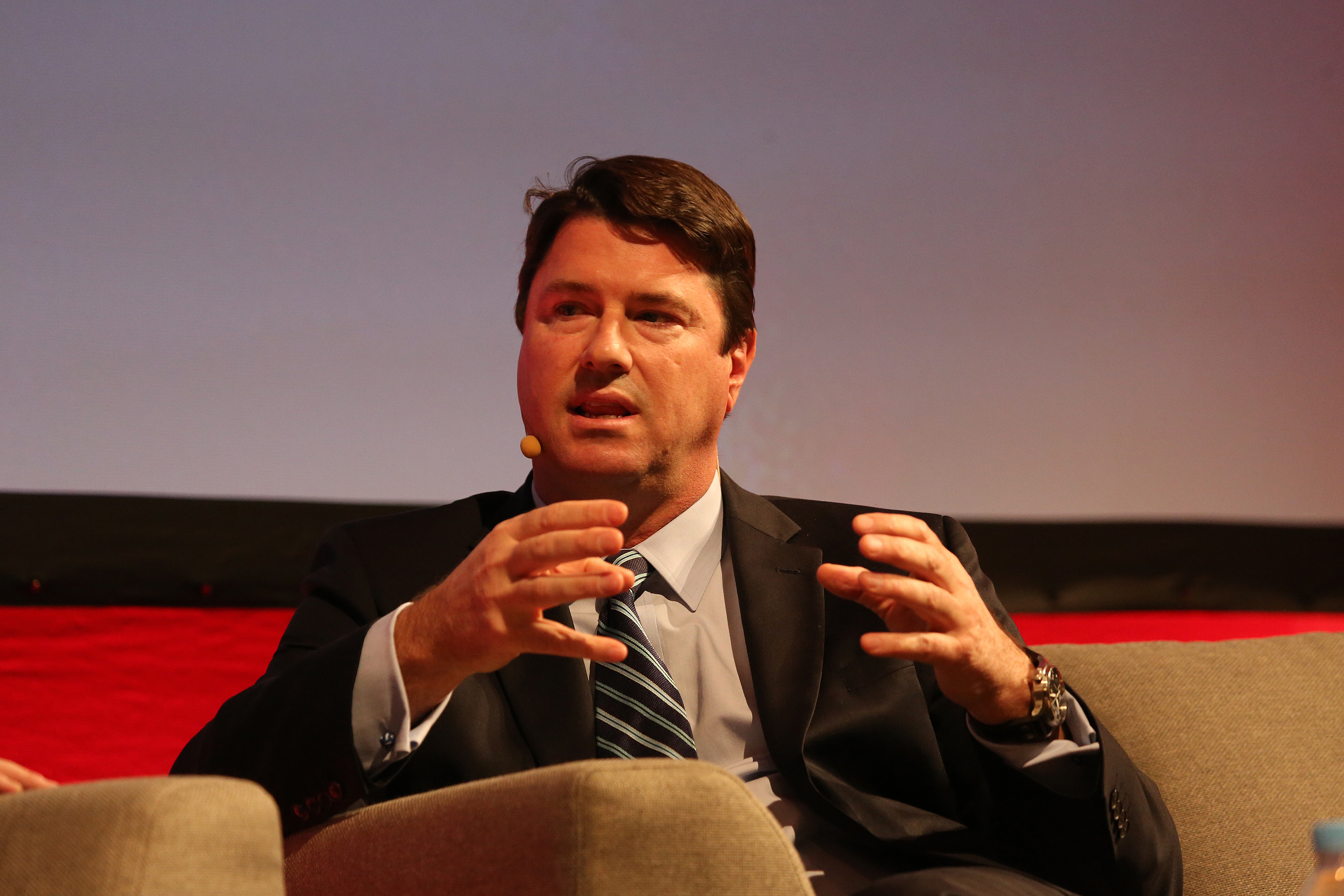
 MEDIATION