awarding, content creating, creator-ing, streaming, trending

The Future’s Behind Us: Dispatches from Cannes Lions 2025

I love the Cannes Lions Festival of Creativity.

There. I said it.

I’ll admit that I’ve had my moments of scepticism over the years, but we need Cannes – perhaps now more than ever.

We need it for the celebration of the work. For the ideas. To shape and focus the industry agenda. We need it to logistically get people in one place at one time. For the opportunities to reconnect with old colleagues and friends – and make some new ones. Because it reminds us of what we do when we’re at our collective best. We need it for all those reasons, and many more besides.

I used also to think that we needed Cannes to show us the future – but I don’t think that’s the case anymore. Because the future has arrived already. We are living inside it.

My take on the vibe at Cannes Lions 2025 was of an industry not bracing for a future to come, but rather one wrestling with the reality of its arrival. It was a thought that dawned on me Tuesday whilst I was talking with a long-time industry acquaintance; that the future has moved from being something rushing towards us – into something that now lies behind us. It simply moved faster than our ability to keep pace with the changes it wrought. And now we’re playing catch up.

And so here we were. Navigating together the shared reality of our transformed world.

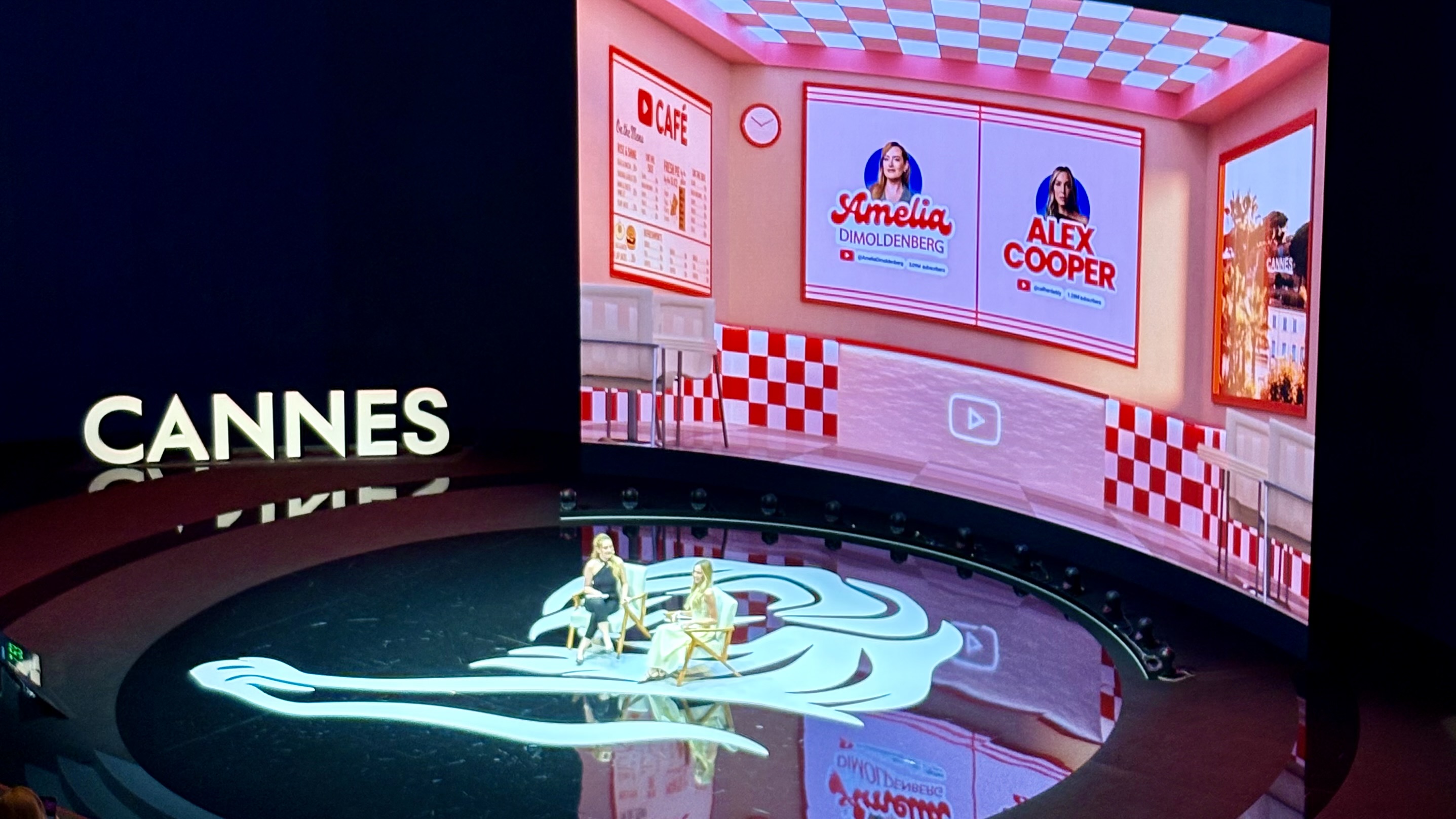
There was no better example of this new reality than YouTube’s presentation in the Palais des Festivals cavernous Lumiere Theatre. Less a presentation than a victory lap, the streaming platform’s CEO Neal Mohan shared with the audience that a billion hours of YT are watched daily on television sets – YouTube is the new TV. With Kaizen – the story of Inoxtag’s Everest climb – he suggested that YouTube creators are also now the new Hollywood start-ups.

Alongside creator content’s expanding influence over the industry is the halo of fan content that accompanies it – often in podcast form. Mohan shared that 1bn people watch a podcast every month on YouTube, noting the power of the connection between creators and fans – observing that “fans don’t follow culture, they shape it … fandom itself is a form of creative expression”.

Brands need not miss out on the action. Chicken Shop Date’s Amelia Dimoldenberg and Call Her Daddy host Alexandra Cooper were on hand to announce the launch of ‘open call’ – a new feature powered by YouTube BrandConnect, which enables brands to discover and partner with creators.

In a blog post, YouTube notes that “Open call gives creators of all sizes the opportunity to pursue new relationships with brands. And brands can lean on the relevance and trust of YouTube creators to get more from their social strategy on YouTube.”

Amelia and Alex put it more bluntly: creators can “take the middlemen out” and work directly with brands.
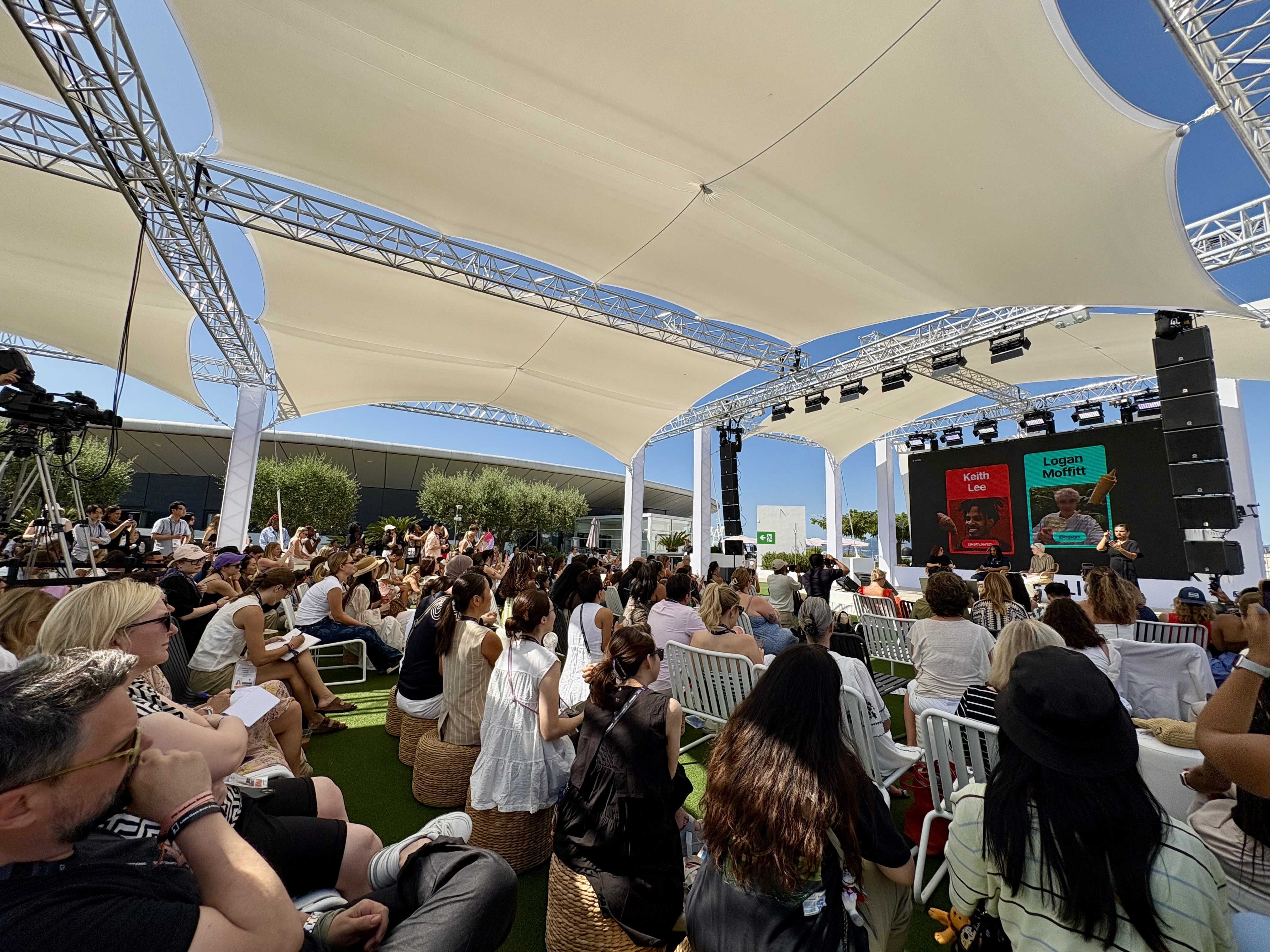
I was left in no doubt about the popularity of creators as the audience began to swell on the Palais’ Terrace Stage Wednesday, not for the excellent daily festival lowdown from Contagious’ Alex Jenkins and Chloe Markowitz – but for the following session featuring TikTok’s Global Head of Business Marketing and Commercial Partnerships Sofia Hernandez in conversation with creators Keith Lee and Logan Moffitt – the latter rocked to fame earlier this year with this viral cucumber salads.

It was bedlam.
Again, that sense that I was sat in a future that had already arrived.

We’re living and working in a world in which creator culture has supplanted the advertising model, in which streaming distribution has overtaken the broadcast model, in which clicks from search engines are declining as the foundations of search evolves – all of it powered by the invisible hand and accelerating force of AI (I got 650 words in without a mention, people).

In response, brands and marketers have changed their strategies and approaches to media and marketing.

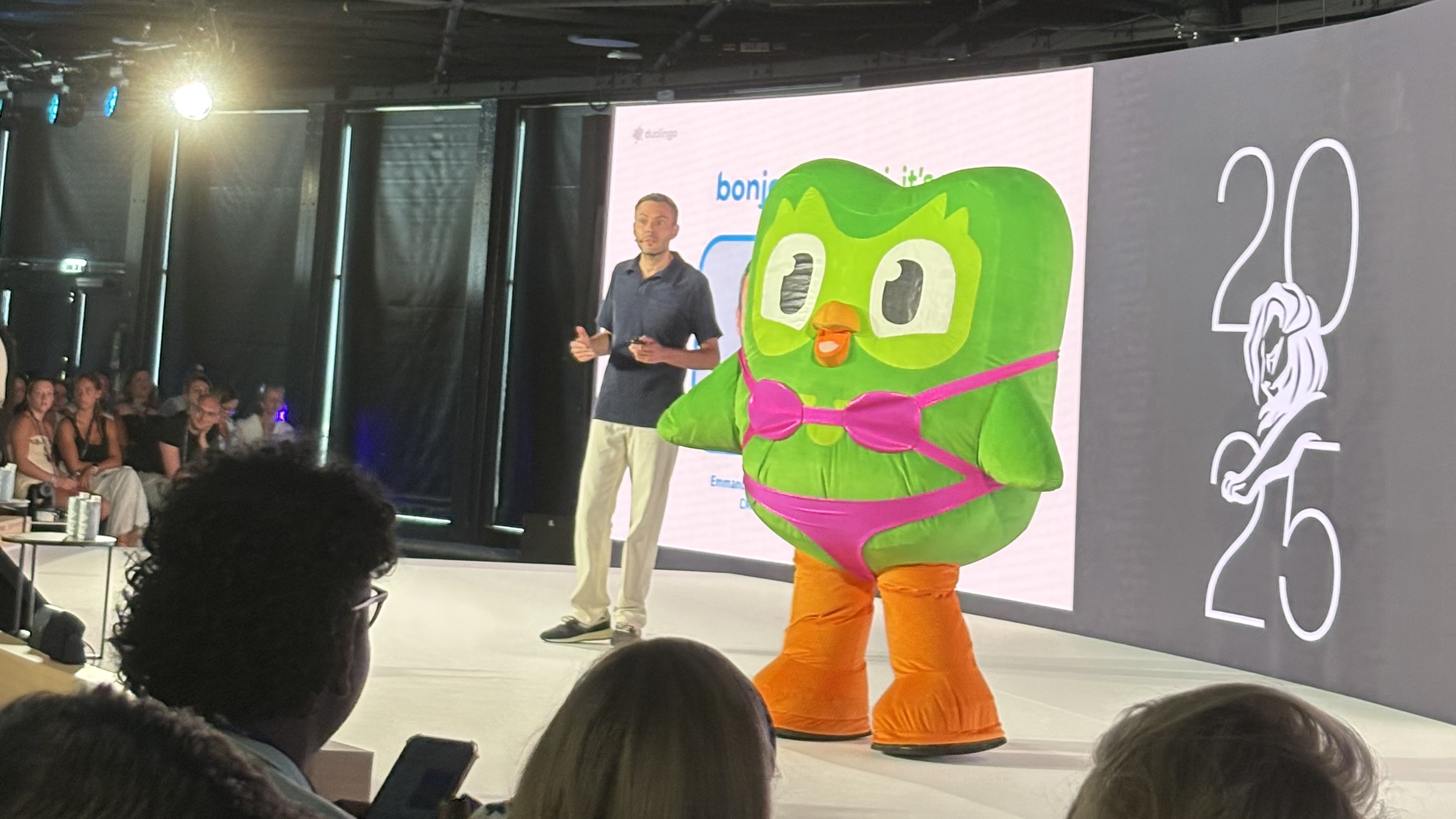
Duolingo’s Emmanuel Orssaud described how the platform eschews the conventional integrated model (too expensive, trying to do too many things, doesn’t get people talking) in favour of a social-first model where 30% of all spend is focussed not on proven effective comms but on “figuring out what else will work”. They’re expanding next into long-form content with a Duolingo Gameshow, and an anime series.
It echoes Liquid Death CEO Mike Cesario’s comments on last year’s Cannes Lions Creative Impact stage in which he shared the brand’s category-redefining approach to marketing. The brand focusses on standing out and being entertaining. The only game in town for Liquid Death is capturing attention, because “if you can get people to stop and look at your product, you’re already ahead of 99% of the market”.

Even the vibe of the awards competition this year felt like a body of work negotiating with itself. The customary smorgasbord of brands’ ideas and innovation were competing with – and often losing out to – their own past body of work.

New campaigns for Apple competed with ten years’ worth of the ‘Shot on iPhone’ campaign’, while Dove’s 2025 entries vied for metal with ‘Real Beauty for Dove’ – a 20-year-long body of work for the brand.

As Contagious’ Alex Jenkins put it – it’s a bit like bringing a gun to a knife fight.

One juror in a post-panel discussion shared with me that brand campaigns competing with the whole back-catalogue of others caused a fair bit of debate. I bet it did. The same juror indicated that they would be referring the issue to Cannes Lions. I can’t imagine it will be allowed to happen again.

So it turns out that the hero of Cannes Lions 2025 wasn’t innovation or ideas, nor was it comms platform vs tactical campaigns, or creativity vs tech or ads vs content or anything vs anything else.

The hero of Cannes 2025 was change itself.

Along La Croisette and in the Palais and everywhere in between was an industry grappling not with the future to come, but with a future that now lies behind us. The current source of unfair advantage is being able to marshal your resources – be they marketing, agency, creator, or anything in between – to leverage better than your competitors the world around you.

It’s tempting to suggest that it was ever thus; but we all know, deep down, that it’s never before been like this.

On stage in the Omnicom Space, Malcolm Gladwell noted that “There is a nobility in failure. [and that] the stories of failure are the most compelling stories that are not being told. The costs of trying crazy shit are not nearly as high as people think. This is exactly the moment to be trying crazy shit and failing!”

Or as Mercado Libre CMO Sean Summers puts it, “The industry is facing a tsunami. The biggest risk, is not taking a risk.”

//

I’ll be publishing more thoughts and perspectives from last week’s festival. Subscribe to catch the rest as soon as it drops.

Standard
conferencing, innovating, machine learning, marketing, retailing, trending

Embracing the Agentic Age: What Mobility Commerce tells us about the Future of Marketing

AI in Everything, Everywhere, All at Once

Walking the convention floors at CES last month, it was impossible to ignore the bigger, brighter screens, smarter cars, more intelligent home devices, and increasingly agile robots. There was a bit more of everything, everywhere, and – because of the impact of AI – it’s all happening at once.

Technologist Shelly Palmer has suggested that “2025 is the year of the realization of AI’s promise,” and it’s hard to disagree. Artificial Intelligence has shifted from hype to reality, becoming deeply embedded in consumer electronics, interactions, and commerce.

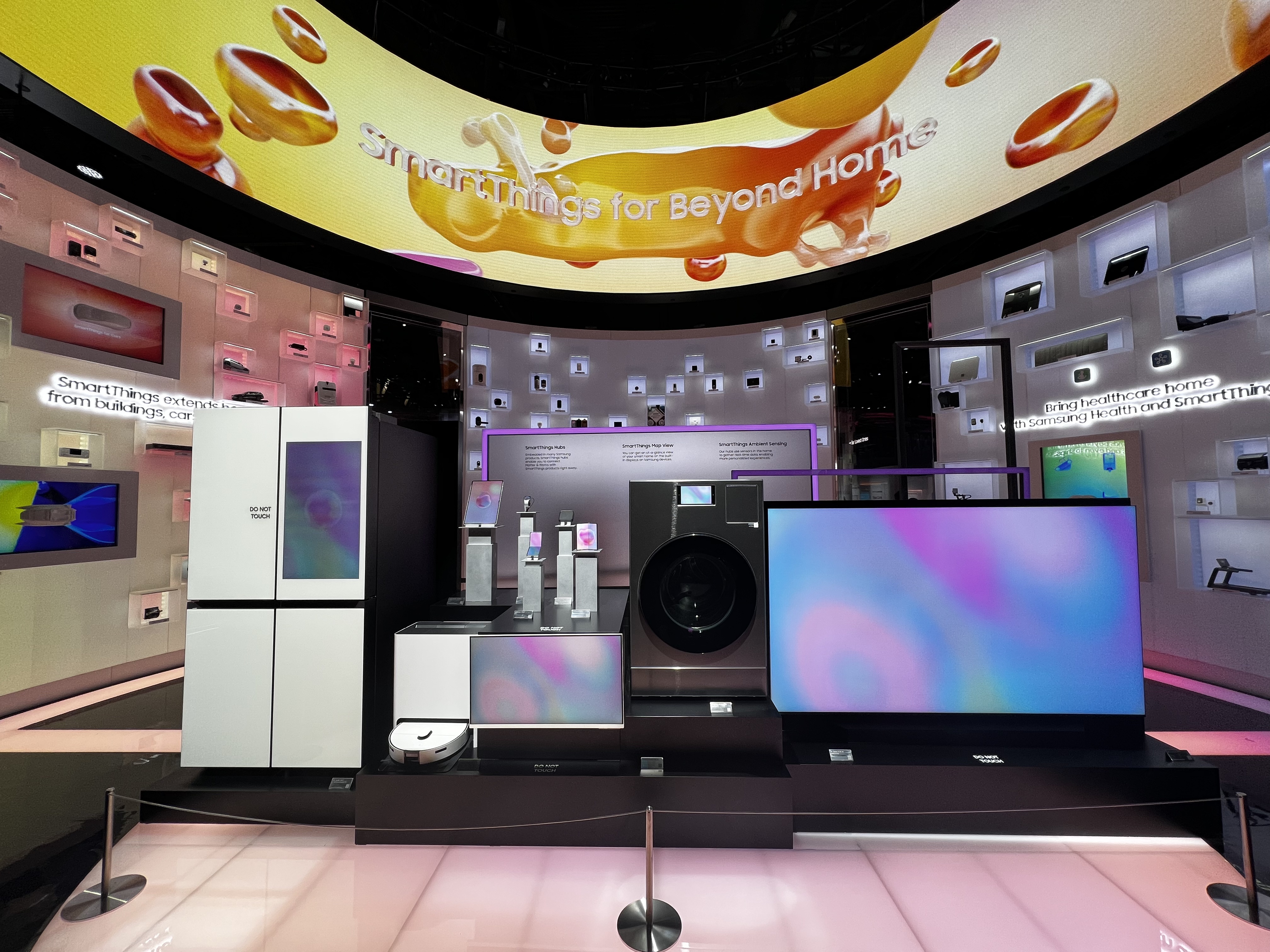
Samsung’s SmartThings appliances displayed on the showfloor at CES

Samsung’s SmartThings Automotive now seamlessly connects EVs to broader smart ecosystems, while Richtech Robotics’ autonomous delivery robots are redefining service efficiency. Meanwhile, LG’s AI home hub and Samsung’s Home AI System illustrate how intelligent agents are integrating into everyday life, transforming how we live, work, and move.

But the most pivotal force behind this revolution is Nvidia. At CES, they launched their RTX 50 GPUs, pushing AI-driven gaming and content creation to new heights. They also introduced the Cosmos family of foundational AI models, designed to train humanoid and industrial robots, as well as vehicles for autonomous mobility. The era of agentic AI is here.

The Emergence of the Software-Defined Vehicle

The automotive industry is undergoing a fundamental shift, evolving from hardware-driven machines into software-defined experiences. Nvidia’s Cosmos AI model is at the forefront of this transformation, enabling advanced self-driving capabilities. Trained on 20 million hours of human activity footage, it generates photorealistic simulations that help self-driving cars better understand and navigate real-world environments.

By leveraging synthetic data, developers can train AI systems more efficiently and cost-effectively, reducing reliance on real-world testing. Companies like Uber are already using Cosmos to accelerate their autonomous driving efforts, while Waymo expands its self-driving taxi operations and Honda’s ASIMO OS introduces “ultra-personalized” vehicle interfaces powered by over-the-air updates.

This shift has given rise to the software-defined vehicle (SDV), where traditional metrics like horsepower and acceleration take a backseat to comfort, connectivity, safety, and sustainability. SDVs—along with their supporting ecosystems—were everywhere at CES, signaling a future where cars are more than just a mode of transport; they are destinations in themselves. Think relaxation spaces, content hubs, gaming centers, and even commerce platforms on wheels.

The New Marketing Canvas of Mobility Commerce

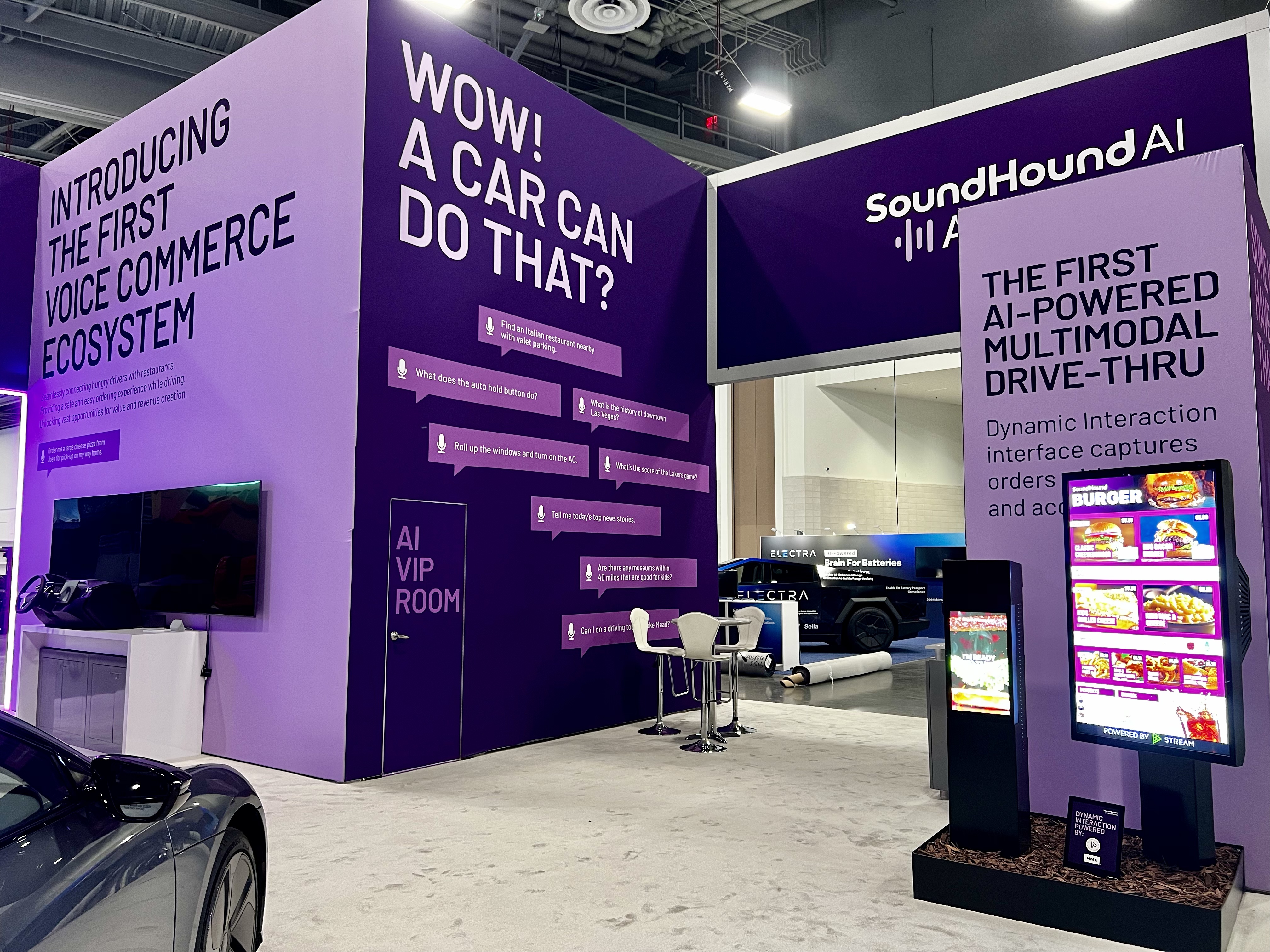
Mobility commerce is fast becoming a frontier for innovation, and CES showcased the technologies set to power it. Take SoundHound AI’s voice-based commerce platform, for example—it allows drivers to order food, pay for services, and access real-time data directly from their car’s infotainment system.

The SoundHound booth at CES demonstrated a custom voice commerce ecosystem

AI-powered interfaces like these go beyond convenience; they enhance the ownership experience while unlocking new revenue streams, increasing the lifetime value of car owners. As vehicles become personalized media and commerce hubs, they create fresh opportunities for brand engagement.

In-car voice assistance is also evolving into richer, multidimensional conversational experiences. The private environment of a vehicle provides a unique space for seamless content consumption and commerce through natural voice interaction. This not only enhances the driving experience but also presents new possibilities for marketing—delivering contextual recommendations and unlocking new monetization models.

Marketing in the Agentic Age

The SDV is just one example of how the agentic age—a world navigated and intermediated by AI agents—is taking shape. The marketing implications are profound.

With AI automating interactions across search, content discovery, and customer service, consumer journeys are increasingly shaped by AI-driven recommendations. Whether through home assistants, automotive voice interfaces, or AI-powered search engines, customers will increasingly rely on digital agents to make decisions for them.

For some categories and brands, this means marketing directly to AI agents. Yet, human engagement remains critical. Brands now have unprecedented tools to create Generative AI-enhanced marketing experiences, from producing high-impact advertising that was previously cost-prohibitive to delivering hyper-personalized web experiences.

AI-powered assistants and avatars can guide potential buyers through product discovery, offering dynamic, customized interactions. The ability to generate tailored content at scale will be a major competitive advantage in this new era of AI-first marketing.

The Evolution of Search and Brand Discovery

Search is evolving at an unprecedented pace, moving beyond keyword-based queries to AI-driven, solution-focused interactions. Consumers are shifting from traditional search engines to AI assistants, social commerce, and e-commerce platforms for discovery.

According to Omnicom Media Group, nearly 40% of consumers in key markets now use LLMs like ChatGPT for search, while 76% rely on platforms like Amazon. Even smart TVs are emerging as search engines, enabling users to browse content via AI-powered voice commands. Meanwhile, consumers no longer rely on a handful of trusted reviewers; they can query and analyze reviews across multiple platforms using AI.

This shift demands a fundamental rethink of visibility strategies. Traditional SEO is no longer enough—discovery now happens across a fragmented ecosystem, from social video platforms to generative AI assistants. Brands must focus on “share of model” (how often they are referenced in AI-driven search results), deploy LLM-specific tracking, and optimize structured comparison data for AI crawlers.

Transforming the Marketing Experience

The shift from SEO to GEO (Generative Experience Optimization) is just one part of a larger marketing transformation, which was on full display at CES. As homes, vehicles, and workspaces move from smart to intelligent, the entire landscape of brand discovery, purchase, and experience is evolving.

2025 is set to be a landmark year for AI, search, creator-led marketing, and innovation. As these trends redefine consumer expectations, brands must adapt their marketing strategies to align with a world where AI, personalisation, and digital-first experiences drive engagement and growth.

Standard
predicting, trending

Mapping & Mining the Future: How an Innovative & Imaginative Approach from What’s Next is making future-reading more accessible for us all

Predicting_the_future_map_Richard_Watson
the above screengrab is from a really rather glorious TRENDS & TECHNOLOGY TIMELINE 2010+ conceived, created and – courtesy of creative commons – shared with the world by Richard Watson at Nowandnext.com.  you can view the whole thing here.  its worth it.  do it now.

its a complicated thing for a complicated subject…  how do you aggregate let alone predict the various and multiplicitous future offerings that a speeding-up tech-driven lived-in-real-time world will bring?  well, you imagine a London tube map where stations are trends, lines are broad themes or topics and the further away from zone 1 you get the further into the future you travel, and it turns out you're in pretty good shape.

as Watson observes, "Predicting the future is a dangerous game — the future is never a straight, linear extrapolation from the present. Unexpected innovations and events will conspire to trip up the best-laid plans — but it’s still better than not thinking about the future at all"  …well worth printing in A3 and sticking near your desk.

not surprisingly, given the whole dawning of a new decade thing, recent weeks have seen a deluge of predictions and future trend observations emerge; and in another philanthropic move, Syamant of futurechat has aggregated a whole load of them into one place for us.  dive in a go future-exploring.

all this is important.  its important because as media and message blur, the recommendations we make to brands can't just be what to say and where to say it.  an application – for example – is neither media or message, its a blur of both.  our recommendations instead have to be developed and built around identification of the topics and themes that exist for a brand or organisation to potentially say something about, and indeed why its relevant for a given brand to be involved in a particular area.

predicting the trends of tomorrow doesn't just provide an academic sojourn into what may come to pass… rather it gives anyone involved in communications planning starters for ten on the topics and themes that will impact and change our lives.  and understanding and explaining to which of those a brand should connect is some of the most valuable advice we can give.  let the future commence.

Standard