co-creating, collaborating, community-building, content creating, creator-ing, realtiming

Streaming’s Next Decade: From Ads to Audiences – and Why Creators are Set to Win

I evaluated in my previous post some media and marketing predictions I made in late 2014. Netflix had announced their arrival in Australia for the following March. My expectation that content would win out over channel, that ability to deliver on desire for choice on-demand would determine growth, and that programmatic would swallow huge swathes of the industry – have all proved I think, largely, true.

My prediction however that the industry would largely fall out of love with the ‘ad’ didn’t come to pass as expected. Adverts have remained the predominant unit of currency for paid branded messaging.

Instead, the group that capitalised on the opportunity as I saw it – to create “platform-neutral content strategies that can adapt to platform and context more quickly – generating more relevance for brands’ comms” were not brands, but creators. The “native content in video form” that I foresaw becoming predominant in video did come to pass, but with a generation of content creators – rather than brands – at the helm.

For many brands and marketers, success is now dependent on engaging and fuelling this generation of content creators – who intermediate between products and services on one hand, and customers and consumers on the other.

Last week saw two awesome examples of this now established marketing model in practice.

How Capcom Inspire an Army of Creators to Fuel Monster-Hunting

Monster Hunter Wilds, which released worldwide on February 28, has had a great launch. Within the first three days, the game sold over 8 million copies (it’s now over 10m), setting a record as Capcom’s fastest-selling title. On Steam it attracted more than 1.3 million concurrent players shortly after launch, securing a position among the platform’s top 10 most-played games by concurrent users.

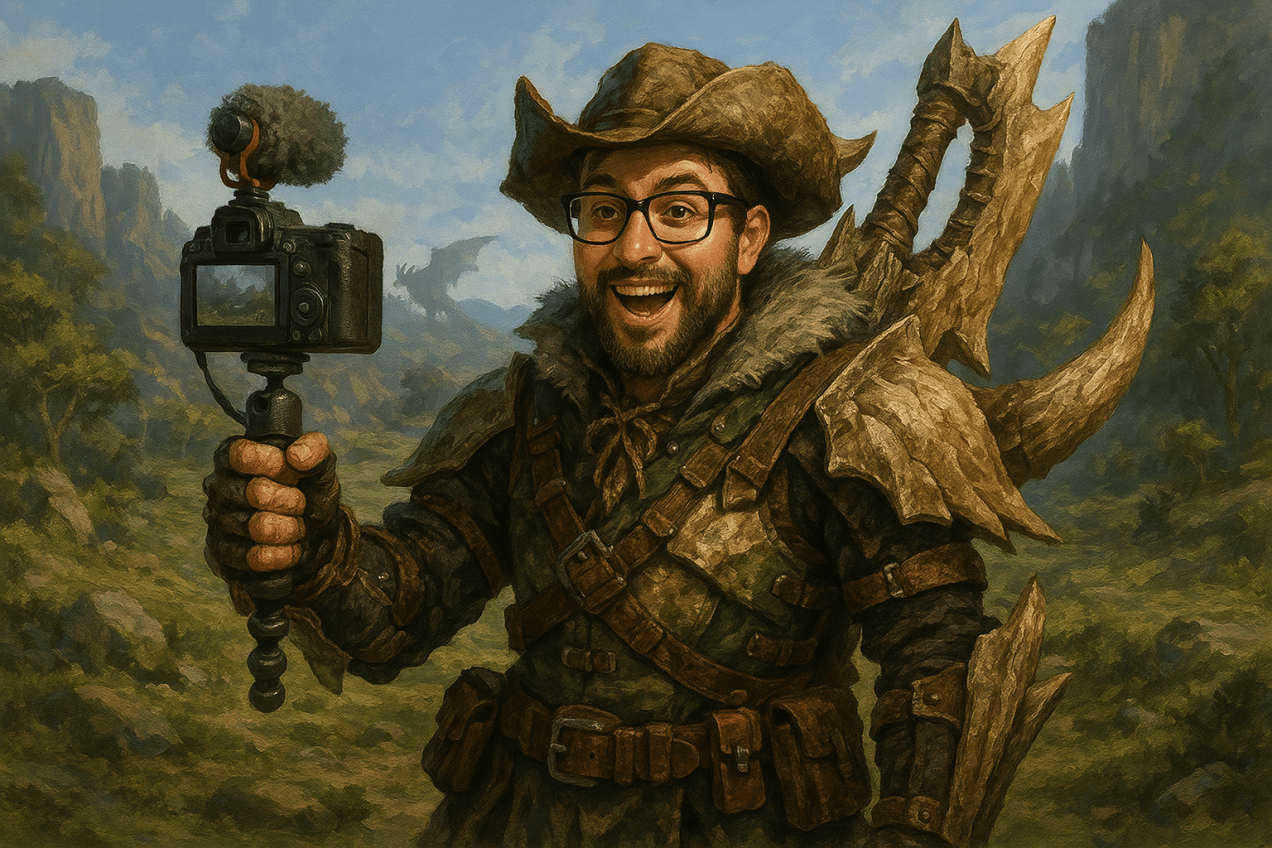
Whilst this success wouldn’t be possible without a great product – Wilds has been critically well-received, earning 90 out of 100 on Metacritic with reviewers praising engaging combat, impressive creature design, and innovative gameplay features – its success is also down to a determined effort to engage audiences thru the game’s affiliated army of creators.

Last Tuesday’s Monster Hunter Wilds Showcase, hosted by producer Ryozo Tsujimoto, revealed the first free update, which is scheduled for this coming Friday. The content is relevant of course for people who play the game (declaration: I’m 49 hours in and counting), but I’d suggest that’s not the primary audience for this content.

Rather, Tuesday’s content was designed and deployed not primarily for the game’s 10m players, but for creators. The update had more than enough new information to fuel new content, but enough details held-back and teased to allow room for all-important speculation and prediction. This video from the awesome Khraze Gaming channel is a great example.

There’s now a very established – and mutually beneficial – relationship between the Monster Hunter Wilds dev team and the game’s content creators. The game’s owners are supporting their community of content creators, who in turn are producing content to build their community of subscribers.

This isn’t all one-way. There’s been plenty of pushback from hardcore fans of the series, critical that the game is too easy. But the devs aren’t shying away from this. They are embracing this community feedback, in an open letter this week announcing that:

“We would also like to thank you for the many comments, thoughts and feedback we have received since the game was released.

The development team has been reading your feedback, and we are encouraged by it. We are also using the comments and feedback we have received to help us plan our future actions.

Future updates will see more Tempered Monsters (★8) added to the game … And for even more of a challenge, Arch-tempered monsters will make an appearance. These are even stronger versions of tempered monsters.”

Another masterful example of a marketing team engaging and fuelling content creators was from Marvel.

How Marvel Inspired Creators to Create with a Five-Hour Plus Livestream

In this even more astonishing and finely-tuned example of the marketing-to-creators model, Marvel revealed the cast of the now-in-production Avengers Doomsday via a five hour plus live-stream – with a new cast member being revealed on the back of a director’s chair every 12 minutes. The announcement concluded with Robert Downey Jr. – who will play Doom in the strategically crucial film for Marvel – walking out to sit in the final chair and asking the audience to be quiet on set.

Just to reiterate in case you read that quickly – the Avengers Doomsday cast reveal announcement video was a panning shot of 27 director’s chairs … which lasted five and a half hours.

This clearly is content designed not to be watched by audiences. Rather – just like Monster Hunter Wilds – its content precision-made for creators. Content machine-tooled to be poured-over in crazy detail in real-time by an army of creators (many of whom are of course huge fans).

Creators like The Breakroom team, who scrambled into their studio to livestream their discussions and reactions to the Avengers announcement video, in real-time. A livestream of a livestream. Marvel designing and deploying content for creators.

This is the new and now established model. Content from brands tailor-made for creators, designed to fuel the production of content for their audiences. Creators are the intermediaries and amplifiers of brand messaging. Communities are maintained and managed not directly by brands, but by a team of creators the literal job of who is to drive engagement with audiences for brands; either because they are fans, or their income depends on it – and in reality, usually and probably both.

This is what will underpin brand success over the next decade of video.
This is a model about to be supercharged by next-generation AI production capabilities.
This is what marketing precision at scale really looks like.
Standard
advertising, content creating, creator-ing, predicting, streaming

Streaming’s First Decade: Three Predictions I Got Right – and One I Called Totally Wrong

It’s been ten years to the month since Netflix launched in Australia (where I was lucky enough to be working at the time). A decade on, it’s worth reflecting on what’s changed, what I called right, and what caught me (and the industry) off guard.

There’s been some great commentary from Tim Burrowes both via Unmade (paywalled) and on the MediaLand podcast about the impact of the streamers on the broader media landscape down under. In a Mediation post back in 2014, I made some predictions about what the arrival of streaming would mean for marketing in Australia, and the broader media landscape.

I think I mainly called it right.

Three Out of Four Ain’t Bad: Three Predictions That Nailed It (and One That Didn’t)

Prediction one: “In the immediate term there is undoubtedly going to be a firestorm for views and scale – brace for plenty of press releases in the first quarter of 2015 about content deals, views and reach. in the medium term this will play out in a battle for content – with many shows already locked away in local deals, there will be fierce competition between the platforms as distribution rights cycle into play.”

Verdict: Totally called it. The fight for content has not only played out between the streamers, but more broadly across the industry as legacy broadcasters and streaming platforms battled for the content that will drive and retain subscribers. In Australia that battle continues to this day, with the launch of Max on Monday locking HBO’s content library onto the platform – and the arrival of ESPN on Disney+ introducing an additional potential bidder for many of the market’s upcoming sports rights negotiations. Content has, for the last decade, remained king and has been a key defining element of the success – and conversely the struggles – of the streaming platforms.

Prediction two: We’ll see “a radical shift in viewer expectations. more choice, more freedom to choose what we watch and where, how and when we watch it. This future has been a long-time coming and has been with some for much longer than others”.

Verdict: Two for two. If anything has defined streaming’s impact, it’s the expectation of choice, on demand. That expectation has spilled beyond streaming—into podcasts, and even cinema. The streaming age taught many of us that, for the typical movie, it was easier to wait and watch at home – a behaviour reinforced by ever-reducing windows between theatrical and home release.

As the Entertainment Strategy Guy put it in a recent post, we’re drawn to the cinema now for ‘events’; “the actual most popular “genre” isn’t really a genre, but a style: exciting. People go to the movies to see spectacle, which often means action or exciting set pieces …18 of the top 25 films [in the US 2024 box office] have a lot of action set pieces. (Even Wicked ends with one).”

Prediction three: “With increasingly fragmented and diverse platforms and viewing services, advertisers and their agencies will increasingly rely on programmatic solutions to build reach quickly.”

Verdict: Absolutely. Over the past decade, programmatic advertising has transformed the industry by enabling real-time bidding, automating media buying, and enhancing targeting capabilities. On one hand, this shift has driven greater efficiency, has undoubtedly improved ROI, and empowered marketers to deliver more personalised experiences. But it’s also led to concerns about transparency, data privacy, and brand safety – not to mention the broader impact of an over-reliance on short-term, performance-based media on brands and long-term brand-building. It’s all our jobs to ensure we build tech that will serve us better over the next – AI-powered – decade, than we did for the last.

Prediction four: “Many advertisers and ad agencies will finally be forced to break out of the ‘advert’ model – using instead platform-neutral content strategies that can adapt to platform and context more quickly – generating more relevance for brands’ comms. think native content in video form.”

Verdict: So this one is a lot less clear. I genuinely thought back in 2015 that the industry’s long-held affinity for the ‘advert’ would wane. I thought the classic ad, so effective in the broadcast age, wouldn’t survive in a streaming world; a world in which tolerance for content interruption would be significantly reduced.

I was genuinely wrong on that. The power of the ‘ad’ holds sway to this day. The industry didn’t wholesale move on from the ad. It didn’t predominantly leverage more diversified content and ideas-based marketing to create fewer, better, more transformative experiences for audiences.

Too expensive. To difficult to scale and measure. Too hard.

Only it wasn’t.

Because while the industry remained predominantly stuck in ad-land, the last decade has seen a content revolution that has more than delivered on my prediction of ‘native content in video form’.

Native Creators: The Creator Economy Delivered What Marketing Didn’t

In parallel to the growth of streaming over the last ten years, the creator economy had, by 2023, blossomed into a $250 billion industry. This expansion is projected to continue, with estimates suggesting the market could reach $480 billion by 2027.

A report last year (admittedly from YouTube) found that an astonishing 65 percent of Gen Z responders self-identified as video content creators. The number of content creators worldwide has surpassed 200 million, reflecting the increasing appeal of content creation as a profession. The market for global influencer content has more than tripled since 2020, reaching approximately $33 billion in 2025.

It seems trite to point-out that this incredible growth – and it is incredible – is largely down to the fact that creator-made content is typically significantly more engaging than traditional ‘adverts’; it feels authentic, personal, and tailored to specific communities … because it IS authentic, personal, and tailored to specific communities.

Audiences tend to trust creators they follow, viewing their recommendations as more genuine and relatable than polished brand messaging—leading to higher attention, interaction, and emotional connection.

The prediction I made a decade ago suggesting that the industry’s ad-venture would come to an end was correct, it just turned out to be a generation of creators – powered by platforms like YouTube and latterly TikTok – that delivered on that strategic opportunity of ten years ago. The great irony of course is that advertisers did end up being an integral part of this creative content revolution; they were the money.

In other words, it wasn’t the brands who changed the game—it was creators and their audiences. And it’s that shift – from ads to creator-audiences – that will define the next decade of streaming.

Standard
converging, fragmenting, podcasting, streaming

Netflix’s Next Move? Video Podcasts – And Why Marketers Need to Be Ready

Business Insider reporting this week suggests that Netflix is exploring deals with prominent podcasters. According to sources ‘familiar with Netflix’s strategy’, “Netflix insiders had warmed to the idea of tapping podcasting talent to host a talk-based video show, after previously expressing scepticism that the format could work on the platform.”

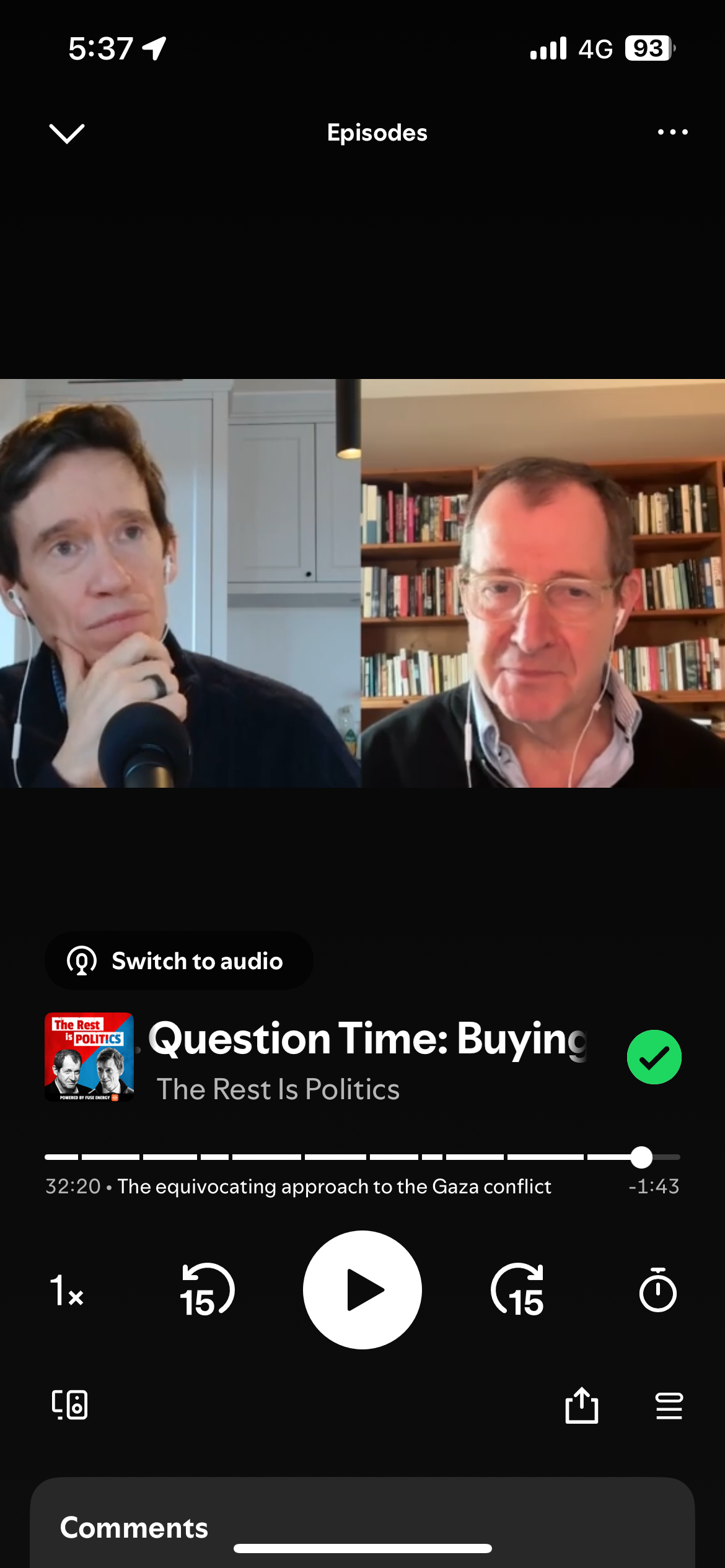
The availability of the podcast in video form has been surging of late. Most notably on YouTube – where prominent podcasters have been streaming their conversations for a good while now – but also on Spotify, where earlier this year I was surprised to see Alistair and Rory of the popular The Rest is Politics podcast pop-up within my Spotify app in video form.

Rory Stewart and Alastair Campbell, hosts of Britain’s biggest podcast The Rest Is Politics, popping up in video form on Spotify

Spotify pivoting to become a video streaming channel is just one part of a wider – and sizable – convergence into the video format, which in many ways represents one of most significant shifts in media and content consumption of recent times.

Forces of Fragmentation and Consolidation

When the industry initially debated fragmentation in the media landscape it was, generally, in reference to channels. Back in olden days when I started planning you basically had TV, print (both newspapers and magazines no less), radio, outdoor – plus something we called ambient media (out of home contextual ideas that popped up to generally surprise and delight urban audiences).

Digital was nascent, and streaming was still way over the horizon (I still have the presentation I gave to a major UK TV broadcaster client in around 2005 communicating the existence of a website I thought they should be paying attention to, called YouTube).

Since then, one of the seismic forces shaping media planning and strategy has been fragmentation. But it wasn’t channel fragmentation – which has been more than countered by consolidation within digital platforms over the last two decades.

2024 global advertising revenues surpassed $1 trillion. Major technology companies—specifically Alphabet (Google), Meta (Facebook), Amazon, Alibaba, and ByteDance — collectively accounted for over half of this expenditure source. EMarketer reports that in the US, Amazon, Apple, Meta, Microsoft, and Alphabet last year attracted nearly two-thirds of digital advertising dollars. The media landscape has many issues, platform fragmentation is not one of them.

What has fragmented is attention. The platforms that now dominate media have distributed audiences – which poses an ongoing challenge for brands looking to leverage Ehrenberg Bassian principles to reach as many light and non-buyers of their products in advance of an many purchase occasions as possible.

Advertisers are chasing, and demanding, scale … which is where Netflix’s potential foray into podcasts comes in. The streamer announced last year that it would stop reporting quarterly subscriber numbers from Q1 2025 – a sign interpreted by many in the industry that future growth from more subscribers was expected to plateau. Growth for Netflix must come next from driving increased time spent on the platform: in particular amongst subscribers to the ad-tier where a consistent source of advertiser-friendly audiences in a strategic priority.

Netflix’s Podcast Move

Enter podcasts … a potentially dreamy next step in their ongoing conquering of the video landscape. Let us count the ways in which Netflix must be salivating over the potential of the video podcast:

• Low barriers to entry and production costs
• In-built reach from influencer hosts (I find it significantly more useful to think of – and plan – podcasters as influencers and creators, rather than hosts) – which at the head drives scale, and into the tail offers relevance for selling on to advertisers
• Long dwell times, creating consistent high volumes of impressions and platform engagement (remember some podcast episodes are longer than the average movie run time).

Netflix are uniquely placed to take advantage of the opportunity. Video content platforms have always largely divided along two lines: professionally-created content (Netflix, legacy broadcasters offering BVOD etc, legacy conglomerates such as Disney+ and Paramount+ etc), and creator content (such as YouTube and the majority of video on social platforms). The former have never really wanted to do the latter, and the latter have struggled to do the former.

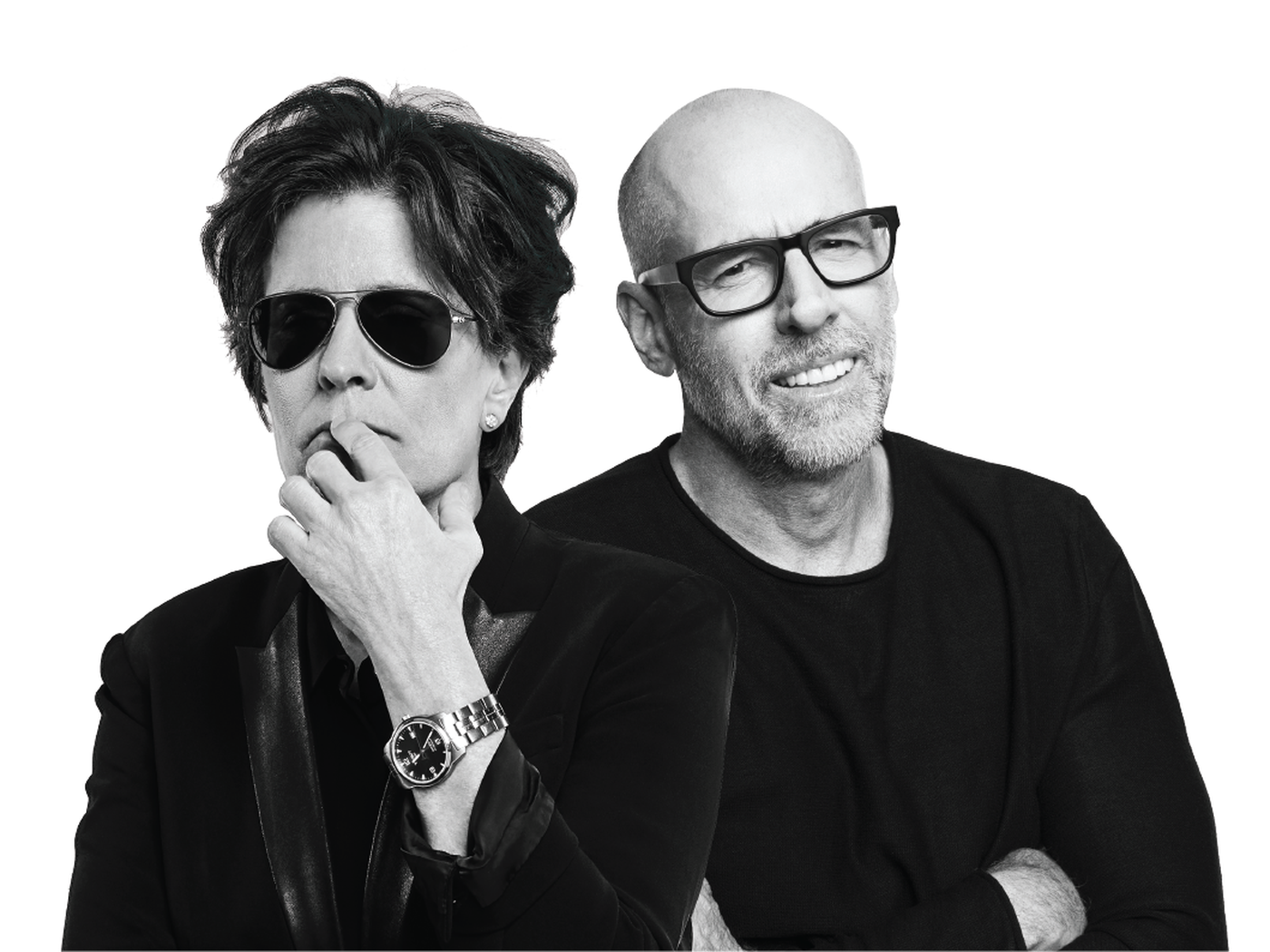
Netflix can genuinely move to deliver both professionally-created, and now premium creator content via high-reaching quality podcasts. I’d be stunned if Kara Swisher and Scott Galloway – who are currently in renewal negotiations with Vox Media for the home of their wildly successful Pivot podcast – weren’t talking to Netflix about taking the show to the streamer … opening the opportunities for the Pivot brand itself to expand into a range of video formats and series on the platform.

Kara Swisher and Scott Galloway – of the Kara and Scott Universe – hosts of the wildly popular Pivot podcast … a move to Netflix would make strategic sense

What This Means for Marketers

For marketers – this is all upside. Yes, it will mean more of that fragmented attention being sucked behind the Netflix walled garden, but if packaged up right it opens large swathes of addressable audiences in one targetable place – as well as scale, along with depth and diversity, of those audiences.

To succeed, marketers will need big proprietary data sets to create effective audiences to buy from Netflix, the agency support to build significant and meaningful partnerships and JVPs with the streamer (as well and others) that gets access to the best talent on the platform, and – most importantly – have an idea that can travel.

Because my hunch is that if Netflix push the podcast video door open, and if they can scale it and commercialise the audiences, then it’s the brands with clear, big (sorry) ideas that can be co-owned and co-created with Netflix’s creator community – that will be the brands that succeed. It would be such a shame for Netflix to sit astride a converged platform offering video podcast shows created by such talented influencers – only for brands to spot-buy their way into the party.

Standard