awarding, content creating, creator-ing, streaming, trending

The Future’s Behind Us: Dispatches from Cannes Lions 2025

I love the Cannes Lions Festival of Creativity.

There. I said it.

I’ll admit that I’ve had my moments of scepticism over the years, but we need Cannes – perhaps now more than ever.

We need it for the celebration of the work. For the ideas. To shape and focus the industry agenda. We need it to logistically get people in one place at one time. For the opportunities to reconnect with old colleagues and friends – and make some new ones. Because it reminds us of what we do when we’re at our collective best. We need it for all those reasons, and many more besides.

I used also to think that we needed Cannes to show us the future – but I don’t think that’s the case anymore. Because the future has arrived already. We are living inside it.

My take on the vibe at Cannes Lions 2025 was of an industry not bracing for a future to come, but rather one wrestling with the reality of its arrival. It was a thought that dawned on me Tuesday whilst I was talking with a long-time industry acquaintance; that the future has moved from being something rushing towards us – into something that now lies behind us. It simply moved faster than our ability to keep pace with the changes it wrought. And now we’re playing catch up.

And so here we were. Navigating together the shared reality of our transformed world.

There was no better example of this new reality than YouTube’s presentation in the Palais des Festivals cavernous Lumiere Theatre. Less a presentation than a victory lap, the streaming platform’s CEO Neal Mohan shared with the audience that a billion hours of YT are watched daily on television sets – YouTube is the new TV. With Kaizen – the story of Inoxtag’s Everest climb – he suggested that YouTube creators are also now the new Hollywood start-ups.

Alongside creator content’s expanding influence over the industry is the halo of fan content that accompanies it – often in podcast form. Mohan shared that 1bn people watch a podcast every month on YouTube, noting the power of the connection between creators and fans – observing that “fans don’t follow culture, they shape it … fandom itself is a form of creative expression”.

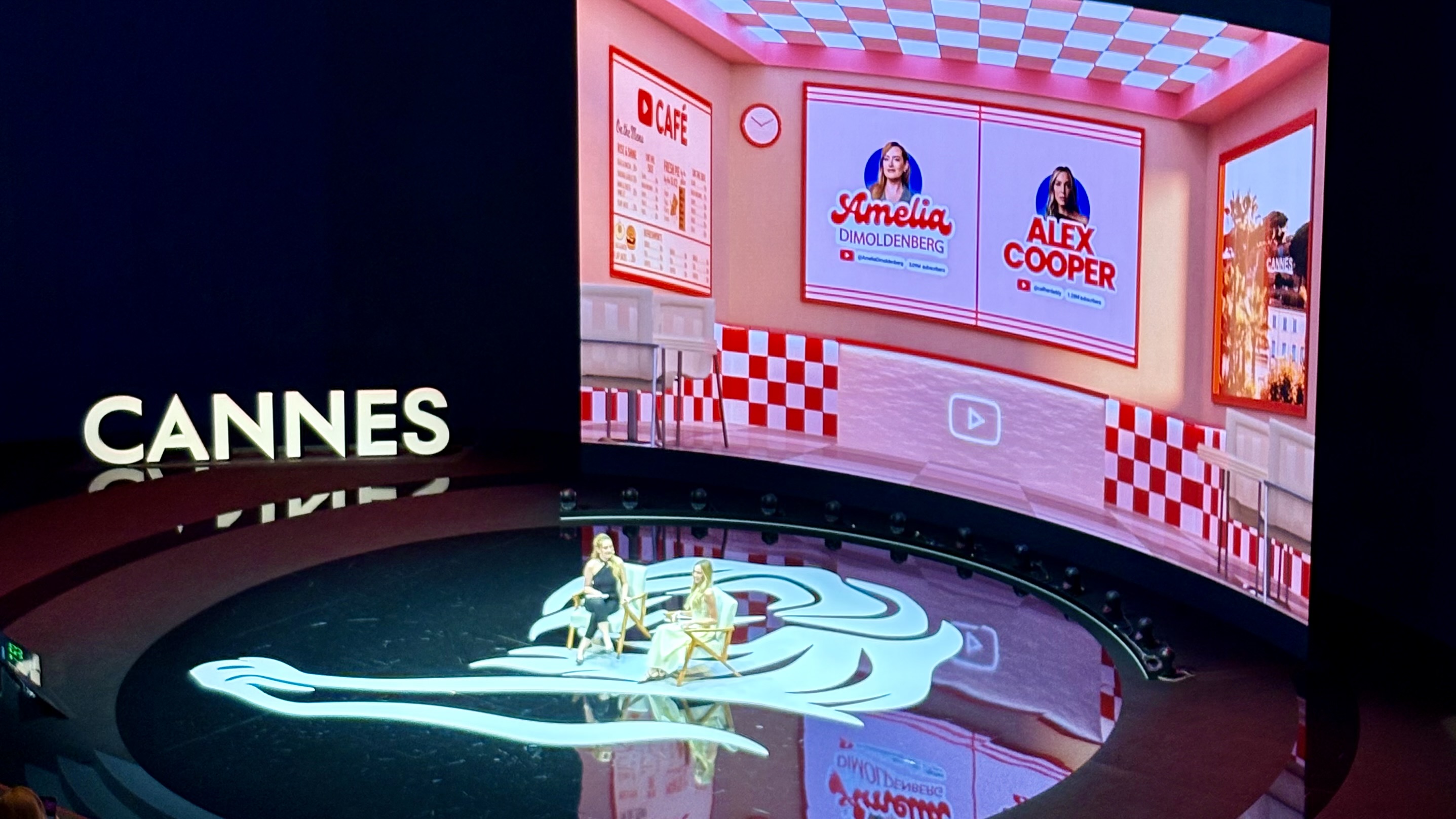
Brands need not miss out on the action. Chicken Shop Date’s Amelia Dimoldenberg and Call Her Daddy host Alexandra Cooper were on hand to announce the launch of ‘open call’ – a new feature powered by YouTube BrandConnect, which enables brands to discover and partner with creators.

In a blog post, YouTube notes that “Open call gives creators of all sizes the opportunity to pursue new relationships with brands. And brands can lean on the relevance and trust of YouTube creators to get more from their social strategy on YouTube.”

Amelia and Alex put it more bluntly: creators can “take the middlemen out” and work directly with brands.
I was left in no doubt about the popularity of creators as the audience began to swell on the Palais’ Terrace Stage Wednesday, not for the excellent daily festival lowdown from Contagious’ Alex Jenkins and Chloe Markowitz – but for the following session featuring TikTok’s Global Head of Business Marketing and Commercial Partnerships Sofia Hernandez in conversation with creators Keith Lee and Logan Moffitt – the latter rocked to fame earlier this year with this viral cucumber salads.

It was bedlam.
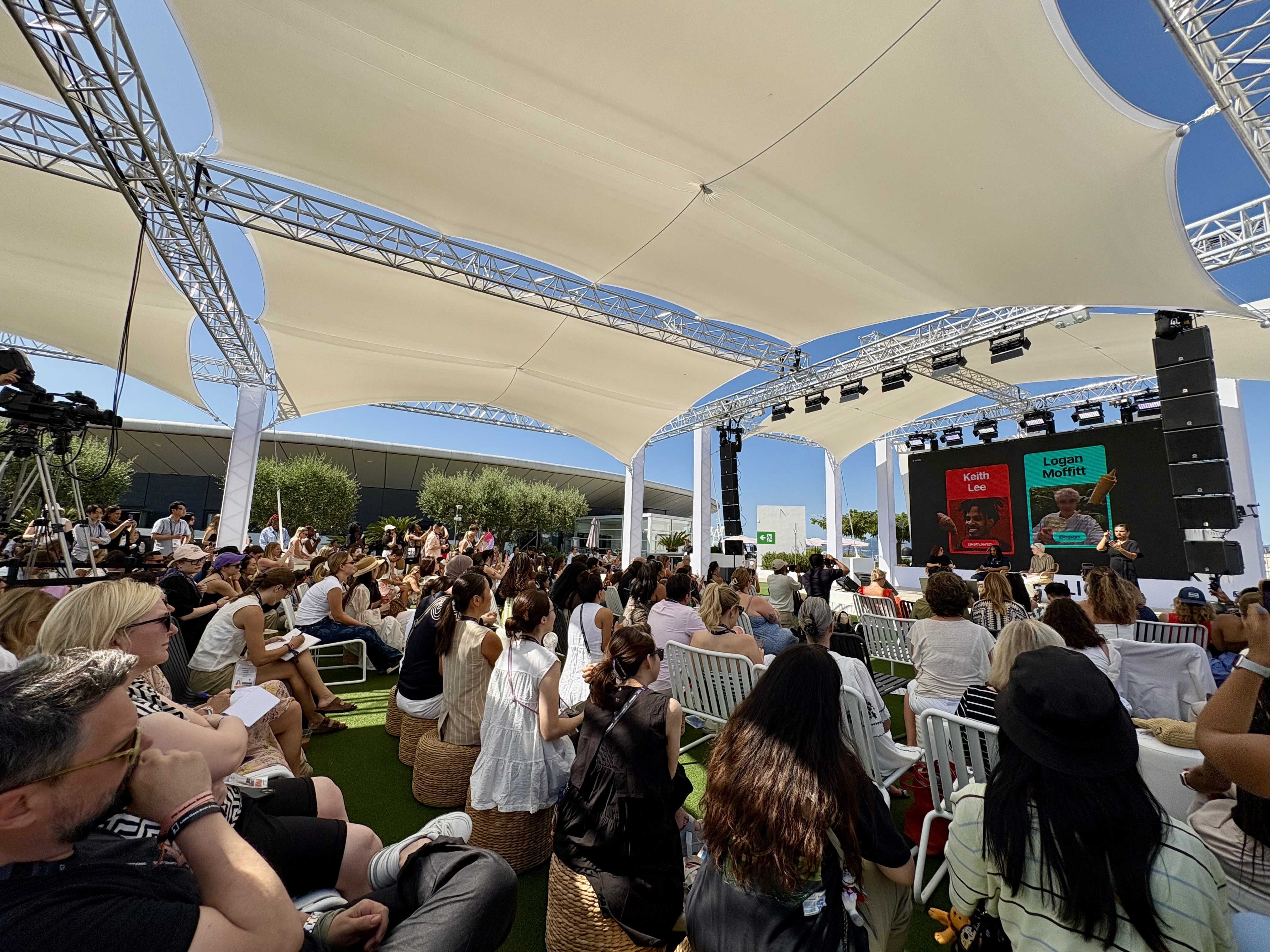
Again, that sense that I was sat in a future that had already arrived.

We’re living and working in a world in which creator culture has supplanted the advertising model, in which streaming distribution has overtaken the broadcast model, in which clicks from search engines are declining as the foundations of search evolves – all of it powered by the invisible hand and accelerating force of AI (I got 650 words in without a mention, people).

In response, brands and marketers have changed their strategies and approaches to media and marketing.

Duolingo’s Emmanuel Orssaud described how the platform eschews the conventional integrated model (too expensive, trying to do too many things, doesn’t get people talking) in favour of a social-first model where 30% of all spend is focussed not on proven effective comms but on “figuring out what else will work”. They’re expanding next into long-form content with a Duolingo Gameshow, and an anime series.
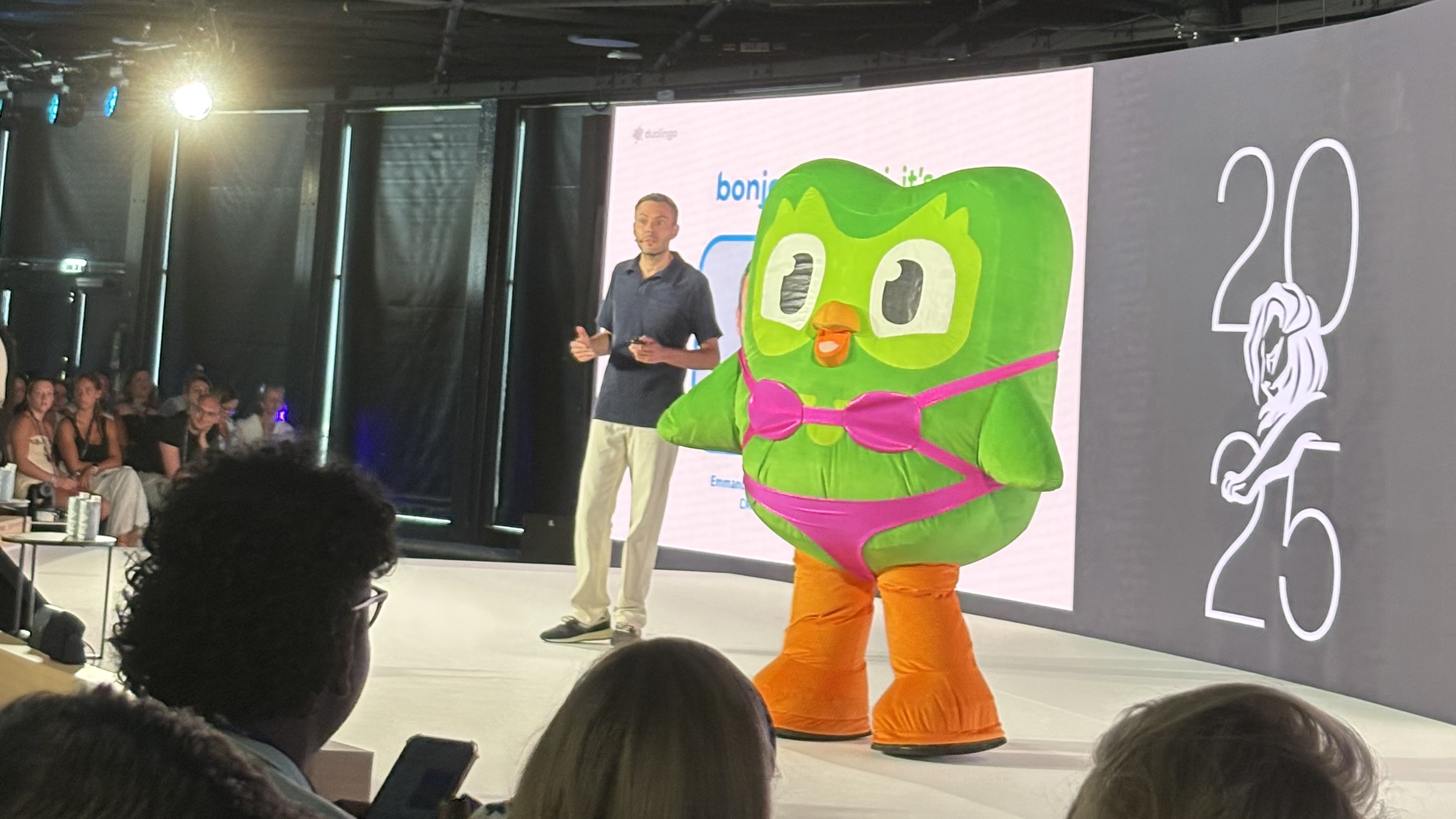
It echoes Liquid Death CEO Mike Cesario’s comments on last year’s Cannes Lions Creative Impact stage in which he shared the brand’s category-redefining approach to marketing. The brand focusses on standing out and being entertaining. The only game in town for Liquid Death is capturing attention, because “if you can get people to stop and look at your product, you’re already ahead of 99% of the market”.

Even the vibe of the awards competition this year felt like a body of work negotiating with itself. The customary smorgasbord of brands’ ideas and innovation were competing with – and often losing out to – their own past body of work.

New campaigns for Apple competed with ten years’ worth of the ‘Shot on iPhone’ campaign’, while Dove’s 2025 entries vied for metal with ‘Real Beauty for Dove’ – a 20-year-long body of work for the brand.

As Contagious’ Alex Jenkins put it – it’s a bit like bringing a gun to a knife fight.

One juror in a post-panel discussion shared with me that brand campaigns competing with the whole back-catalogue of others caused a fair bit of debate. I bet it did. The same juror indicated that they would be referring the issue to Cannes Lions. I can’t imagine it will be allowed to happen again.

So it turns out that the hero of Cannes Lions 2025 wasn’t innovation or ideas, nor was it comms platform vs tactical campaigns, or creativity vs tech or ads vs content or anything vs anything else.

The hero of Cannes 2025 was change itself.

Along La Croisette and in the Palais and everywhere in between was an industry grappling not with the future to come, but with a future that now lies behind us. The current source of unfair advantage is being able to marshal your resources – be they marketing, agency, creator, or anything in between – to leverage better than your competitors the world around you.

It’s tempting to suggest that it was ever thus; but we all know, deep down, that it’s never before been like this.

On stage in the Omnicom Space, Malcolm Gladwell noted that “There is a nobility in failure. [and that] the stories of failure are the most compelling stories that are not being told. The costs of trying crazy shit are not nearly as high as people think. This is exactly the moment to be trying crazy shit and failing!”

Or as Mercado Libre CMO Sean Summers puts it, “The industry is facing a tsunami. The biggest risk, is not taking a risk.”

//

I’ll be publishing more thoughts and perspectives from last week’s festival. Subscribe to catch the rest as soon as it drops.
Standard
co-creating, collaborating, community-building, content creating, creator-ing, realtiming

Streaming’s Next Decade: From Ads to Audiences – and Why Creators are Set to Win

I evaluated in my previous post some media and marketing predictions I made in late 2014. Netflix had announced their arrival in Australia for the following March. My expectation that content would win out over channel, that ability to deliver on desire for choice on-demand would determine growth, and that programmatic would swallow huge swathes of the industry – have all proved I think, largely, true.

My prediction however that the industry would largely fall out of love with the ‘ad’ didn’t come to pass as expected. Adverts have remained the predominant unit of currency for paid branded messaging.

Instead, the group that capitalised on the opportunity as I saw it – to create “platform-neutral content strategies that can adapt to platform and context more quickly – generating more relevance for brands’ comms” were not brands, but creators. The “native content in video form” that I foresaw becoming predominant in video did come to pass, but with a generation of content creators – rather than brands – at the helm.

For many brands and marketers, success is now dependent on engaging and fuelling this generation of content creators – who intermediate between products and services on one hand, and customers and consumers on the other.

Last week saw two awesome examples of this now established marketing model in practice.

How Capcom Inspire an Army of Creators to Fuel Monster-Hunting

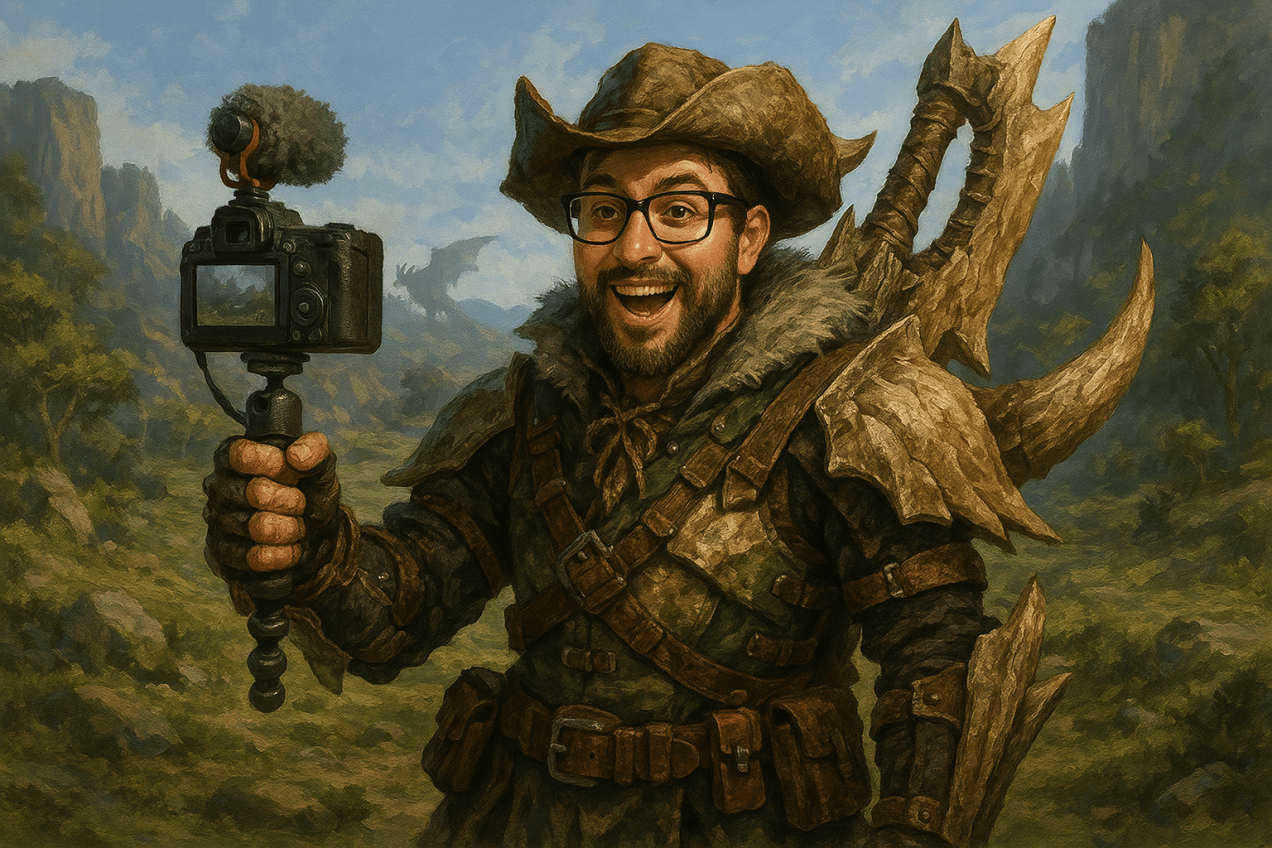
Monster Hunter Wilds, which released worldwide on February 28, has had a great launch. Within the first three days, the game sold over 8 million copies (it’s now over 10m), setting a record as Capcom’s fastest-selling title. On Steam it attracted more than 1.3 million concurrent players shortly after launch, securing a position among the platform’s top 10 most-played games by concurrent users.

Whilst this success wouldn’t be possible without a great product – Wilds has been critically well-received, earning 90 out of 100 on Metacritic with reviewers praising engaging combat, impressive creature design, and innovative gameplay features – its success is also down to a determined effort to engage audiences thru the game’s affiliated army of creators.

Last Tuesday’s Monster Hunter Wilds Showcase, hosted by producer Ryozo Tsujimoto, revealed the first free update, which is scheduled for this coming Friday. The content is relevant of course for people who play the game (declaration: I’m 49 hours in and counting), but I’d suggest that’s not the primary audience for this content.

Rather, Tuesday’s content was designed and deployed not primarily for the game’s 10m players, but for creators. The update had more than enough new information to fuel new content, but enough details held-back and teased to allow room for all-important speculation and prediction. This video from the awesome Khraze Gaming channel is a great example.

There’s now a very established – and mutually beneficial – relationship between the Monster Hunter Wilds dev team and the game’s content creators. The game’s owners are supporting their community of content creators, who in turn are producing content to build their community of subscribers.

This isn’t all one-way. There’s been plenty of pushback from hardcore fans of the series, critical that the game is too easy. But the devs aren’t shying away from this. They are embracing this community feedback, in an open letter this week announcing that:

“We would also like to thank you for the many comments, thoughts and feedback we have received since the game was released.

The development team has been reading your feedback, and we are encouraged by it. We are also using the comments and feedback we have received to help us plan our future actions.

Future updates will see more Tempered Monsters (★8) added to the game … And for even more of a challenge, Arch-tempered monsters will make an appearance. These are even stronger versions of tempered monsters.”

Another masterful example of a marketing team engaging and fuelling content creators was from Marvel.

How Marvel Inspired Creators to Create with a Five-Hour Plus Livestream

In this even more astonishing and finely-tuned example of the marketing-to-creators model, Marvel revealed the cast of the now-in-production Avengers Doomsday via a five hour plus live-stream – with a new cast member being revealed on the back of a director’s chair every 12 minutes. The announcement concluded with Robert Downey Jr. – who will play Doom in the strategically crucial film for Marvel – walking out to sit in the final chair and asking the audience to be quiet on set.

Just to reiterate in case you read that quickly – the Avengers Doomsday cast reveal announcement video was a panning shot of 27 director’s chairs … which lasted five and a half hours.

This clearly is content designed not to be watched by audiences. Rather – just like Monster Hunter Wilds – its content precision-made for creators. Content machine-tooled to be poured-over in crazy detail in real-time by an army of creators (many of whom are of course huge fans).

Creators like The Breakroom team, who scrambled into their studio to livestream their discussions and reactions to the Avengers announcement video, in real-time. A livestream of a livestream. Marvel designing and deploying content for creators.

This is the new and now established model. Content from brands tailor-made for creators, designed to fuel the production of content for their audiences. Creators are the intermediaries and amplifiers of brand messaging. Communities are maintained and managed not directly by brands, but by a team of creators the literal job of who is to drive engagement with audiences for brands; either because they are fans, or their income depends on it – and in reality, usually and probably both.

This is what will underpin brand success over the next decade of video.
This is a model about to be supercharged by next-generation AI production capabilities.
This is what marketing precision at scale really looks like.

Standard
advertising, content creating, creator-ing, predicting, streaming

Streaming’s First Decade: Three Predictions I Got Right – and One I Called Totally Wrong

It’s been ten years to the month since Netflix launched in Australia (where I was lucky enough to be working at the time). A decade on, it’s worth reflecting on what’s changed, what I called right, and what caught me (and the industry) off guard.

There’s been some great commentary from Tim Burrowes both via Unmade (paywalled) and on the MediaLand podcast about the impact of the streamers on the broader media landscape down under. In a Mediation post back in 2014, I made some predictions about what the arrival of streaming would mean for marketing in Australia, and the broader media landscape.

I think I mainly called it right.

Three Out of Four Ain’t Bad: Three Predictions That Nailed It (and One That Didn’t)

Prediction one: “In the immediate term there is undoubtedly going to be a firestorm for views and scale – brace for plenty of press releases in the first quarter of 2015 about content deals, views and reach. in the medium term this will play out in a battle for content – with many shows already locked away in local deals, there will be fierce competition between the platforms as distribution rights cycle into play.”

Verdict: Totally called it. The fight for content has not only played out between the streamers, but more broadly across the industry as legacy broadcasters and streaming platforms battled for the content that will drive and retain subscribers. In Australia that battle continues to this day, with the launch of Max on Monday locking HBO’s content library onto the platform – and the arrival of ESPN on Disney+ introducing an additional potential bidder for many of the market’s upcoming sports rights negotiations. Content has, for the last decade, remained king and has been a key defining element of the success – and conversely the struggles – of the streaming platforms.

Prediction two: We’ll see “a radical shift in viewer expectations. more choice, more freedom to choose what we watch and where, how and when we watch it. This future has been a long-time coming and has been with some for much longer than others”.

Verdict: Two for two. If anything has defined streaming’s impact, it’s the expectation of choice, on demand. That expectation has spilled beyond streaming—into podcasts, and even cinema. The streaming age taught many of us that, for the typical movie, it was easier to wait and watch at home – a behaviour reinforced by ever-reducing windows between theatrical and home release.

As the Entertainment Strategy Guy put it in a recent post, we’re drawn to the cinema now for ‘events’; “the actual most popular “genre” isn’t really a genre, but a style: exciting. People go to the movies to see spectacle, which often means action or exciting set pieces …18 of the top 25 films [in the US 2024 box office] have a lot of action set pieces. (Even Wicked ends with one).”

Prediction three: “With increasingly fragmented and diverse platforms and viewing services, advertisers and their agencies will increasingly rely on programmatic solutions to build reach quickly.”

Verdict: Absolutely. Over the past decade, programmatic advertising has transformed the industry by enabling real-time bidding, automating media buying, and enhancing targeting capabilities. On one hand, this shift has driven greater efficiency, has undoubtedly improved ROI, and empowered marketers to deliver more personalised experiences. But it’s also led to concerns about transparency, data privacy, and brand safety – not to mention the broader impact of an over-reliance on short-term, performance-based media on brands and long-term brand-building. It’s all our jobs to ensure we build tech that will serve us better over the next – AI-powered – decade, than we did for the last.

Prediction four: “Many advertisers and ad agencies will finally be forced to break out of the ‘advert’ model – using instead platform-neutral content strategies that can adapt to platform and context more quickly – generating more relevance for brands’ comms. think native content in video form.”

Verdict: So this one is a lot less clear. I genuinely thought back in 2015 that the industry’s long-held affinity for the ‘advert’ would wane. I thought the classic ad, so effective in the broadcast age, wouldn’t survive in a streaming world; a world in which tolerance for content interruption would be significantly reduced.

I was genuinely wrong on that. The power of the ‘ad’ holds sway to this day. The industry didn’t wholesale move on from the ad. It didn’t predominantly leverage more diversified content and ideas-based marketing to create fewer, better, more transformative experiences for audiences.

Too expensive. To difficult to scale and measure. Too hard.

Only it wasn’t.

Because while the industry remained predominantly stuck in ad-land, the last decade has seen a content revolution that has more than delivered on my prediction of ‘native content in video form’.

Native Creators: The Creator Economy Delivered What Marketing Didn’t

In parallel to the growth of streaming over the last ten years, the creator economy had, by 2023, blossomed into a $250 billion industry. This expansion is projected to continue, with estimates suggesting the market could reach $480 billion by 2027.

A report last year (admittedly from YouTube) found that an astonishing 65 percent of Gen Z responders self-identified as video content creators. The number of content creators worldwide has surpassed 200 million, reflecting the increasing appeal of content creation as a profession. The market for global influencer content has more than tripled since 2020, reaching approximately $33 billion in 2025.

It seems trite to point-out that this incredible growth – and it is incredible – is largely down to the fact that creator-made content is typically significantly more engaging than traditional ‘adverts’; it feels authentic, personal, and tailored to specific communities … because it IS authentic, personal, and tailored to specific communities.

Audiences tend to trust creators they follow, viewing their recommendations as more genuine and relatable than polished brand messaging—leading to higher attention, interaction, and emotional connection.

The prediction I made a decade ago suggesting that the industry’s ad-venture would come to an end was correct, it just turned out to be a generation of creators – powered by platforms like YouTube and latterly TikTok – that delivered on that strategic opportunity of ten years ago. The great irony of course is that advertisers did end up being an integral part of this creative content revolution; they were the money.

In other words, it wasn’t the brands who changed the game—it was creators and their audiences. And it’s that shift – from ads to creator-audiences – that will define the next decade of streaming.

Standard
converging, fragmenting, podcasting, streaming

Netflix’s Next Move? Video Podcasts – And Why Marketers Need to Be Ready

Business Insider reporting this week suggests that Netflix is exploring deals with prominent podcasters. According to sources ‘familiar with Netflix’s strategy’, “Netflix insiders had warmed to the idea of tapping podcasting talent to host a talk-based video show, after previously expressing scepticism that the format could work on the platform.”

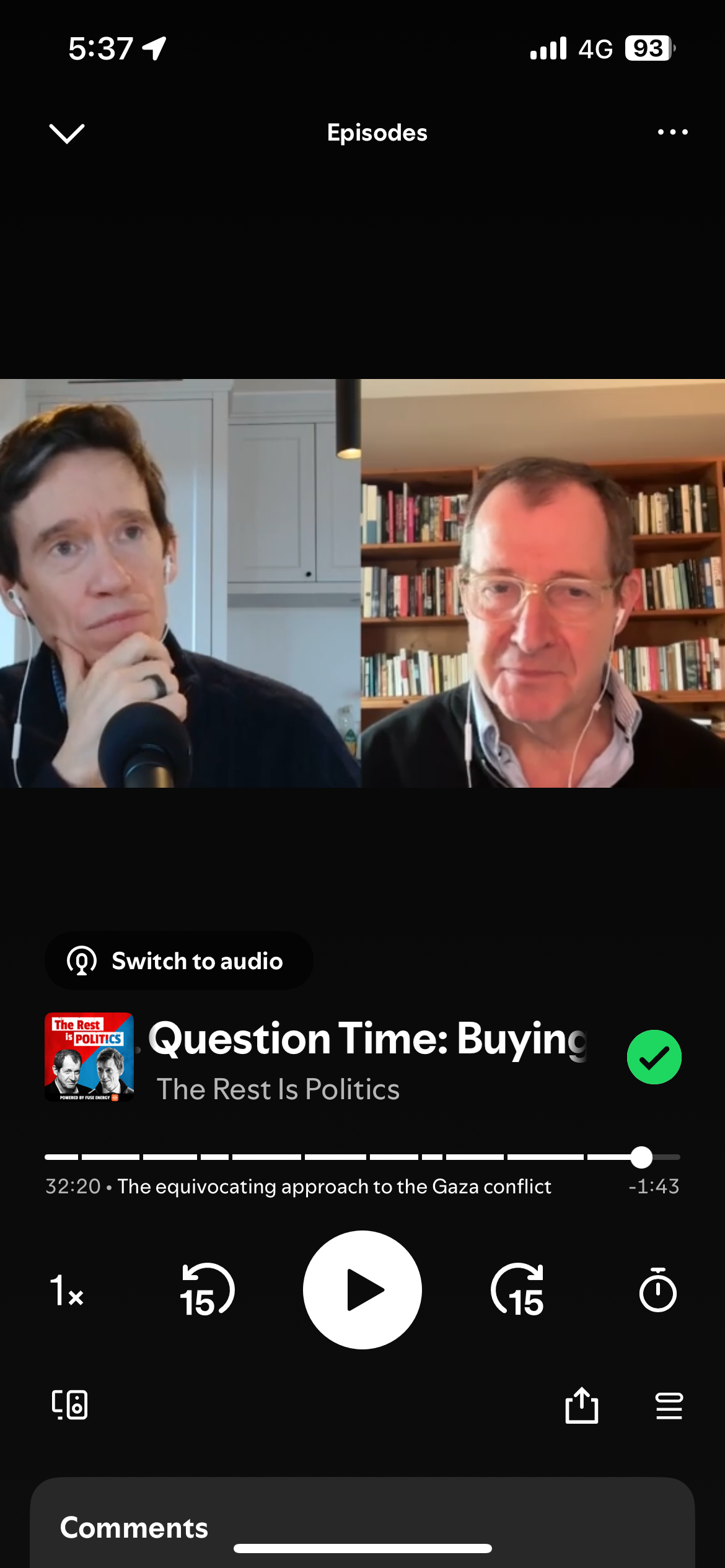
The availability of the podcast in video form has been surging of late. Most notably on YouTube – where prominent podcasters have been streaming their conversations for a good while now – but also on Spotify, where earlier this year I was surprised to see Alistair and Rory of the popular The Rest is Politics podcast pop-up within my Spotify app in video form.

Rory Stewart and Alastair Campbell, hosts of Britain’s biggest podcast The Rest Is Politics, popping up in video form on Spotify

Spotify pivoting to become a video streaming channel is just one part of a wider – and sizable – convergence into the video format, which in many ways represents one of most significant shifts in media and content consumption of recent times.

Forces of Fragmentation and Consolidation

When the industry initially debated fragmentation in the media landscape it was, generally, in reference to channels. Back in olden days when I started planning you basically had TV, print (both newspapers and magazines no less), radio, outdoor – plus something we called ambient media (out of home contextual ideas that popped up to generally surprise and delight urban audiences).

Digital was nascent, and streaming was still way over the horizon (I still have the presentation I gave to a major UK TV broadcaster client in around 2005 communicating the existence of a website I thought they should be paying attention to, called YouTube).

Since then, one of the seismic forces shaping media planning and strategy has been fragmentation. But it wasn’t channel fragmentation – which has been more than countered by consolidation within digital platforms over the last two decades.

2024 global advertising revenues surpassed $1 trillion. Major technology companies—specifically Alphabet (Google), Meta (Facebook), Amazon, Alibaba, and ByteDance — collectively accounted for over half of this expenditure source. EMarketer reports that in the US, Amazon, Apple, Meta, Microsoft, and Alphabet last year attracted nearly two-thirds of digital advertising dollars. The media landscape has many issues, platform fragmentation is not one of them.

What has fragmented is attention. The platforms that now dominate media have distributed audiences – which poses an ongoing challenge for brands looking to leverage Ehrenberg Bassian principles to reach as many light and non-buyers of their products in advance of an many purchase occasions as possible.

Advertisers are chasing, and demanding, scale … which is where Netflix’s potential foray into podcasts comes in. The streamer announced last year that it would stop reporting quarterly subscriber numbers from Q1 2025 – a sign interpreted by many in the industry that future growth from more subscribers was expected to plateau. Growth for Netflix must come next from driving increased time spent on the platform: in particular amongst subscribers to the ad-tier where a consistent source of advertiser-friendly audiences in a strategic priority.

Netflix’s Podcast Move

Enter podcasts … a potentially dreamy next step in their ongoing conquering of the video landscape. Let us count the ways in which Netflix must be salivating over the potential of the video podcast:

• Low barriers to entry and production costs
• In-built reach from influencer hosts (I find it significantly more useful to think of – and plan – podcasters as influencers and creators, rather than hosts) – which at the head drives scale, and into the tail offers relevance for selling on to advertisers
• Long dwell times, creating consistent high volumes of impressions and platform engagement (remember some podcast episodes are longer than the average movie run time).

Netflix are uniquely placed to take advantage of the opportunity. Video content platforms have always largely divided along two lines: professionally-created content (Netflix, legacy broadcasters offering BVOD etc, legacy conglomerates such as Disney+ and Paramount+ etc), and creator content (such as YouTube and the majority of video on social platforms). The former have never really wanted to do the latter, and the latter have struggled to do the former.

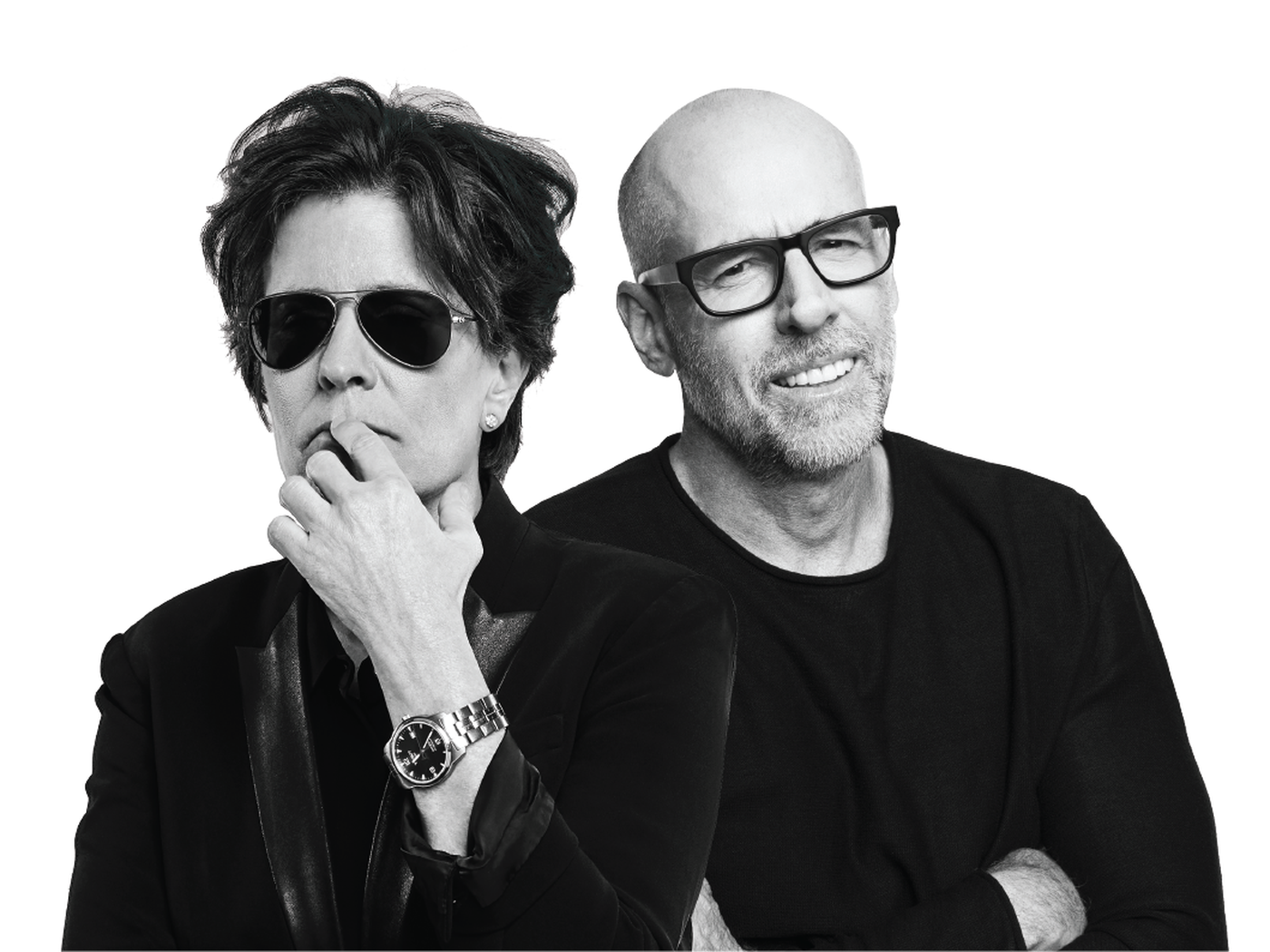
Netflix can genuinely move to deliver both professionally-created, and now premium creator content via high-reaching quality podcasts. I’d be stunned if Kara Swisher and Scott Galloway – who are currently in renewal negotiations with Vox Media for the home of their wildly successful Pivot podcast – weren’t talking to Netflix about taking the show to the streamer … opening the opportunities for the Pivot brand itself to expand into a range of video formats and series on the platform.

Kara Swisher and Scott Galloway – of the Kara and Scott Universe – hosts of the wildly popular Pivot podcast … a move to Netflix would make strategic sense

What This Means for Marketers

For marketers – this is all upside. Yes, it will mean more of that fragmented attention being sucked behind the Netflix walled garden, but if packaged up right it opens large swathes of addressable audiences in one targetable place – as well as scale, along with depth and diversity, of those audiences.

To succeed, marketers will need big proprietary data sets to create effective audiences to buy from Netflix, the agency support to build significant and meaningful partnerships and JVPs with the streamer (as well and others) that gets access to the best talent on the platform, and – most importantly – have an idea that can travel.

Because my hunch is that if Netflix push the podcast video door open, and if they can scale it and commercialise the audiences, then it’s the brands with clear, big (sorry) ideas that can be co-owned and co-created with Netflix’s creator community – that will be the brands that succeed. It would be such a shame for Netflix to sit astride a converged platform offering video podcast shows created by such talented influencers – only for brands to spot-buy their way into the party.

Standard
conferencing, innovating, machine learning, marketing, retailing, trending

Embracing the Agentic Age: What Mobility Commerce tells us about the Future of Marketing

AI in Everything, Everywhere, All at Once

Walking the convention floors at CES last month, it was impossible to ignore the bigger, brighter screens, smarter cars, more intelligent home devices, and increasingly agile robots. There was a bit more of everything, everywhere, and – because of the impact of AI – it’s all happening at once.

Technologist Shelly Palmer has suggested that “2025 is the year of the realization of AI’s promise,” and it’s hard to disagree. Artificial Intelligence has shifted from hype to reality, becoming deeply embedded in consumer electronics, interactions, and commerce.

Samsung’s SmartThings appliances displayed on the showfloor at CES

Samsung’s SmartThings Automotive now seamlessly connects EVs to broader smart ecosystems, while Richtech Robotics’ autonomous delivery robots are redefining service efficiency. Meanwhile, LG’s AI home hub and Samsung’s Home AI System illustrate how intelligent agents are integrating into everyday life, transforming how we live, work, and move.

But the most pivotal force behind this revolution is Nvidia. At CES, they launched their RTX 50 GPUs, pushing AI-driven gaming and content creation to new heights. They also introduced the Cosmos family of foundational AI models, designed to train humanoid and industrial robots, as well as vehicles for autonomous mobility. The era of agentic AI is here.

The Emergence of the Software-Defined Vehicle

The automotive industry is undergoing a fundamental shift, evolving from hardware-driven machines into software-defined experiences. Nvidia’s Cosmos AI model is at the forefront of this transformation, enabling advanced self-driving capabilities. Trained on 20 million hours of human activity footage, it generates photorealistic simulations that help self-driving cars better understand and navigate real-world environments.

By leveraging synthetic data, developers can train AI systems more efficiently and cost-effectively, reducing reliance on real-world testing. Companies like Uber are already using Cosmos to accelerate their autonomous driving efforts, while Waymo expands its self-driving taxi operations and Honda’s ASIMO OS introduces “ultra-personalized” vehicle interfaces powered by over-the-air updates.

This shift has given rise to the software-defined vehicle (SDV), where traditional metrics like horsepower and acceleration take a backseat to comfort, connectivity, safety, and sustainability. SDVs—along with their supporting ecosystems—were everywhere at CES, signaling a future where cars are more than just a mode of transport; they are destinations in themselves. Think relaxation spaces, content hubs, gaming centers, and even commerce platforms on wheels.

The New Marketing Canvas of Mobility Commerce

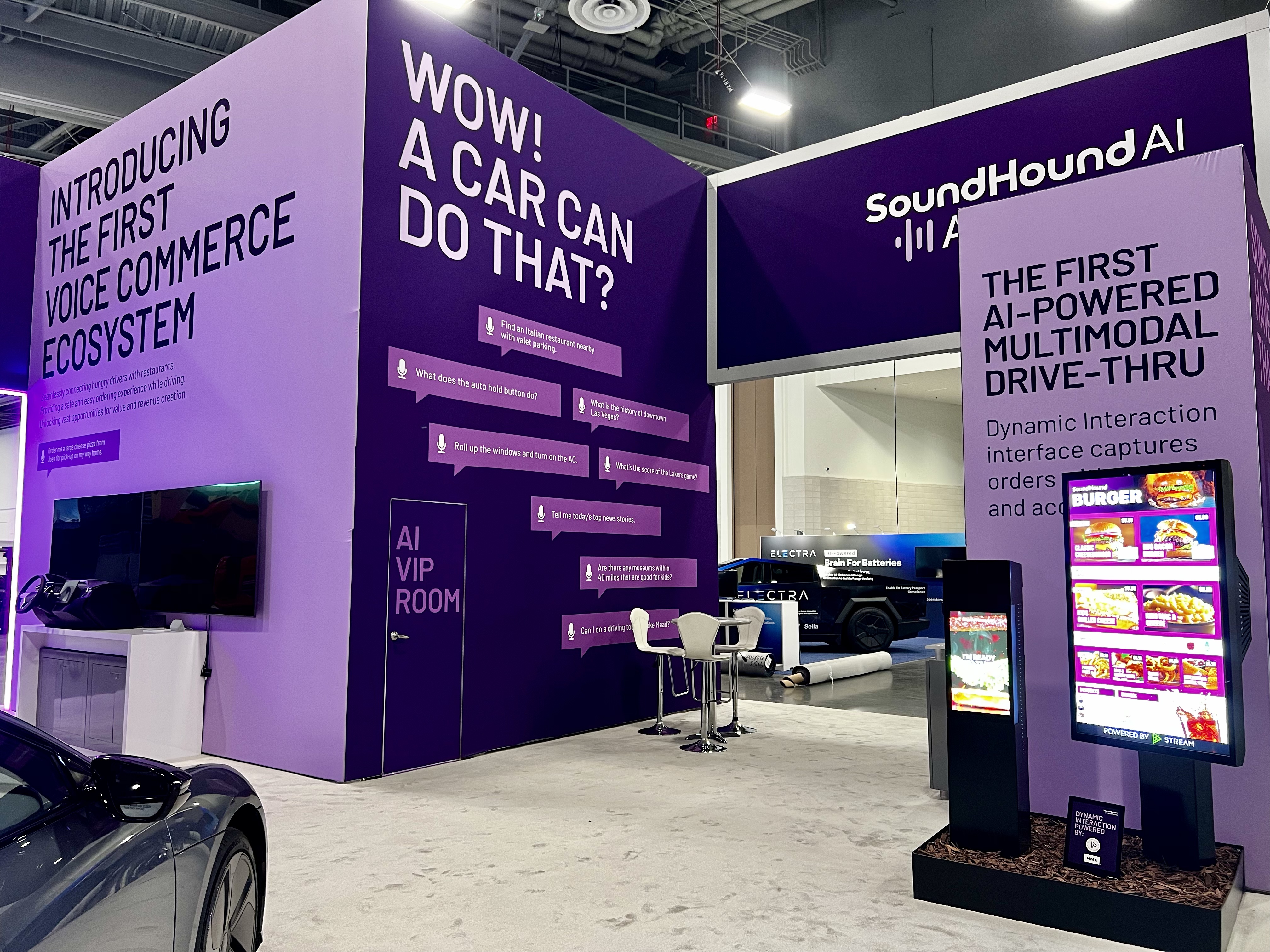
Mobility commerce is fast becoming a frontier for innovation, and CES showcased the technologies set to power it. Take SoundHound AI’s voice-based commerce platform, for example—it allows drivers to order food, pay for services, and access real-time data directly from their car’s infotainment system.

The SoundHound booth at CES demonstrated a custom voice commerce ecosystem

AI-powered interfaces like these go beyond convenience; they enhance the ownership experience while unlocking new revenue streams, increasing the lifetime value of car owners. As vehicles become personalized media and commerce hubs, they create fresh opportunities for brand engagement.

In-car voice assistance is also evolving into richer, multidimensional conversational experiences. The private environment of a vehicle provides a unique space for seamless content consumption and commerce through natural voice interaction. This not only enhances the driving experience but also presents new possibilities for marketing—delivering contextual recommendations and unlocking new monetization models.

Marketing in the Agentic Age

The SDV is just one example of how the agentic age—a world navigated and intermediated by AI agents—is taking shape. The marketing implications are profound.

With AI automating interactions across search, content discovery, and customer service, consumer journeys are increasingly shaped by AI-driven recommendations. Whether through home assistants, automotive voice interfaces, or AI-powered search engines, customers will increasingly rely on digital agents to make decisions for them.

For some categories and brands, this means marketing directly to AI agents. Yet, human engagement remains critical. Brands now have unprecedented tools to create Generative AI-enhanced marketing experiences, from producing high-impact advertising that was previously cost-prohibitive to delivering hyper-personalized web experiences.

AI-powered assistants and avatars can guide potential buyers through product discovery, offering dynamic, customized interactions. The ability to generate tailored content at scale will be a major competitive advantage in this new era of AI-first marketing.

The Evolution of Search and Brand Discovery

Search is evolving at an unprecedented pace, moving beyond keyword-based queries to AI-driven, solution-focused interactions. Consumers are shifting from traditional search engines to AI assistants, social commerce, and e-commerce platforms for discovery.

According to Omnicom Media Group, nearly 40% of consumers in key markets now use LLMs like ChatGPT for search, while 76% rely on platforms like Amazon. Even smart TVs are emerging as search engines, enabling users to browse content via AI-powered voice commands. Meanwhile, consumers no longer rely on a handful of trusted reviewers; they can query and analyze reviews across multiple platforms using AI.

This shift demands a fundamental rethink of visibility strategies. Traditional SEO is no longer enough—discovery now happens across a fragmented ecosystem, from social video platforms to generative AI assistants. Brands must focus on “share of model” (how often they are referenced in AI-driven search results), deploy LLM-specific tracking, and optimize structured comparison data for AI crawlers.

Transforming the Marketing Experience

The shift from SEO to GEO (Generative Experience Optimization) is just one part of a larger marketing transformation, which was on full display at CES. As homes, vehicles, and workspaces move from smart to intelligent, the entire landscape of brand discovery, purchase, and experience is evolving.

2025 is set to be a landmark year for AI, search, creator-led marketing, and innovation. As these trends redefine consumer expectations, brands must adapt their marketing strategies to align with a world where AI, personalisation, and digital-first experiences drive engagement and growth.

Standard