co-creating, collaborating, community-building, content creating, creator-ing, realtiming

Streaming’s Next Decade: From Ads to Audiences – and Why Creators are Set to Win

I evaluated in my previous post some media and marketing predictions I made in late 2014. Netflix had announced their arrival in Australia for the following March. My expectation that content would win out over channel, that ability to deliver on desire for choice on-demand would determine growth, and that programmatic would swallow huge swathes of the industry – have all proved I think, largely, true.

My prediction however that the industry would largely fall out of love with the ‘ad’ didn’t come to pass as expected. Adverts have remained the predominant unit of currency for paid branded messaging.

Instead, the group that capitalised on the opportunity as I saw it – to create “platform-neutral content strategies that can adapt to platform and context more quickly – generating more relevance for brands’ comms” were not brands, but creators. The “native content in video form” that I foresaw becoming predominant in video did come to pass, but with a generation of content creators – rather than brands – at the helm.

For many brands and marketers, success is now dependent on engaging and fuelling this generation of content creators – who intermediate between products and services on one hand, and customers and consumers on the other.

Last week saw two awesome examples of this now established marketing model in practice.

How Capcom Inspire an Army of Creators to Fuel Monster-Hunting

Monster Hunter Wilds, which released worldwide on February 28, has had a great launch. Within the first three days, the game sold over 8 million copies (it’s now over 10m), setting a record as Capcom’s fastest-selling title. On Steam it attracted more than 1.3 million concurrent players shortly after launch, securing a position among the platform’s top 10 most-played games by concurrent users.

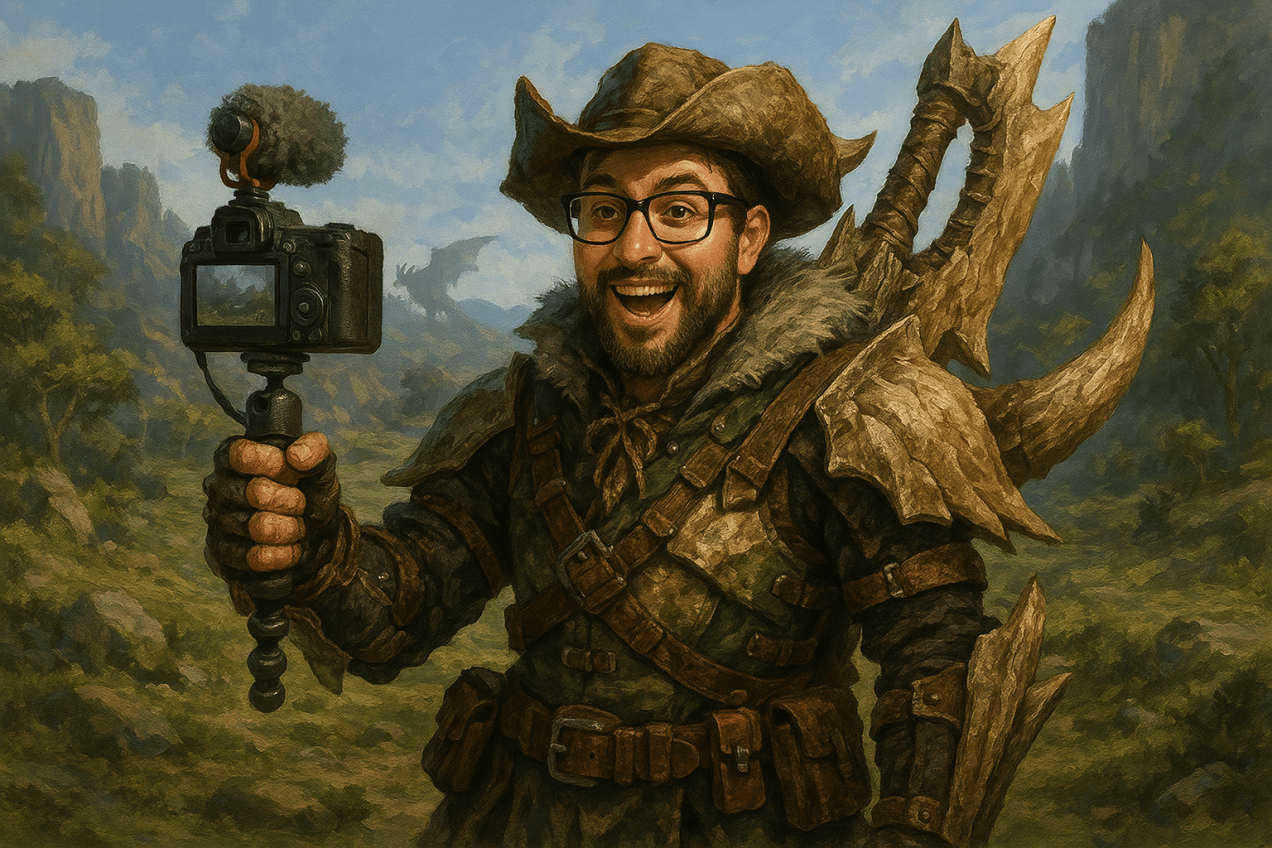
Whilst this success wouldn’t be possible without a great product – Wilds has been critically well-received, earning 90 out of 100 on Metacritic with reviewers praising engaging combat, impressive creature design, and innovative gameplay features – its success is also down to a determined effort to engage audiences thru the game’s affiliated army of creators.

Last Tuesday’s Monster Hunter Wilds Showcase, hosted by producer Ryozo Tsujimoto, revealed the first free update, which is scheduled for this coming Friday. The content is relevant of course for people who play the game (declaration: I’m 49 hours in and counting), but I’d suggest that’s not the primary audience for this content.

Rather, Tuesday’s content was designed and deployed not primarily for the game’s 10m players, but for creators. The update had more than enough new information to fuel new content, but enough details held-back and teased to allow room for all-important speculation and prediction. This video from the awesome Khraze Gaming channel is a great example.

There’s now a very established – and mutually beneficial – relationship between the Monster Hunter Wilds dev team and the game’s content creators. The game’s owners are supporting their community of content creators, who in turn are producing content to build their community of subscribers.

This isn’t all one-way. There’s been plenty of pushback from hardcore fans of the series, critical that the game is too easy. But the devs aren’t shying away from this. They are embracing this community feedback, in an open letter this week announcing that:

“We would also like to thank you for the many comments, thoughts and feedback we have received since the game was released.

The development team has been reading your feedback, and we are encouraged by it. We are also using the comments and feedback we have received to help us plan our future actions.

Future updates will see more Tempered Monsters (★8) added to the game … And for even more of a challenge, Arch-tempered monsters will make an appearance. These are even stronger versions of tempered monsters.”

Another masterful example of a marketing team engaging and fuelling content creators was from Marvel.

How Marvel Inspired Creators to Create with a Five-Hour Plus Livestream

In this even more astonishing and finely-tuned example of the marketing-to-creators model, Marvel revealed the cast of the now-in-production Avengers Doomsday via a five hour plus live-stream – with a new cast member being revealed on the back of a director’s chair every 12 minutes. The announcement concluded with Robert Downey Jr. – who will play Doom in the strategically crucial film for Marvel – walking out to sit in the final chair and asking the audience to be quiet on set.

Just to reiterate in case you read that quickly – the Avengers Doomsday cast reveal announcement video was a panning shot of 27 director’s chairs … which lasted five and a half hours.

This clearly is content designed not to be watched by audiences. Rather – just like Monster Hunter Wilds – its content precision-made for creators. Content machine-tooled to be poured-over in crazy detail in real-time by an army of creators (many of whom are of course huge fans).

Creators like The Breakroom team, who scrambled into their studio to livestream their discussions and reactions to the Avengers announcement video, in real-time. A livestream of a livestream. Marvel designing and deploying content for creators.

This is the new and now established model. Content from brands tailor-made for creators, designed to fuel the production of content for their audiences. Creators are the intermediaries and amplifiers of brand messaging. Communities are maintained and managed not directly by brands, but by a team of creators the literal job of who is to drive engagement with audiences for brands; either because they are fans, or their income depends on it – and in reality, usually and probably both.

This is what will underpin brand success over the next decade of video.
This is a model about to be supercharged by next-generation AI production capabilities.
This is what marketing precision at scale really looks like.

Standard
advertising, celebrating, community-building, innovating, marketing, responding

The five-point Covid-19 Response Playbook; according to the awesome Aesop’s Bangkok

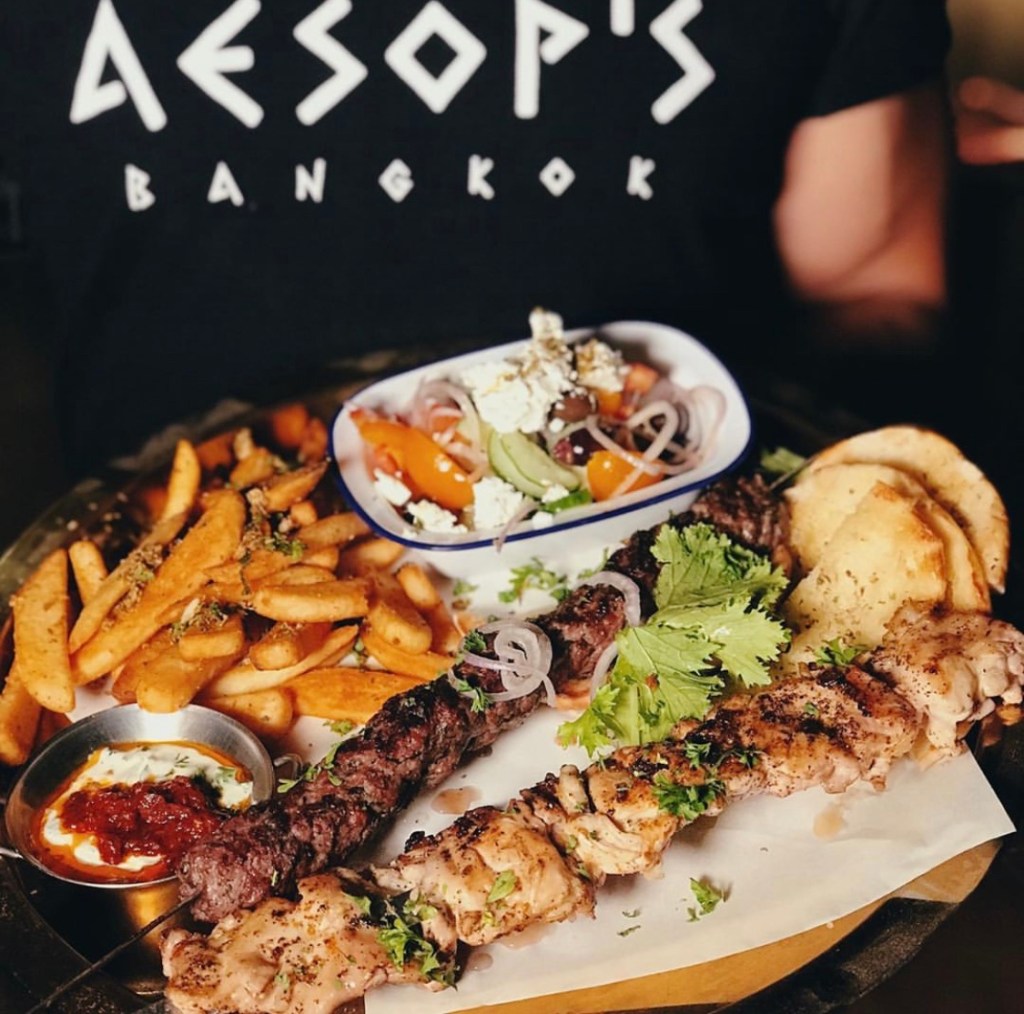
Back in the olden days when we used to get on aeroplanes and visit other countries, one of my favourite places to drop by was the awesome Aesop’s Greek restaurant in Bangkok’s Sathorn district.

The food is just the best, but so is the atmosphere, with owner (and PHD alumnus) John Gamvros, creating a shared social space with dancing, plate smashing, parties, quiz nights, and the occasional Queen singalong party (you can see why I didn’t mind stopping by occasionally).

Like many restaurants, Aesop’s Bangkok has been hugely impacted by this year’s pandemic and the shut-downs that have been introduced around the world to slow its spread.

The fall-out from the closures could be devastating to the industry: Forbes reports that – according to a study commissioned by the Independent Restaurant Coalition – the pandemic could force 85% of independent U.S. restaurants to close by the end of the year. Over on this side of the world in Japan, which is weathering the crisis better than many, that figure is reported to be around 20%.

It was most heartening then when I received, via the awesome Heather, a write up on Chope outlining how Aesop’s Bangkok responded to the challenge of Covid-19 – or, as John puts it – the ‘ronacoaster’.

The article outlines the innovative, creative and generous steps John and the team at the restaurant took to adapt and respond to the crisis. A little WhatsApp banter with John later, and I’d seen and heard what I thought was as great a Covid-19 Response Playbook as any that I’d seen.

I present to you then, the five-point Covid-19 Response Playbook – as inspired by the awesome approaches and actions of John and the Aesop’s Bangkok team.

Step One: Pivot and Operationalise, Fast

Like many restaurants, Aesop’s immediately kicked into gear re-launching their delivery product, creating a dedicated consumer-facing channel at orderaesops.com, as well as accelerating their digital marketing effort to support the platform. They also had to work with their staff to re-engineer the menu, change operations and back that up with training.

In the current moment you have to follow more then ever Nick Fury’s observation to The Cap in CA:TWS that you have to “… take the world as it is, not as we’d like it to be.” What do you realistically need to do right now to capitalise on the opportunities and overcome the barriers to driving revenues?

Now delivering Gyros

Step Two: Play To Your Strengths

Rather than reinventing the wheel, the restaurant found a way to deliver the added magical elements that made the Aesop’s dining experience so special. This included, for example, plate smashing. So the team found a way to deliver orders complete with smashable plates, so you can bring the Aesop’s dining experience to life in your own home (you presumably have to do you own in-home clearing up tho too).

Step Three: Do, Don’t Say

Actions really do speak much louder than words right now. The team built trust with the restaurant’s followers by communicating updates directly and regularly on our social media channels, and responding to specific queries and concerns.

The bigger the brand, the harder this is to do of course, but I couldn’t help but think of the contrast between the personal approach and the – much lambasted – generic response from big brands in the early stages of the crisis.

Film from YouTube creator Microsoft Sam’s supercut shows the striking similarities in the ads made in response to the crisis

Step Four: Pay It Forward

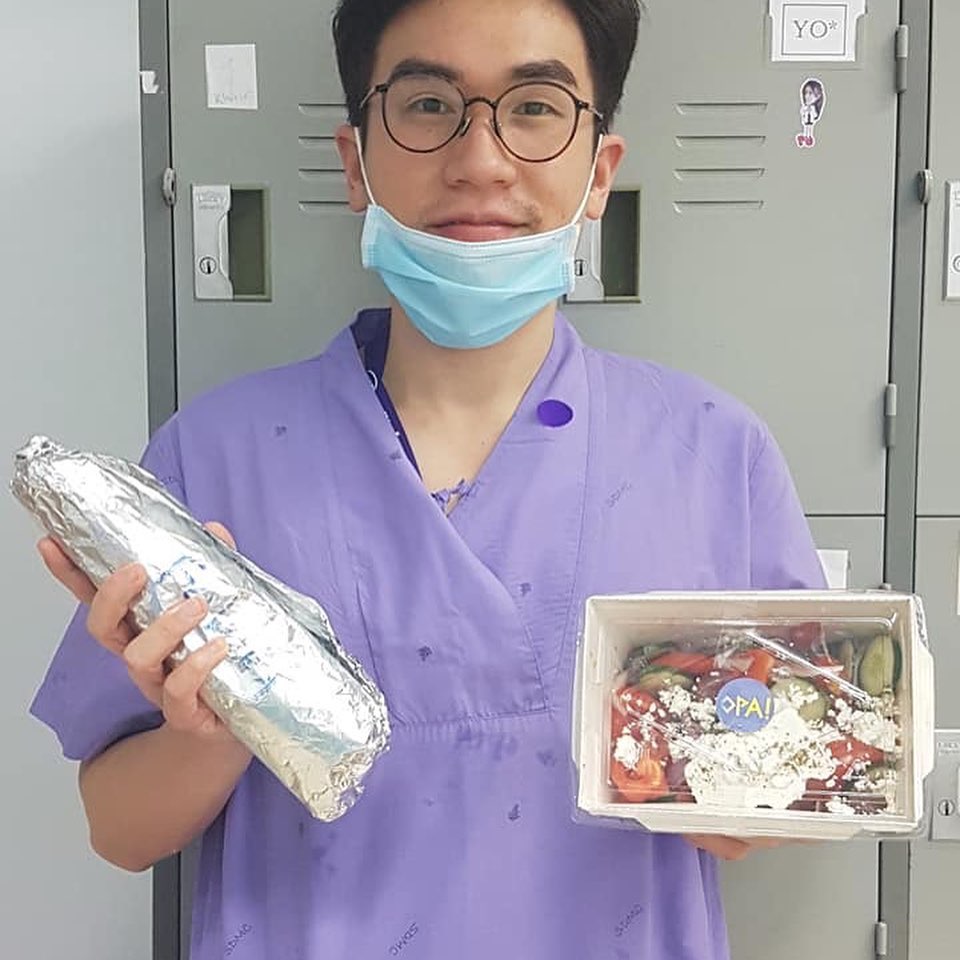
Some of the most heartening stories to have emerged from the crisis have been around brands and businesses retooling and responding by paying efforts forward, and Aesop’s were no exception. They partnered with Ramathibodi Hospital to launch Eat it Forward Fridays, providing much needed fuel to the hard working doctors and nurses on duty. For every order received, Aesop’s donates one meal to Ramathibodi hospital to feed the hospital heroes with fresh, healthy Greek food.

Step Five: Be Honest

As John describes: “… it actually takes a lot more work than you’d expect to maintain the same high standards we set in the restaurant. We have overcome it through teamwork, listening to customer feedback, and constantly tweaking things. I have been honest with my customers, I tell them we are on a journey and that we are learning as we go. More often than not they appreciate that honesty and reward it.”

I think most people would agree that we’ve all at times felt out of our depth over the last six months. Being honest with customers (and with each other) about what we are trying to achieve, along with an equally honest assessment of how we are doing in getting there, will be appreciated and rewarded in kind.

Big thanks to Heather for the share, and John and all the team at Aesop’s Bangkok for the inspiration. We’ll stop on by just as soon as we can.

Stay safe everyone.

Standard
awarding, celebrating, cinema, community-building, imagining, innovating

A Counterpoint for Cannes: Lessons from the Sundance Film Festival

Sundance-film-festival

so I was listening, as is my want, to Simon Mayo and Mark Kermode’s Movie Review Podcast (which is very good btw) as they were live from The Sundance Film Festival which was visiting London. they were interviewing John Cooper, Director of the SFF who described how the festival first came about:

“Sundance … was created to find a safe haven for artists to become better and to make better cinema … then we started this thing … we called labs, which were basically workshops where filmmakers come and work on their scripts with mentors and there’s a whole mentoring process … very quickly after that [we] were making movies but they weren’t getting seen anywhere so we needed to create a platform and that was the Sundance Film Festival and that’s how it started” (source)

the festival has seen the likes of Paul Thomas Anderson, Alexander Payne and Tarantino all hone and develop their skills in an environment where risk-taking is encouraged and protected; a very different environment to Cannes or the Oscars … where the focus is on subjective judgement by peers and winning awards.

I couldn’t help but think and wish that there was a Sundance equivelant for our industry. the Cannes Festival of Creativity (which will soon see the great and good head off to the south of France for the annual networkathon) is basically our Oscars, and it has its place.

but there doesn’t seem to be a counterpoint? we don’t have a Sundance.

certainly in Australia the Media Federation Awards, like the B&T awards and Adnews awards, all follow the Cannes / Oscars template … glitz and glamour as the campaigns and ideas judged to be the best allow the people who submitted them to have a fully deserved 15 seconds in the glare of the lights.

how awesome would it be if the above quote read:

“Incubator … was created to find a safe haven for planners to become better and to generate better innovations … then we started this thing … we called labs, which were basically workshops where planners come and work on their ideas with mentors and there’s a whole mentoring process … very quickly after that [we] were creating innovation but they weren’t getting seen anywhere so we needed to create a platform and that was the Incubator Ideas festival and that’s how it started”

how awesome? very.

Standard
brand extending, branding, campaigning, co-creating, community-building, connecting, earning, gaming, owning, praising, social media-ising, user-generating

Big Planning and Big Thinking: How Bendigo and Adelaide Bank use owned & earned media to deploy a little utility into the world

Got a big idea that you want to bring to life? Create a plan, share it and make it happen with help from the PlanBig community

so the lovely and awesome Zaac posted a link to my wall of the above effort from Bendigo and Adelaide Bank.  it's called PlanBig and, in it's own words, its…

"… a way for people to get together to make things happen and make a difference.  We [Bendigo and Adelaide Bank] believed that there was some real value in giving people the chance to come together in one place to talk about ideas, share inspiration, offer advice or help make things happen for themselves or someone else.  PlanBig brings together the experiences, knowledge and expertise of people with different skills from all walks of life and all ages to help each other get ideas kick started."

it's a delightful and instinctively attractive platform, which elegantly ticks a range of boxes including – amongst others – socialisation, co-creation, crowdsourcing and gamification.  it also has a elegant and seamless execution that connects with the Book and other social platforms…  the badges-as-reward effort has been borrowed from FourSquare, as has the Book's Like concept (in fact the functionality is a bit like a social network functionality greatest hits, which isn't a bad thing – better to use functionality with which we're familiar … makes it more, well, functional).

as the site observes, "Bendigo and Adelaide Bank feel so strongly about helping people realise their dreams, they’ve been doing it in local communities for over 150 years" … so this platform is just a natural extension of a brand proposition that's been in market for over a century.

it's also another example of the owned and earned media combo (note the absence of bought media) to create (1) utility (2) meaningful connections with a community of people and (3) content ripe for the amplification – if even a few of these ideas get big it will be marketing gold-dust.  all of which makes a great deal more sense to me than buying a shedload of ads telling people what competitive lending rates you have.

this genuinely feels like a brand / product extension with sociable and marketable assets built in from the ground up.  it's a communication for people, by people, and its infinitely better for it.  good on 'em.

Standard