advertising, branding, IPA|ED:two, planning, researching

The Ecology of Engrams

en·gram [en-gram] – noun

encoding in neural tissue that provides a physical basis for the persistence of memory; a memory trace (1)

E·col·o·gy [i-koluh-jee] – noun

branch of biology dealing with relations and interactions between organisms and their environment, including other organisms (2)

I believe the concept of the individual brand engram for the purposes of marketing communications is redundant. I believe that a truer reflection of brands can be found by examining the dynamics of engram herds within a population.

1. The Myth of the Isolated Engram

The emergence of neuroscience has informed us that brands are not definitive established entities. Rather they are ideas. An ever-changing and dynamic concept of meanings and associations held – amongst millions of others (4) – within our minds. As Wendy Gordon puts it, “a brand in memory is a totality of stored synaptic connections between neurones … gradually built up through the combination of many past experiences and ongoing current encounters with a brand” (5). The term engram – coined originally by Richard Semon in 1904 – refers to this ‘memory trace’ (6) within which a brand is held.

Two key properties emerge from this concept:

First, the brand-as-engram is largely malleable and open to influence. Whilst marketers would hold that this gives them remit to leverage this set of associations thru advertising and other means, the reality is quite different;

The stimuli we receive don’t uniformly alter the engram. Daniel Schacter notes that; “our memory systems are built so that we are likely to remember what is most important to us” (7). Not all stimulus is created equal, as Willmott and Nelson observe; “ in a networked society, where people not only have more contacts but rely on them more for advice and support … personal recommendations, and recriminations, have more weight” (8). In other words brand engrams are – by their very nature – most open to influence by other people. Brand engrams are most open to influence by other engrams.

The second property to emerge from the brand-as-engram concept is that because engrams are formed from different experiences in different individual’s heads, no two engrams can be the identical. As Wendy Gordon puts it; “two people can never experience an identical set of encounters with a brand, and therefore their brand engrams will be different” (9).

So brand engrams are mostly open to influence by other engrams, each of which is unique; the concept of the isolated and definitive brand engram is therefore a myth.

Brands aren’t individual ideas, but herds of ideas, within a population. Herds that over time will grow or shrink, become more disparate or move more tightly together, or that become more or less consistent; all as a result of their environment that includes other engrams. It is this latter facet of the engram herd – consistency – upon which this submission will focus.

2. The Importance of the Consistent Herd

Key to successful marketing of a brand is to have a consistent engram herd, with consistent meanings and values associated with a brand. As Wendy Gordon points out, “new entrants to established product categories require an enormous financial investment to build these values, which ensure that a target group of consumers are able to share a similar pattern of specific belief system about a brand” (10).

There are several reasons why consistency of engram throughout a herd is crucial; as a shared language for word of mouth, as a consistent reference for self-identity, and within the concept of transactive memory:

2.1 The importance of consistent herd in Word of mouth epidemics

In The Tipping Point, Malcolm Gladwell describes what he calls ‘the law of the few’ and describes how it was beneficial to the spreading of Hush Puppies from a few individuals in New York’s East Village to the mainstream American malls; “The law of the few says the answer is that one of these exceptional people [the few] found out about the trend and through social connections and energy and enthusiasm and personality spread the word about Hush Puppies” (11).

But what the malls of mainstream America depended upon, what made the spread of the idea commercial on a large scale, was the creation and existence of an engram herd which consistently adopted Hush Puppies as cool. Gladwell’s ‘exceptional people’ may spread a message, but once tipped, it requires consistency of an engram throughout the herd to hold, and maintain it.

And what any individual relies upon when receiving or transmitting messages within a word of mouth epidemic is a consistent frame of reference throughout that herd, a consistent language, a consistent engram on which to build.

The point is backed up by Caroline Whitehall who – in describing tactics to reduce marketing inertia – notes that “most of us are only likely to change behaviour if there is evidence of a larger movement emerging” (12). What this tactic relies upon is a consistent understanding throughout the herd of what that larger movement means; in order to create meaningful understanding of what adopting that group idea or behaviour entails.

2.2 The role of the consistent herd in communicating self-identity

Heath and Potter observe that “what we are all really after is not individuality, it is distinction, and distinction is achieved not by being different, but by being different in a way that makes us recognisable as members of an exclusive club” (13).

This construction of identity is achieved in various ways, the adoption and presentation of brands to others being one. We rely on the meanings and associations of the brands we choose to communicate something about ourselves, what Daniel Dennett calls ‘centres of narrative gravity’ (14).

The creation and communication of identity is wholly dependent on this centre of gravity, this consistency amongst the herd of what a brand means and the associations it therefore imparts to the individual who bears it. Only with consistency throughout the herd, other people carrying the engram are immediately aware of what – for example – wearing a t-shirt from Abercrombie & Fitch, or Armani, or Bathing Ape, imparts to the wearer.

Without consistency of meaning the message is at best diffused and at worst lost; the brand less effectively contributes to identity. Wendy Gordon notes that “A brand is metaphor for a complex pattern of associations” (15). Without consistency of engrams across the herd, that metaphor is meaningless.

2.3 The need for a consistent herd for a functioning transactive memory

A final example of the value of herd consistency is a concept developed by Daniel Wenger of the University of Virginia and described by Malcolm Gladwell in The Tipping Point; that of Transactive Memory. “When we talk about memory, we aren’t just talking about ideas and impressions and facts stored inside our heads. An awful lot of what we remember is actually stored inside outside our brains … we store information with other people” (16).

This ‘outside’ information is encoded within and amongst engrams, many of which will be held within those of brand engrams. For example when we talk about Live Aid with people who also hold that engram, we may be reminded of information about the concert and the events surrounding it that we may have forgotten. We recall that the event happened as well as those specifics most pertinent to us within our own individual engrams, but we expect and require the herd engram to hold the greater body of information and detail of that brand.

It is in many ways a concept analogous to that of the Wisdom of Crowds, and idea James Surowiecki expounds in his book of the same name: “under the right circumstances, groups are remarkably intelligent, and are often smarter than the smartest people in them … chasing the expert is a mistake, and a costly one at that. We should stop hunting and ask the crowd” (17).

The same could be said of a marketer wishing to understand how a brand is perceived; stop hunting a ‘typical’ individual engram; no such thing exists. Start by understanding the nature and dynamics of the engram herd as a whole, in which the greater and truer reflection of the brand can be found.

3. Case Study – Articulating eBay’s engram herd

One brand that has seen a chasm develop within its engram herd is eBay, a brand that is seeing its growth slow (18). Existing heavy users hold very positive associations – both with the complexity of the site and the community around it. But a great many of the engram herd have lapsed from use of eBay, citing that it’s too complicated and riskier than conventional online purchasing (19).

These are two very different centres of narrative gravity. And they’re in direct conflict. I’d suggest that it is partly this conflict within the herd that is resulting firstly in the slowed growth that eBay is currently experiencing, and secondly in decreasingly effective marketing communications. Put simply, communications are failing to reflect, and therefore resonate with, the herd engram footprint.

Saying ‘buy this on eBay’ (20) isn’t indicative of the heavy user positive engram gravity well; to heavy users it feels patronising. Nor does it address the negative engram gravity well typical of lapsed users who feel that eBay is complicated and risky.

To test this theory, I conducted some proprietary quantitative research amongst 88 randomly selected consumers (from my Facebook friends!) and asked them to indicate whether or not a range of words applied to eBay as well as three other brands within the online commerce space – Amazon, Play.com and HMV.co.uk.

Figure 1 shows the extent to which various associations were made with each of the four brands. So for example across the 88 respondents 70 connected the association ‘affordable’ with Amazon, 56 respondents with Play.com, 46 with eBay etc. By pooling the associations we get an indication of the herd engram footprint for these brands, indicating the extent to which these four brands overlap with each other.
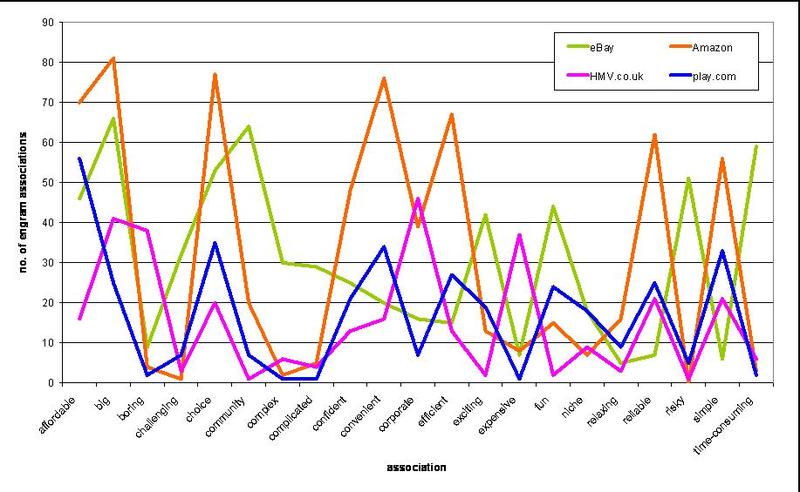
Figure 1: herd engram associations by brand 21

But when each brand is examined individually, a much more distinct herd engram emerges. Figure 2 shows only the eBay data, ranked by association.

Figure 2: eBay herd engram associations ranked strongest
first 21

Big, community, choice and affordable emerge top (reflecting the positive gravity well), as do time-consuming and risky (the negative gravity well). In an individual engram this picture wouldn’t have emerged, the gravity well of that individual would have dominated. Only by looking at the herd engram are the range of (in eBay’s case less consistent) associations observed.

But the real indication of the relative strength of herd consistency comes when the brand herd engrams are compared. Figure 3 shows each of the four brand herd engram footprints as ranked by each brand independently of association (i.e. the first point on the x-axis is the strongest association for each of the four brands).

Figure 3 brand herd engram footprints as ranked by each
brand independently of association (21)

Amazon’s herd engram footprint has most connections concentrated across fewer associations. In short its herd is the most consistent. Amazon’s herd more easily and implicitly recognise what its individual members mean when they mention Amazon or when it is used as a display of self-identity.

The challenge for eBay is to use its marketing communications to help generate consistency across its herd engram. At present those carrying the engram are forming very different memory traces orientated around different experiences of the product, ensuring that broadcast communications resonate less well with the collective associations of eBay’s herd.

The challenge for all advertisers is to acknowledge the existence of the herd brand engram and accept its truer reflection of the brand as it exists across the memory traces of consumers. Articulate it. Measure its consistency. Identify the foci for the gravity wells that will influence the currents and eddies of the conversations and interactions – the ecology – of the herd engram.

Notes and References

  1. Random House Unabridged Dictionary, © Random House, Inc.
    2006
  2. American Psychological Association (APA): via Dictionary.com
    Unabridged (v 1.1). Retrieved October 01, 2007
  3. Wildebeest herd grazing on savannah, Masai Mara Game
    Reserve, Kenya, as seen on
    the ‘Great Plains’ episode of Planet Earth. http://tv.yahoo.com/planet-earth/show/39817/photos/14
  4. Daniel L. Schacter. Searching
    for Memory: The Brain, the Mind, and the Past. Basic Books. p59
  5. Wendy Gordon. Brands
    on the brain: new scientific discoveries to support new brand thinking. Kogan
    Page. P112
  6. Daniel L. Schacter. Searching
    for Memory: The Brain, the Mind, and the Past. Basic Books. p57
  7. Daniel L. Schacter. Searching
    for Memory: The Brain, the Mind, and the Past. Basic Books. P46
  8. Micahel Willmott & William Nelson. Complicated lives;
    sophisticated consumers, intricate lifestyles, simple solutions. Wiley. p221
  9. Wendy Gordon. Brands
    on the brain: new scientific discoveries to support new brand thinking. Kogan
    Page. P115
  10. Wendy Gordon. Understanding Brands, by 10 people who do.
    Chapter 2: Accessing the brand through research. Ed Don Cowley. Kogan Page. p36
  11. Malcolm Gladwell. The Tipping Point. Abacus. p21-22
  12. Caroline Whitehall. Inertia is Good. Admap December 2005,
    Issue 467. p3
  13. Joseph Heath & Andrew Potter. The Rebel Sell: How the
    Counter Culture Became Consumer Culture. Capstone Publishing. p219
  14. Daniel Dennett. ‘The Self as a Centre of Narrative Gravity’
    in Self and Consciousness, ed F. Kessel, P. Cole, D.Johnson. Hillsdale, NJ:
    Erlbaum, 1992
  15. Wendy Gordon. Brands
    on the brain: new scientific discoveries to support new brand thinking. Kogan
    Page. P112
  16. Malcolm Gladwell. The Tipping Point. Abacus. p188
  17. James Surowiecki. The Wisdom of Crowds. Abacus. p xiv-xv
  18. As reported by eBay, specific proprietary data is
    confidential.
  19. The author. eBay proprietary qualitative research. June 2007
  20. This was – amongst other specific messages eg Trust &
    Safety – the general message communicated by eBay from circa. 2005 until
    mid-2007
  21. Independent proprietary quantitative research conducted by
    the author for the purposes of this paper. Sample on 88 respondents (recruited via Facebook – not nationally
    representative). September 2007
Standard
broadcasting, converging, internet, IPA|ED:three, planning, social networking, user-generating, viewing

Darth Vader and The Evolving Ecology of TV

I was shown the above – somewhat delightful – clip at a conference last week.  a subsequent forwarding on to a colleague reignited a question I gave pause for thought to a year ago when I asked what is TV?  the answer I came to then is the same answer that I stand by now…  that TV is the act of consuming aggregated audiovisual content.

I pointed out at the time that this definition implied that, should you run with it, YouTube is television.  and I believe it is.  in Dec  06 I wrote:

"the aggregation of TV requires content and distribution.  technology
has allowed citizens to produce the former, and the internet has
allowed them to do the latter.  we are all – should we wish to be –
content aggregators.  we are all budding broadcasters.  and a
generation is learning to watch TV aggregated by commercial entities as
well as fellow citizens."
mediation post Weds 6th December 06

an obvious question then in all of this is – who is to do the aggregation?  …commercial broadcasters or – via PVR on TV / subscriptions on YouTube / wall posts on Facebook – viewers themselves?  in negotiating the future of media and communications – the aim of this blog – we have to accept the inevitable conclusion that it is of course both.

in the evolving ecology of TV (in both the broad and narrowcasting sense) the question in not who aggregates, but who – at a given moment in time – we want to aggregate for us.  its a question of context…  Saturday evening on the sofa is very different to 30mins web surfing on a Friday lunchtime.  as a viewer, my individual needs vary massively over the course of a day or week.

commercial broadcasters and internet unilateralists continue to be at war over the issue of who aggregates.  the battle is pointless.  in the year since I wrote my original ‘what is TV’ post, commercial TV has been under what seems to be continuous fire, not from futurologists predicting their demise, but from a media who have witnessed compromise after compromise of viewer trust.

if broadcast TV thinks it needs to win a perceived war against the internet by cutting corners and taking shortcuts in order to be as popular as possible, then it is fundamentally flawed on two fronts.  one; there is no war – both commercial and viewer-aggregated TV are here to stay, and two; the role of commercial broadcasters in this new ecology is not compete with YouTube by being as popular as possible, but to inspire it by being as original as possible…

the role of broadcast TV is to be the source of original, intriguing, inventive, surprising and high-quality content.  content that demands to sit alongside it’s online counterparts.  as Stephen Poliakoff comments in today’s MediaGuardian, "if you commission it, the viewers do turn up."

…just as millions turned up to see Darth Vader in cinemas in Empire Strikes back in 1980 (and on TV and DVD ever since)  …and just as millions have turned up to see the clip at the top of this post.  together they’re a great example of this new relationship: content originally produced commercially by Fox and Lucasarts as high-quality content, remixed by DoomBlake for fun, as parody, as art.

both are entertaining, and both have their place in the new TV ecology.  it’s notable that DoomBlake’s recreative remix is  entertaining because of the original context as defined by Lucas’s commercial creative vision.  these content siblings need each other – one as source material, and the other as a way to stay contemporary in a changing world.

Standard
advertising, engaging, internet, planning

Missing an Opportunity in the Search for the Golden Domino

I’ve seen this latest Guinness effort a few times since it launched on TV last Thursday.  it’s a fantastic piece of advertising, as of course it should be for the £10m price-tag that came attached to it.  but according to an article by Stephen Armstrong in today’s Media Guardian;

"By the time the 60-second film broke last week …  it had already been pieced together and posted on YouTube by thousands of net users across the world in an enormous online hunt for a golden domino … AMV BBDO gave out the first clue on posters, beer mats and websites two weeks ago.  Solving each of the 11 clues released a code that revealed a few more seconds of the commercial, with the first to sling the completed film on to YouTube earning the brewers’ version of Willy Wonka’s ticket."

really!?  you could have fooled me.  not a jot have I seen of it!  which is more than a little disappointing.

the investment behind Guinness’s broadcast media (and a £10m ad) should quite rightly take priority in the mix – but to invest so little behind a genuinely interesting and smart piece of consumer engagement shows at best a lack of confidence, and at worst a distinct case of ‘let’s do the consumer engagement bit’ as an add-on.  the fact that – as a thirty year old urban alcohol drinker – I didn’t see the golden domino activity could just be accident; the fact that this activity started a mere two weeks before the ad was first broadcast definitely wasn’t.

a case of smart, very smart, thinking just not backed-up by investment.  this should and could have been huge, the fact that it wasn’t (96,000 views to the discussion forum just doesn’t cut it), represents a genuinely missed opportunity.

the same article observes that "alarm is growing in the advertising community over the idea that the net allows clients to pay for an ad in one territory and then reap the benefits for free across the globe".  the fact that ‘if I paid £10m for something, I’d feel I had the right to do whatever the hell I liked with it’ aside, one way to combat this threat is to ground the ad into a territory with exactly the kind of comms behaviour that golden domino demonstrates so well…

great ads will for a very long time to come have a key part to play in any communication strategy…  but a failure to use them as part of a bigger picture, and more importantly invest in that bigger picture, will only contribute to the spot ad’s woes.

Standard
content creating, internet, planning, viewing

Building a Robust Ad Model in the Online Video Space

Msn_video_2 MSN’s video portal launched recently (source: Microsoft)

having only two days ago posted about how the content / conduit model of consumption is evolving, the good people of MSN yesterday visited citadel Vizeum to tell us about their new online video portal, which can be viewed here.

its a new contender in what’s an increasingly crowded market.  just as broadcast channels have grown in number so too has the choice of internet based on-demand channels.

Online_video_market

internet-based online channels (source: Microsoft)

it’s a far cry from the days when YouTube, blinkx and Google were battling with bootlegged Mpegs.  the market has gone mainstream, and in doing so not only have heritage channel brands (BBC, ITV, Guardian etc) entered the fray, but a wealth of premium content has been made available.

Premium_content
premium content (source: Microsoft)

but the key question for both content creators and conduits in this new market  remains – how does the commercial model remain viable?

consumers are proving less and less likely to pay for content – the recent announcement that the New York Times’ pay service TimesSelect has gone free being a case in point – and advertisers (rightly) are increasingly wary of divesting budget into more and more fragmented media channels (or conduits) online.

this is where the MSN video portal feels most accomplished; firstly, not only is the content is of the highest caliber, but it’s seamlessly integrated with a range of advertising spaces, not all of which are the viewing screen itself; on which compulsory ads are viewed in between every few slices of content.  in addition a 300 x 240 display ad pops out from the side, and a 300 x 60 sits permanently below the screen.

two observations.

one, it seems that the more things change the more things stay the same.  the old contract between viewers and advertisers (where viewers tolerate ads to get the bits they want for free) stands.  it turns out the new way of doing things is the old way of doing things; just with new language, different trading models, and – given the proliferation of ‘screens’ – more sophisticated media targeting and selection.

two, your ads sure as hell better be good.  as much as the model stays the same, the TV now has a mouse.  and whilst as long as brands that make entertaining content will add to the overall experience, a response-orientated insurance add will have people navigating away from the site (let alone the screen) faster than you can say brand response.

of course the increasingly-used alternative to all of this is to bypass the model and make the stuff people want, the content.  and again MSN seem have this in hand, talking to – and utilising the experience of – TV production companies about the creation of original content funded by advertisers.
Original_content

TV Production houses working with Microsoft

so if there is an eventual long-term shift in the business model, it’s most likely to be the move of investment to the producers.  interestingly, it could be the Endemols and RDFs of the world that build on their historical income from channels (conduits) with direct income from advertisers and their comms planning agencies.  interesting times.

Standard
branding, engaging, planning

Making Good Stuff: Creating Content in the Flight to Quality.

Xfactor X-Factor – great cross-platform content is in demand

Jeff Jarvis, who blogs at Buzz Machine writes in the Guardian today about fundamental changes at Dell, in which the company adopted digital behaviours to more actively engage with their customers.  as a result of investing in everything from their own blogs, Wikis and forums, to IdeaStorm – a website where customers can tell Dell what to do –  the company’s new problem is "managing and spreading all this knowledge from consumers".  Jarvis comments that:

"Dell and its customers are collaborating on the creation of content, media and marketing – without content, media or marketing companies.  Advertising is no one’s first choice as the basis of a relationship … clearly, the direct relationship between a customer and a company is preferable.  but that direct connection cuts out the middlemen – that is the media."

now then, I’d be the last person to dispute the principle that marketers should invest in actively engaging with their customers, but whilst this may be the ideal for all brands its just not terribly feasible for many, if not most!

firstly, Dell – as a manufacturer of laptops – is an example of a brand with a product that requires active involvement on the part of it’s owner.  laptops needs to be updated and managed, software upgraded or fixed.  moreover, laptops will for many customers occupy a central role within their lives; laptops keep our content and provide access to communications.  they enable us to work and play.  not all brands are in this fortunate position.  everything about Dell products make them amenable to being engaged with.  most brands will struggle to occupy such fortunate a position

secondly, if we all engaged ‘hands-on’ with all the brands we ever consumed there’d be little time for us to do anything else.  we may very well co-create with and contribute to a company, but it’s only ever with a few of the brands that sit at the top of our trees.  there are hundreds of other brands with which we have ‘hands-off’ relationships; relationships that must be nurtured and evolve without the benefit of active hands-on consumer engagement.

our media model isn’t broken.  it’s just changing.  in the olden days there was lots of stuff – like TV shows or fashion shoots or a movie or
the latest single from Spice Girls or Take That (first time round!)

Media_conduit_one

consumers accessed all that stuff thru conduits called media channels – so advertisers invested in the media channels that were most able to deliver either lots of – or the most relevant – consumers at the end of them.  the bigger the conduit, or the fewer conduits reaching a consumer, the more the conduits were worth.

advertiser money rode the back of this content and attached their brands to it.

nowadays essentially three things have changed…  firstly, there’s a lot more conduits – media fragmentation.  secondly, there’s a load more stuff – mainly because of the increase in conduits, the largest of which has been the internet – a global library of stuff ready and waiting on demand.

but the third and most significant factor – and the one to which Jeff Jarvis refers – is the changing relationship between consumers and stuff…

Media_conduit_two

what’s not happening is the disintermediation of the conduits.  there is still relatively little stuff that consumers directly engage with – the majority of media time remains within the confines of the media conduits.  the real story is of conduit control…

PVRs, Google (thought I’d get thru a post without mentioning them but no luck!), Podcasting – all examples not of consumers abandoning the media conduits, but of consumers controlling them – accessing and organising them to their own ends.  why?  because of the explosion of more stuff thru more conduits.

more stuff via more conduits  >>>  more control over content  >>>  the inevitable result of which is that advertisers are looking to get closer to the stuff at the end.  and this is where it’s getting fun!

a former associate who works at a London ad agency was explaining yesterday over lunch that one of the key strands of a campaign they’re planning won’t be a TV ad but a TV series.  they’re pitching a 22 episode season in order to tell the brand story they wish to convey.  investment still goes into the media model – it’s just into the ‘stuff’ bit as well as the ‘conduit’ stuff.  content still gets made, advertisers still spend to attach themselves to the stuff, and consumers still get great content that other people (brands) pay to make.

when viewed in this way the conventional ad takes on a whole new meaning.  it’s a little bit of stuff in itself.  how can we as agencies help our clients make more and better use of these little content canapes?  how can they sit alongside their meat and two veg season-long siblings that we’re increasingly looking to create?  but most importantly how can we make them stand out?

Emily Bell made reference to this in her MediaGuardian column today.

"In the world of web content, which has been fuelling the
content innovation fire, there is a new trend called ‘the flight to
quality’, which describes the process of refining something to the
point where you are producing the best object, clip, article package,
conversation on a theme or topic or object that the rest of the web
wants to point at."

it won’t be enough to create stuff.  it’s got to be the best of stuff.  but we’re fortunate on two fronts; one, London agencies are the best in the world at creating great content – they’ve just got to change their scope from 30" to 30 mins!  two, the production houses are waiting for our ideas.  Lorraine Heggessey, former controller of BBC1 and chief exec of talkbackThames in today’s Independent media section explains that "as she grows the company, [she] is constantly searching for new formats that have the potential for export".  that sounds like a gauntlet being laid down.  I hope it is, and I hope more advertisers and agencies have the gumption to pick it up and run with it!

Standard
advertising, branding, engaging, planning

The Information R/evolution and it’s consequences for Advertising and Brand Communications

this wonderful piece of content, entitled Information R/evolution, is by Michael Wesch of the Kansas State University.  it explores the basic tenants of information and how they have fundamentally changed as information has moved from paper to digital storage.

for more on this subject they point in the direction of Clay Shirky”s work, as well as David Weinberger’s Everything is Miscellaneous.

the principles of how consumers aggregate relevant information to their own ends is especially true for the business of brand communications.  it has become a given that the double revolutions challenging advertisers and their agencies are (1) a digitally driven explosion of content and (2) technologically-driven consumer control over that content.

advertisers hoping to push through this double whammy of virtually infinite (and expanding) content and consumer control over it by force of sheer strength (and budgets) will learn to their cost that information and its storage – no matter what its source – no longer permits such behaviour.

the role of many brand communications in the early 21st Century is to package brand messages in such a way that they not only avoid being filtered out, but are actively invited and aggregated by consumers around themselves (and each other).

what the above video communicates so well is a poignant reminder that underpinning much of the current change in the business of brand comms is the simple transfer of information to a digital realm.  whether it’s an essay, blog, advert for a fizzy drink, CD single or TV episode; the fundamental rules of how they are delivered and consumed are being re-written.  some key questions then arise for those creating brand communications to ask themselves:

1. am I creating something people want to have or experience?
2. does it change or add benefit to their lives?
3. can it be easily found and consumed at any time?
4. does it articulate and reflect my brand?
5. could a competitor have made it?

advertising is information.  the nature of information is changing.  our advertising and brand communications must evolve in order to remain relevant and effective in a changing world.

Standard
advertising, branding, engaging, planning

Why Great Ads Are Great, But Not Great Enough

a strange thing has started happenning.  I’ve started watching ads.  Sky+ no longer gets to do it’s thing…  it started a few weeks ago, with THAT gorilla ad.  we wanted to know what all the fuss was about, so we re-wound and watch it.  then we watched it again.  thats what seems to have started it all. then last Friday Ugly Bettty was interrupted by the spanking new effort from Fallon for Bravia…  if you haven’t seen it, watch it now…

Play-Doh is a pleasure to watch.  repeatedly.  and thats a heck of a lot more important that how it compares to it’s predecessors.  an argument was made to me yesterday that viewer expectations of the series are now so high that Bravia / Fallon can’t hope to meet them.  that’s unfair; I can’t imagine a level on which Play-Doh doesn’t engage and entertain the viewer.  this emerging trend of me watching ads continued more recently with eBay’s effort.

knowingly retro, clean and fresh, and containing a wonderfully insightful moment where one of the characters looses a bid, this marks a strong start for what is hopefully set to become a long-running platform for the brand…  eBay has a world to play with, ads created in isolation should only be the first and shallowest expression of that world…  this is begging to be transmedia-planned.

another new effort comes from the Post-Office.  the ants – thank God – have gone and been replaced by a sitcom assortment of characters.  again there’s knowingness in the derogatory reference to sub-standard carpets, and then Joan Collins crops up.  all very random but it works…  but it could be argued just making an ad is a very shallow window on this world and brand.  I would love to see what could be done with this concept extended into 5-8 min sitcom-style shorts online…  a Victoria Wood meets Gervais / Merchant approach could create some genuinely entertaining content (above and beyond which the ads could reference, again a nod to transmedia-ness)…

but the trend isn’t restricted to TV.  a lovely press ad for the Peugeot 407 caught my eye recently too…

Peugeot_dps_2the flowchart on the left is genuinely fun and invites you – by playing thru a decision-making tree – to think about what’s important when buying a car.  a simple idea that’s entertaining whilst remaining embedded in the product…  and there’s an intriguing url – http://www.407trustyourinstinct.co.uk/ – which depressingly is not a smarter deeper reflection of the ad but lots of pictures of cars, a product not a brand experience.

and I suppose that this is the nub of all this…  brands are ideas.  and ads are the multitudes of individual expressions of those ideas.  but to end there, with a great ad, is simply no longer enough.  media offers more, and brands deserve more.  the opportunity is not just to make great ads like the above, but to do the smart interesting stuff with and behind them that a 21st Century media landscape permits…

whether it’s communicating the mythology of making the ad a la Play-Doh, or creating and bringing a world to life like eBay (storybooks, documentaries anyone?); or potentially making entertaining content (Post-Office sitcom please), or something as simple as taking that Gorilla ad that sparked this bout of ad-watching, and changing the smallest thing to make the biggest difference…  the below played out just before 8pm on Saturday 13th October, a few minutes before England played France.  if you didn’t catch this watch the ad again – the gem crops up just at the end.  enjoy.

Standard
advertising, planning, regulating

Childsplay

Zipngeorge “the only consequence of the regulations will be a hit on the commercial incomes of channels targeting young people. the only consequence of that will be a decline in the quality of the content on those channels. which is in no one’s interest.”
Posted by chris stephenson on Sunday, 19 November 2006 at 23:18

More hours + less investment = lower quality.  Should have been an easy equation to forecast.  Not so for Ofcom, who last week published a report into the state of children’s TV.  Apparently it’s bleak.  Whilst the hours of dedicated kids TV have trebled over recent years (with the emergence of dedicated children’s channels), investment across the public service broadcasting channels, has – according to Ofcom – declined somewhere in the region of 20%.

Channels create programmes that people want to watch.  They can then charge advertisers to reach those audiences.  This funds programme making.  And round we go. It should be so easy, Childsplay even.  But no.  By pandering to the notion that advertising has the ability to magically make kids – or anyone for that matter – buy things (if only it were that easy!), and by therefore barring a significant proportion of advertisers from investing in the kids TV market, Ofcom has by its own actions significantly reduced the amount of investment commercial channels can obtain from advertisers.

Ofcom are ignoring the fundamental commerciality of the market.  Worse, they seem to be implying that they should be able to re-engineer the situation with further legislation:

Mr Thickett, who is overseeing the report, points out that "Ofcom has powers to make recommendations but our power is only to look at the market as a whole … we have no powers to prevent them [broadcasters] doing what they feel they need to do."

Broadcasters feel they need to reduce investment not despite, but because of Ofcom’s actions.  Broadcasters are reducing the investment in kids TV precisely because of the pressures of the commercial marketplace, pressures that have been exacerbated by the junk food ban.

Advertisers still target kids via media investment.  But the marketplace has forced advertisers to divert investment away from TV into other media channels – channels that have no PSB remit in delivering quality educational kids television.

Are kids getting thinner?  I doubt it!  Will the government – thru Ofcom – continue to pander to the needs of a nanny state and target advertising?  Very possibly.  Alcohol advertising ban anyone?

Standard
buying, planning

The Disintermediation of the Media Agency

Balihoologo_2 whilst it may be premature to suggest the media agency planning and buying model is about to become redundant, a new search engine’s aspiration to become "the Google for media planning" should surely provide food for thought for those of us who spend a few minutes each day meditating on the future of communications planning.

Steve Roest, who blogs at Open House, has pointed me in the direction of Balihoo, an engine who’s spiders have, for the last few years, searched the web and logged online – and offline – media properties available for purchase by either media buyers or clients direct.  Ad Age’s Media Morph describe the model thus:

"A marketer or media planner can enter a category or genre — say, kayaking — and it’ll return all the media properties about kayaking, as well as related media with similar demographic profiles — including ones that might not be included in or subscribe to traditional media-planning tools … While some marketers might do Google searches, Balihoo refines results to include only properties where advertisers can buy media." (see the full article here)

in a world of unprecedented media fragmentation, the proposition of an engine that will return a comprehensive list of all related media spaces to a brand or subject is an attractive one.  but that is to miss the point. there are several central objections to the suggestion that this means the end for agencies…

firstly, if media planning as a discipline was the amalgamation of media opportunities, a search engine could do it; it would indeed aid the disintermediation of the media agency, giving clients and marketers the power to find and buy media space according to their needs.

but not all media opportunities are created equal, and whilst Balihoo may offer a valuable starting point for initial exploration of a brief, what it won’t do is give credible guarantees of the value of one opportunity versus the other.  it is arguably – to quote (the rarely wrong) JRT Smith – a tool for those that understand "the cost of everything and the value of nothing".

secondly but more fundamentally, using a search engine for media planning alone relies on the push model of media planning.  a model which suggests that by reaching as many of the right people most of the time brands can attempt to build or change the set of associations as required by the marketer.

but thats a pretty outdated model.  the role of media planning is not to hit as many people over the head with an advertising message, in as many places, as possible; but rather to make a value judgment so that the places and spaces in which brands are seen are not only relevant, but add implicit value to the advertising message by the very virtue of being seen in those spaces.

and thats not – fortunately – something a search engine can do.  yet.  it’s not even – to give Balihoo’s ambition of creating a scoring system where agencies and clients can rate opportunities – something an online community can yet do.  value judgments always have to be made within the context of the brief and brand in question. the agency model is safe for a while yet, but only – it should be said – for those agencies that do more than list opportunities – it’s one thing to know the cost of media space, quite another to know it’s value to a brand.

Standard
advertising, converging, internet, planning

When Words Collide – a perpective from DDB

thanks to John V Willshire who pointed me in the direction of this video featuring Matt Dyke, Worldwide Planning Director DDB and Jeroen Matser, Senior Planner DDB, discussing the new landscape of digital innovations converging with the physical world.

much is said about convergence but this take on how the internet is colliding and interacting with the too-often-overlooked offline world is timely and refreshing.

Standard