
conferencing, innovating, machine learning, marketing, retailing, trending

Embracing the Agentic Age: What Mobility Commerce tells us about the Future of Marketing

AI in Everything, Everywhere, All at Once

Walking the convention floors at CES last month, it was impossible to ignore the bigger, brighter screens, smarter cars, more intelligent home devices, and increasingly agile robots. There was a bit more of everything, everywhere, and – because of the impact of AI – it’s all happening at once.

Technologist Shelly Palmer has suggested that “2025 is the year of the realization of AI’s promise,” and it’s hard to disagree. Artificial Intelligence has shifted from hype to reality, becoming deeply embedded in consumer electronics, interactions, and commerce.
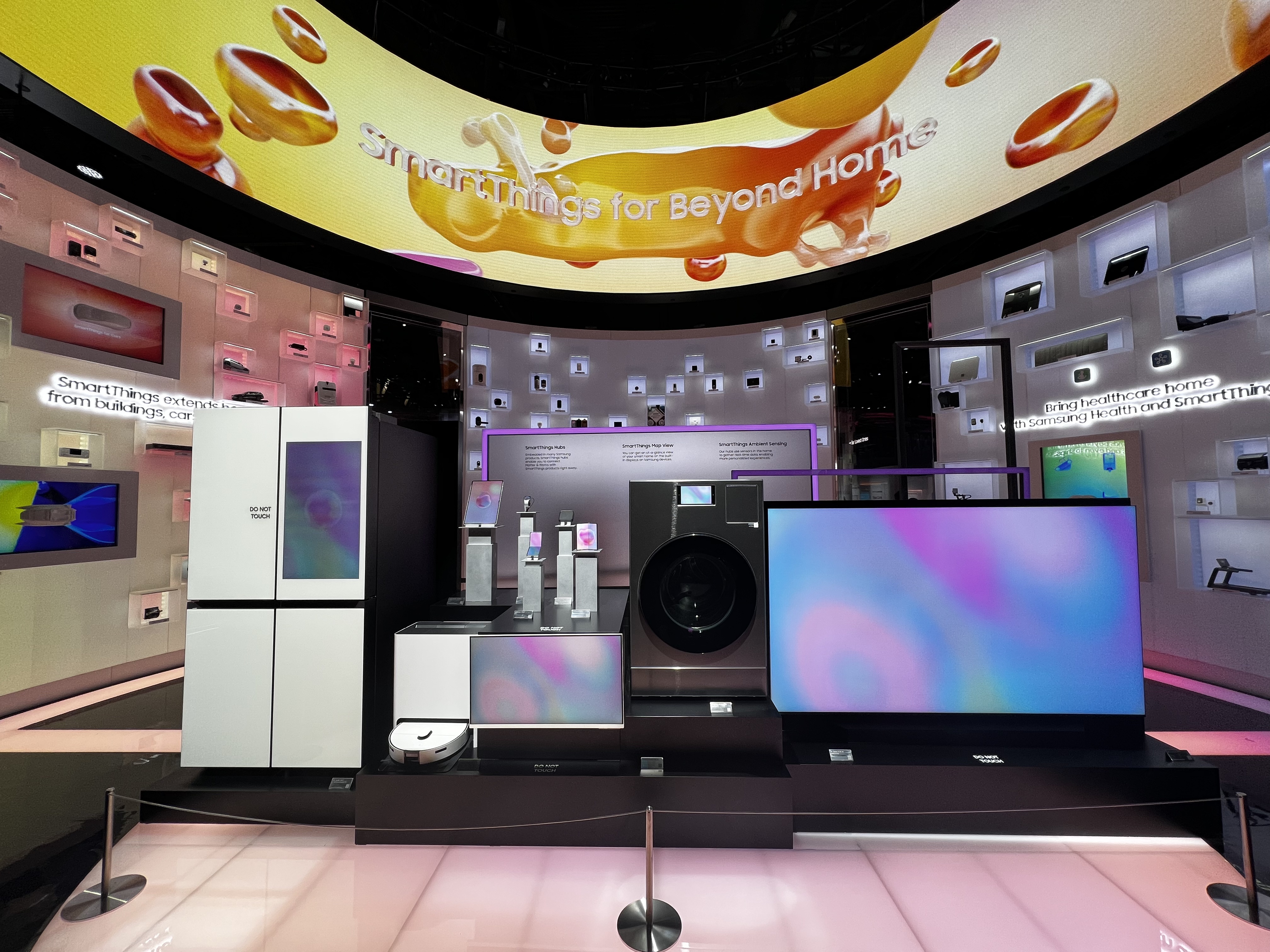
Samsung’s SmartThings appliances displayed on the showfloor at CES

Samsung’s SmartThings Automotive now seamlessly connects EVs to broader smart ecosystems, while Richtech Robotics’ autonomous delivery robots are redefining service efficiency. Meanwhile, LG’s AI home hub and Samsung’s Home AI System illustrate how intelligent agents are integrating into everyday life, transforming how we live, work, and move.

But the most pivotal force behind this revolution is Nvidia. At CES, they launched their RTX 50 GPUs, pushing AI-driven gaming and content creation to new heights. They also introduced the Cosmos family of foundational AI models, designed to train humanoid and industrial robots, as well as vehicles for autonomous mobility. The era of agentic AI is here.

The Emergence of the Software-Defined Vehicle

The automotive industry is undergoing a fundamental shift, evolving from hardware-driven machines into software-defined experiences. Nvidia’s Cosmos AI model is at the forefront of this transformation, enabling advanced self-driving capabilities. Trained on 20 million hours of human activity footage, it generates photorealistic simulations that help self-driving cars better understand and navigate real-world environments.

By leveraging synthetic data, developers can train AI systems more efficiently and cost-effectively, reducing reliance on real-world testing. Companies like Uber are already using Cosmos to accelerate their autonomous driving efforts, while Waymo expands its self-driving taxi operations and Honda’s ASIMO OS introduces “ultra-personalized” vehicle interfaces powered by over-the-air updates.

This shift has given rise to the software-defined vehicle (SDV), where traditional metrics like horsepower and acceleration take a backseat to comfort, connectivity, safety, and sustainability. SDVs—along with their supporting ecosystems—were everywhere at CES, signaling a future where cars are more than just a mode of transport; they are destinations in themselves. Think relaxation spaces, content hubs, gaming centers, and even commerce platforms on wheels.

The New Marketing Canvas of Mobility Commerce

Mobility commerce is fast becoming a frontier for innovation, and CES showcased the technologies set to power it. Take SoundHound AI’s voice-based commerce platform, for example—it allows drivers to order food, pay for services, and access real-time data directly from their car’s infotainment system.
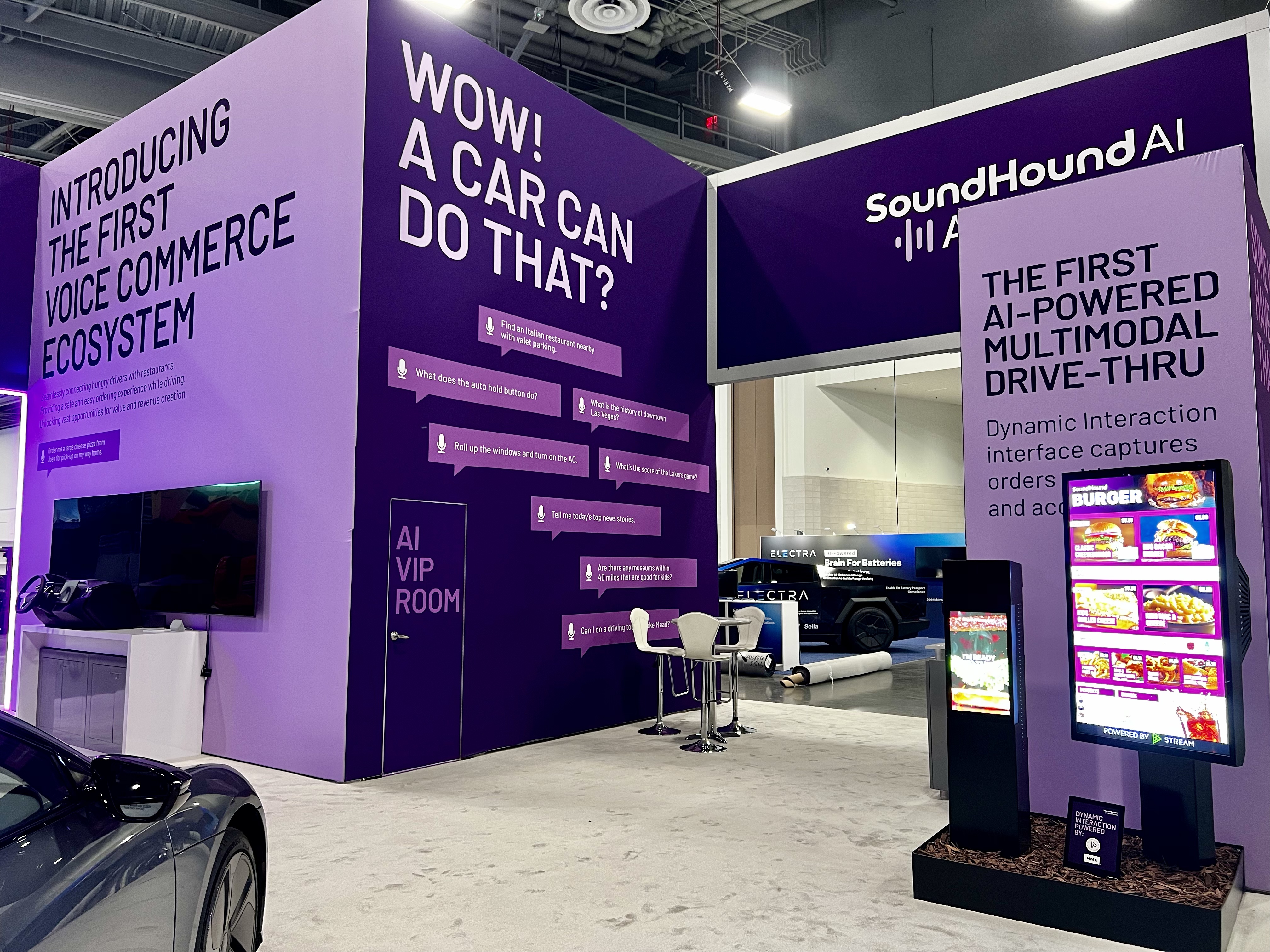
The SoundHound booth at CES demonstrated a custom voice commerce ecosystem

AI-powered interfaces like these go beyond convenience; they enhance the ownership experience while unlocking new revenue streams, increasing the lifetime value of car owners. As vehicles become personalized media and commerce hubs, they create fresh opportunities for brand engagement.

In-car voice assistance is also evolving into richer, multidimensional conversational experiences. The private environment of a vehicle provides a unique space for seamless content consumption and commerce through natural voice interaction. This not only enhances the driving experience but also presents new possibilities for marketing—delivering contextual recommendations and unlocking new monetization models.

Marketing in the Agentic Age

The SDV is just one example of how the agentic age—a world navigated and intermediated by AI agents—is taking shape. The marketing implications are profound.

With AI automating interactions across search, content discovery, and customer service, consumer journeys are increasingly shaped by AI-driven recommendations. Whether through home assistants, automotive voice interfaces, or AI-powered search engines, customers will increasingly rely on digital agents to make decisions for them.

For some categories and brands, this means marketing directly to AI agents. Yet, human engagement remains critical. Brands now have unprecedented tools to create Generative AI-enhanced marketing experiences, from producing high-impact advertising that was previously cost-prohibitive to delivering hyper-personalized web experiences.

AI-powered assistants and avatars can guide potential buyers through product discovery, offering dynamic, customized interactions. The ability to generate tailored content at scale will be a major competitive advantage in this new era of AI-first marketing.

The Evolution of Search and Brand Discovery

Search is evolving at an unprecedented pace, moving beyond keyword-based queries to AI-driven, solution-focused interactions. Consumers are shifting from traditional search engines to AI assistants, social commerce, and e-commerce platforms for discovery.

According to Omnicom Media Group, nearly 40% of consumers in key markets now use LLMs like ChatGPT for search, while 76% rely on platforms like Amazon. Even smart TVs are emerging as search engines, enabling users to browse content via AI-powered voice commands. Meanwhile, consumers no longer rely on a handful of trusted reviewers; they can query and analyze reviews across multiple platforms using AI.

This shift demands a fundamental rethink of visibility strategies. Traditional SEO is no longer enough—discovery now happens across a fragmented ecosystem, from social video platforms to generative AI assistants. Brands must focus on “share of model” (how often they are referenced in AI-driven search results), deploy LLM-specific tracking, and optimize structured comparison data for AI crawlers.

Transforming the Marketing Experience

The shift from SEO to GEO (Generative Experience Optimization) is just one part of a larger marketing transformation, which was on full display at CES. As homes, vehicles, and workspaces move from smart to intelligent, the entire landscape of brand discovery, purchase, and experience is evolving.

2025 is set to be a landmark year for AI, search, creator-led marketing, and innovation. As these trends redefine consumer expectations, brands must adapt their marketing strategies to align with a world where AI, personalisation, and digital-first experiences drive engagement and growth.

Standard
commenting, distributing, marketing, opinionating, promoting, retailing

Coles and Woolies’ Death Star moment: the beginnings of the brand rebellion in Australia’s Supermarket Store Wars

Tarkin and LeiaThe more you tighten your grip, Woolies and Coles, the more brands will slip through your fingers

my return from a rather long winter blogging break has been greeted with the glad tidings that some brands have finally chosen to take a stand against the big two Australian supermarkets.  Adnews reports today that Glenn Cooper, boss of Coopers Brewery has described Coles and Woolies as being the "killers of Aussie brands".  Cooper went further:

“Blatantly, Coles and Woolworths are not brand builders, they are brand destroyers … it’s harsh, but they are not about building brands, they are just about turning over quickly.”

SMH only last week reported that this is an opinion recently echoed by no less than Heinz' chief financial officer and executive vice-president Arthur Winkleblack.  in a briefing to US analysts on the company's first-quarter earnings, Winkleblack specifically name-checked the Australian supermarket sector and blamed them for an erosion of its margins.  sentiments echoed by Heinz' chairman and chief executive Bill Johnson:

''There is no doubt that in terms of retail environment, the Australian market is the worst market, and ultimately the people that will pay the price over there are the consumers because products will ultimately be devalued to address the price points that customers are asking us to address … So the consumer is going to ultimately be the big loser in Australia.'' 

the supermarket's argument is manifold and includes the rationale that this is all in consumers' interest – a Coles spokesman, in response to Winkleblack's comments, stated that "We agree with Heinz's comments that companies need to be competitive to ensure the best outcomes for customers."

but consumers don't benefit from Supermarket competition.  the concensus of an April opinion piece in the Sydney Morning Herald was that consumers – if they see any benefit at all – see it only in the short term.  Academic Angela Paladino commented that:

"Price wars squeeze out marginal players and change the composition of the market. Here fewer competitors seek to enter an unattractive market that is dependent on low price for success, and smaller competitors exit the market as a result of the inability to make a profit. Others may be taken over, for example the 2009 acquisition of Macro Foods by Woolworths. This has a long-term impact on consumer choice, with shoppers left in a market comprised of fewer players with greater power."

Nick Stance, Chief Executive of Choice agreed:

"The market shares of Coles and Woolworths allow them to negotiate hard with their supply chain. In fact many suppliers report they have little choice but to accept terms offered even if that makes their business barely viable … Sometimes the benefit of lower costs is passed on to the consumer through promotions, but promotions are temporary and do not in themselves create sustainable competition … The ''price war'' is a phoney conflict, not least because the big players usually match each others' prices."

there are only two winners in Coles and Woolies' Store Wars; and that's Coles and Woolies.  brands have and continue to exist at the mercy of these distribution Death Stars.  now Coopers and Heinz have come out of the supermarket closet.  it's just two brands.  but that's two more brands than a few months ago.

Coopers and Heinz's coming out is important.  brands standing up to Coles and Woolies is important, because the dominance of Coles and Woolies is hurting brands … not least in expectations of media investment…

I've sat in more meetings that I care to recall where there have been two invisible seats at the table.  in discussions where the spectre of supermarket's expectations for media investment loom large over marketers, marketers dependent on these two Death Stars for significant – and often increasing – distrutions volumes.

it's a sweeping generalisation to say that Australian brands are too dependent on the broadcast interruption model (of which TV spot advertising is the main solution) for their marketing needs.  never-the-less its a generalisation that I believe is true.  a reliance on this 20th Century marketing model isn't just down to the pressures and expectations of Coles and Woolies on media spends, but they sure as hell play a very significant part: too many brands over-invest in broadcast interruption because its what supermarkets want and expect to see on those brands' media schedules.  supermarkets' expectations are holding back brands' media innovation potential.

but the effect and influence isn't limited to consequences above-the-line (a term which I hate but I'll run with anyway).  prices are down.  great.  but its not the supermarkets funding this price decrease – it's brands.  manufacturers are paying for prices to be down with their below-the-line (ditto) budgets.  and because prices are down for good manufacturers will be paying for them to be down … for good.

Coopers_order
The Order of Coopers – owned and earned media curating a community for the brand

what is phenomenal in this context are the levels of innovation that do get out of markets and agencies' doors and into the world.  despite the vast majority of bought media investment being diverted to an outdated (and actually never that well proven model), Coopers – for example – have built a hugely utilised online site and community.  they are investing in owned and earned media that are building a community with direct links to their brand and business that side-steps the supermarkets' Death Stars.

brands, it would seem, are starting to have had enough.  the Supermarket's weaponary have become simply too powerful to ignore.  to paraphrase Senator Organa, 'the more you tighten your grip Coles and Woolies, the more brands will slip through your fingers'.

the rebellion, I very much hope, has begun.

full disclosure: I work as a media strategist for several brands that have distribution through Coles and Woolworths in Australia.  the above comments reflect my, and my opinions alone.  the advice and recommendations I make to brands take these – as well as other – opinions and considerations into account.

Standard