engaging, gaming, marketing, planning, rewarding, selling

Quid Pro Quo and the generosity of our age: how engagement and reward are the new reach and frequency

it may just be me, but I seem to have returned from my Easter adventures in TasVegas to a bit of a utility and relationship-building love in.  generosity, it seems, is all around…

first up, as reported in Contagious, is a trailer (above) for mobile game The Nightjar, an experience which places you alone in space and challenges you to escape using only sound. the app will use 3D sound and will be voiced by Benedict Cumberbatch of the parish of Sherlock Holmes.  all generously provided by the marketing efforts of Wrigley's 5 Gum and all very brilliant, but its what lies behind it that is even more intriguing…

AMV BBDO creative partner Thiago de Moraes explained to Contagious that The Nightjar is the first in a five-year (ie forever in marketing terms) effort to create 'The 5 Experience'.  combining film, art, fashion and music, the project aims to "create a new and unique experience for participants at every single touch point. the idea of The 5 Experience is to turn Wrigleys into an entertainment company as much as it is a company that makes gum … [we're] going to create brilliant new sensorial experiences that people can take part in."

Wrigleys5gum_5experiencethe 5 experience from Wrigley: we like

imagine that.  a company that makes gum deciding that its not – as far as marketing is concerned – in the business of making gum.  but is rather an entertainment company.  imagine the combined available marketing spend of Wrigley's 5 Gum being invested in entertainment utility for it's target audience.  if I was a competitor I'd be keeping the closest eye on how the 5 experience progresses.

next up, generosity knows no bounds from Turner's TruTV, who asked fans to rally to the 'Operation Repo' Facebook page.  in return they got nothing less than an entire episode made just for them.  AdAge reports that for the first time, a program has created a Facebook-only full-length episode as the fans' prize (for reaching 500,000 likes).

TruTV_operation_repo_facebookthe Operation Repo facebook page.  reward fans for liking the show?  hell yeah!

it a significant gesture to existing and potential fans but also to Facebook.  the economics of the exercise must have had to shift, with the cost per viewer on Facebook being significantly higher than the equivalent CPV on broadcast TV.  but, as TruTV may have gathered, not all viewers are created equal.  they have, quite rightly, decided that the increased cost per view for a dedicated and advocating audience is more than worth it.

but wait, there's more.

the spirit of generosity is also alive and well with new media megaliths Google and Facebook, who in recent days have both launched outreach programs to agencies of all people.

Mumbrella reports that the Google Engage For Agencies program will see agencies and consultants looking to help clients with products such as AdWords and the Google Display advertising network get preferential support including training and events.

meanwhile, this month saw Facebook launch Facebook Studio.  the effort see's the social network create a platform on which creatives can share ideas, comment on (Facebook) campaigns and learn what it takes to create a successful FB brand page.

Facebook_Studio Facebook Studio – building bridges with agencies

aimed at ad agencies, PR firms and media strategy companies, creativityonline reports that the move is "a first step in a give-and-take dialogue between Facebook and the creative advertising world … until now, Facebook has been mostly hands-off with agencies, letting them navigate the frequently changing Facebook waters without a compass" … Blake Chandlee, head of Facebook's newly formed agency relations team commented that "we need to do a better job of engaging with agencies" … this from the new head of new agency relations team.

from Wrigleys' efforts to entertain the young people of our planet and Operation Repo's reward of it's show's fans, to Google and Facebook's generous agency outreach and support programs, the spirit love and understanding (as Cher so eloquently put it) does seem to be all around at the moment.

the cynic might observe that these are nothing more than veiled attempts to influence an audience.  that Wrigleys just want to sell more gum.  that TruTV want more fans.  that Google and Facebook just want more ins with agencies to sell more of what they sell, to more clients, more often…

of course they do!

and that's absolutely fine.  in fact it's great.  because if a company want's me to buy more of their gum I'd rather they entertained me into it.  if a TV show want's me to like them on Facebook I'd rather they rewarded me for doing so.  and if Google and Facebook want me to be more effective at planning their wares by making me more familiar with what they have I'd rather they engaged me in and rewarded me for having a conversation about doing so.

because it's quid pro quo.  and it always has been.  and it always will be.  the game hasn't changed, but the currency has.  engagement and reward are the new reach and frequency.  and thank goodness for that.
Standard
conferencing, innovating, insighting, learning

Because basics are brilliant: Dispatches from Straterday part one – the mind map

Straterday

so I had the pleasure of spending a torrentially rainy morning last Saturday in the pleasure of Mark Pollard and a bunch of people interested in strategy.  no, really.  we learned through Priscilla (thanks Priscilla) that Pollard, of this Parish but soon to move to New York, was planning 'an analogue workout for the mind' called Straterday for anyone who was interested.  and so it was that Priscilla, Lauren, Mimi and I joined a host of other plannery media marketing creative types for a morning of stimulation and exercise, all curated by Pollard and friends.

before I type another word I wanted to extend my gratitude to Mark who organised, planned, curated and delivered the session.  you can find Mark via his blog or profile or linked in or twitter or facebook – he is as generous with his energy, ideas, time and content as he is with his online footprint.

I couldn't wouldn't and shouldn't write here a digest of the session.  instead I wanted to capture some of the clarity and inspiration it gave me.  this post is titled 'basics are brilliant' not because Straterday was basic … far from it.  rather it's because as our industry fragments and diversifies and converges and competes and commoditises the ever-diminishing precious asset that is attention, it's all too easy to forget the basics.

the brilliant basics.  the skills and considerations upon which our thinking and work is based.  the foundation of our craft.  that fact that so many of us don't see it as a craft is a debate for another day.  the truth is basics are brilliant.  but there's a danger that we forget to exercise them.  there's a danger that we get lazy.  that we forget just how energising curiosity, observation and innovation are.  Straterday existed to remind us of this.  and it succeeded.

for example …

who mind-maps once a week?

…was one question Mark put to us.  I don't.  but perhaps I should.  we were challenged to see, identify and understand – through mind mapping – the nuances in the stuff we're presented with every day.  I hope Mark doesn't mind me sharing this exercise here, as much as a hope that I find time to do this exercise (perhaps even on these pages) every week.

Spacewalk

write down 20 things in a picture similar to the one above.  them mind map them…  then take any ten of the words you've mapped and list them.  then next to each those words write words that you associate with them.  make leaps.  don't be obvious … this is not Wack-a-Day.

this, as Mark pointed out, is alpha zoning, and you can train this.  by doing the above you keep your associative muscles fighting fit.  you keep you eyes trained to spot the detail that will prove pivotal.  you're ready for the insights that you may otherwise miss.  and you can get going on the 99% of perspiration that you'll need for every 1% of inspiration you allow yourself to generate.

basics.  they're brilliant.

Standard
advertising, cinema, marketing

Marketing Movies, or not: how three Austrlian Movies failed to market themselves

Griff_The_InvisibleRyan Kwanten in Griff The Invisible: invisible by name, invisible by nature

Robin has pointed me in the direction (thanks Robin) of a really interesting article in SMH describing how three Aussie movies failed to connect with local audiences, resulting in a dire performance for home-grown movies at the box office.  what really surprised me though was that if I hadn't have read the article, I'd have no idea that any of these movies even existed.

I wrote a post back in August celebrating recent marketing initiatives for Scott Pilgrim and The Expendables.  initiatives that weren't necessarily expansive nor expensive.  just smart ways to market and communicate the existence of a movie to a relevant audience.  movies and spoilt for (rich) content that they can use and deploy to engage and nudge an audience into attending.

marketing seems to have been a non (let alone second) thought to the movies that failed to cause a stir last week.  Griff the Invisible (above), The Reef and A Heartbeat Away all seem to have relied solely on being in cinemas to encourage viewing – which is simply no longer enough (if it ever was).

there's simply too much distraction now.  too many other options.  too much to distract you from the planned cinema trip on the off chance that there's something on that you'll be up for seeing.

making movies means marketing movies.

at it's worst this means investing in a commodity media buy to get the trailer in front of as many people as possible (this will usually take the form of a TV campaign although for super light TV viewers for me a jot of outdoor will help too).  but at it's best this can mean creating marketing that becomes an extension of your movie.  AI and The Beast anyone?  or Dark Knight and Why So Serious?

perhaps if marketing was seen as a storytelling and engaging extension of the movie product, it would be higher up the agendas of people who make movies.  perhaps if marketing wasn't a bought (and relatively expensive) commodity buy it would be invested with the same creativity with which the movie was made.  perhaps if these movies had been intelligently marketed they wouldn't have all vanished without a trace.  perhaps, perhaps, perhaps.

Standard
insighting, marketing, planning, researching, understanding

Yeah Yeah but what’s the Insight?: a lesson in reverse-engineering from Contagious Magazine

Contagious_logo_magenta

a couple of weeks ago I found myself in the fortunate position of being one of the delegates on Contagious Magazine's Crash Course, a one-day workshop in the company of @JessGreenwood and @gual_contagious in how to understand the changing landscape of communications, but more specifically on how to apply Contagious' observations of this landscape to my own strategy and thinking.

there was huge value in the day, but one particular exercise has stayed with me.  one particular exercise that forced me to stop just admiring and enjoying other people's strategies and execution, and really think about them.  as an exercise its elegance itself, and one that I've certainly forgotten to do of late.

the exercise consists of a simple question; on seeing or observing a case study or piece of creative communications, ask yourself a single question…

what was the insight?

what was the crystallised observation of humanity that led to the solution?  what was the observation that sparked the execution, or experience, or application or movie or competition or retail space or book or course or race or tech or social media monitoring desk?

it's beautifully simple, and forces you to not just passively admire the work your looking at, but intellectually interrogate the work to understand how and why it was developed…

try it with these … for each example of work, ask yourself what the insight was?  the answers – as suggested by Contagious, are beneath…

Burberry
Canon
Levis
Lurpak
Nike
Orange

OK … now for the insights that led to the above:

Burberry_insight
Canon_insight
Levis_insight
Lurpak_insight
Nike_insight
Orange_insight

you may think that some of the insights are obvious, but everything so gloriously is in retrospect.  and in many ways the best insights are obvious; and whilst that doesn't make them any easier to spot, it makes it all the more enlightening – and for that matter fun – when to try to guess…

Standard
conferencing, debating, manifesto writing

Making a stand: Why I’m asking the Australian Media industry to write a manifesto for change

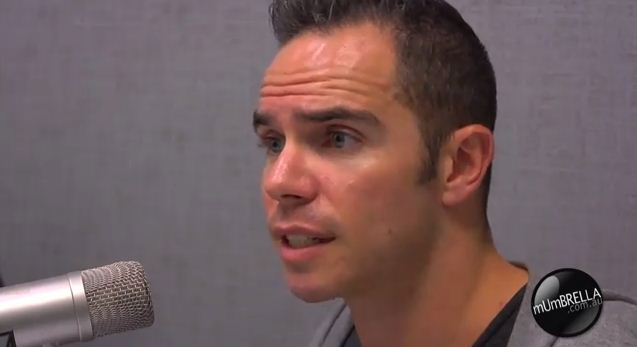
so this is a little bit exciting.  the above is me chatting to Tim Burrowes of Mumbrella about a project for the Mumbrella360 conference in June.  it came about as a result of conversations over the course of last year with lovely and amazing Rob and Uma about how everyone knows that what we do is getting tougher and more compromised but we just seem to be able to act collectively on what to do about it.

so hopefully we can change that…  you can read the full write up of what the ambitions are via the article on Mumbrella, but I wanted to capture why it’s so important to me here … because I genuinely love this industry.  I genuinely love what great connections planning thinking can do for brands and businesses.  I love the creativity, and the embracing of technology, and the social observation, and the meeting of art of science.  and I love the people, who give a damn beyond reason about what they do and how they do it.

but in ten years of doing this I worry that I’ve watched a world change faster then we have.  I fear that I’ve seen the commoditisation not only of what we plan, but of how we plan it.  I’ve watched as brands cling to a belief in the ‘tried and tested’ way of doing things as it crumbles around them.  and I’ve listened to a thousand people ask questions about the future without offering a solution for the present.

that’s why I’m asking us to create this manifesto.  a manifesto for change. one that we all agree on. one that we can signal to everyone who works in our industry.  one that we can signal to clients.  one that frames the conversations between agencies and media owners.  a manifesto that galvanises our industry, defends our margins and energises our people.

I hope that I’m not alone.  I hope that there are enough people who give enough of a damn about what we do to work with me over the next eleven weeks to galvanise us into action…  because the commoditisation, marginalisation, and lack of automation and cooperation won’t change unless we want them to.  our present, let alone our future, is in our own hands…

Standard
futuregazing, imagining, planning, predicting, researching

Planning for the Future, Today: Courtesy of Michell Zappa and his Technological Mapness

Michell_zappa_future_map

created by Michell Zappa, and sent to me by the awesome Mimi-ness of things, this speculative but intriguing visualisation of how technological developments could pan out presents an interesting question and exercise for brands and connections planning.  how would you connect to people, given technological developments over the next year?  what about in four years time?

perhaps a lot more social media, a bit less print?  perhaps you'll have more sophisticated CRM management and real-time insight capture via social networks.  so largely the same, but different.

the future may be more different than you currently imagine.  Zappa's map suggests that within the next four years the following will be mainstream.  not industry buzzed, geek adopted, first mover technologies.  mainstream…

Social Graph, Tabs & Pads, and Multitouch.  so far so Zuckerberg and Jobs.  but what if you go a little further..?  3D printing, Linked data, Gesture and Speech Recognition, and Electronic Paper.  within four years.  this kind of technology – if adopted by the mainstream – would transform the retail environment.  it would radically alter the opportunities we have to engage and interact with the conversations brands offer us.

it suggests a useful exercise.  create a brand platform (I originally typed 'plan a brand campaign' but let's not go there right now) in 2015.  imagine these technologies being on every high-street and in every home.  how would it change what you create?  what would be possible?  what would you imagine for a world that could 3D print your product in their home?  or interact with your communications by talking or gesturing to them?

then translate your ideas to right now…  what could – at a stretch – be done in the next three months?  what you do next is easy.  you go do it.

Standard
broadcasting, television, viewing

The Broken Contract: Why FOX8’s Snag a Simpson paints a worrying picture for TV as we know it

FOX8_Snag_a_SimpsonFOX8's Snag a Simpson initiative … creating viewer engagement or bribe to increase viewer minutage?

so I returned home last night to find one of Pelican's number playing the above game on FOX8.  the channel invites you to try and 'Snag a Simpson' … this involves you pressing select to play, and when you see a Simpsons character on the screen you snag them by pressing Red on your FOXTEL remote.

I know for a fact that you can do this because I watched said person do it.

only you need to 'Snag' 10 Simpsons in 15 minutes for your reward.  the guide explains that it's free and you can play as many times as you want.  I bet you can.

the generous interpretation is that FOX8 is genuinely looking to create viewer engagement and reward consistent viewing.  the less generous interpretation is that the channel is blatantly attempting to bribe you from switching channels during the ads breaks (or shows for that matter) and at the same time increase their minutage amongst the measurement panel.

I fear that it may be the latter.

but I also fear that its another worrying sign that the implicit contract between channels and viewers (and advertisers) is broken.  the contract states that you get the programmes for free (or for less if you're on subscription) and all you have to do is watch the ads…

only people don't buy that any more.  in fact the contract seems a great deal less attractive than it once did…  why?  (1) a lot of people pay for their TV now, so they're not getting their content for free (2) the amount of choice available makes switching all too attractive (3) we're increasingly trained to consume micro-content – small packages of TV or otherwise that can be consumed in a couple or minutes (or seconds if you're browsing your Tweetdeck) – this makes catching even only a scene on an another channel preferable to sticking to an ad break (and even if you miss the rest of the show you caught the first half so what the hell) and (4) the ads in most ad breaks are pretty crap … I've taken time to watch a few ad breaks of late and I really really have been stunned by the general drivel that advertisers and agencies seem to think passes for an ad…

we made the contract together and I guess that we'll break it together; everyone involved will have been complicit in it's cancellation:

the viewers got impatient and became happy to flick around ubiquitous content.

the advertisers only cared that a small but big enough fraction of people who saw an ad responded, ignoring the fact that the vast vast majority of people who saw it were either ambivalent (neutral brand equity effect) or disliked it (negative brand equity effect) or hated it (super-negative brand equity effect and potentially damaging WOM.

channels continued to print money and fight for petty share wins, ignoring the fact that overall viewing was in decline and that viewers were distracted, multitasking and ambivalent to the efforts of the advertisers from whom they were taking money.

and what of agencies?  perhaps agencies will become the most culpable of all.  we failed to ask the networks the questions we should be asking, going along with their playground share battles, whilst all the time taking micro-payments in the form of a commission from every ad that we placed.  agencies sat like market stall traders at the base of a dam that was about to burst; not investing in an ark but instead telling their customers that everything was fine … that the dam would hold … that the flood would never come.

we may come to see a great deal more endeavours to encourage viewers to 'Snag a Simpson", or a Robinson, or heaven forbid a Grimshaw.  it's cheating.  we can do better.  whether or not we choose to accept our fate of SImpson-Snagging is up to us.

Standard
advertising, differentiating, opinionating, thinking

Running away to the Circus: Dispatches from The Festival of Commercial Creativity – Charles Wigley and BBH’s Anti-Wind Tunnel Movement

Circus_logo

"getting medieval on our ass" was what Charles Wigley, chairman of BBH, promised the circus audience last week, as he got "back to the core of what we do with big brands and set processes".  he asked a simple question … how can we spend our time better?

Provocation

Wigley argued that just like how at some point all cars started to look the same – we've done exactly the same thing to our industry …he refers to it as the anti wind-tunnel marketing movement, and there's a rather nifty presentation embedded below (via a post on BBH labs).

he observes that we talk differentiation, but that 90% of the stuff we "burden the earth with" is the same; "we are churning out similarities" – he suggests two reasons:

(1) we all follow largely the same (consumer insight-oriented) process: "professionalism has led to homogenization and systematisation of the creative process … a model of creative development that traps us all" … the result being that most brands approach the same questions with the same people in same way

(2) we consistently fail to ask the question: is it different?  we focus so exclusively on relevance that we fail to think about whether our work is true or different. a point summed up rather neatly with this still from the above slideshow.

Circus_wigley_venn

Examples

of ads that are indistinguishable from each other…

Banking – NAB, Westpac and St George
SUVs – Jeep, BMW and VW
Cereal – Coco Pops, Milo and Sultana bran

(NB I'm trying to track these down on YouTube but can't find many / any of them – I'll keep trying and post when I do)

Wigley's simple and elegant point is that because the briefs are all the same, the results are the same. this extends into digital solutions too … there's a very real danger that advertising will eat itself.

the cliches are now so ingrained that adverts can be created that that play with the established conventions of the category and market…

Reasons

why this is happening…?

part of the problem is that lack of tangible USPs.  Wigley argues that we now rely on ESP (emotional selling propositions) to market brands, and so the holy grail becomes the key consumer insight.  but we all have the same products in the same category marketing to the same people with the same process to the consumer insights – and the ideas they generate – are all the same.  we are, as Wigley puts it, "dancing on a pinhead when dealing with these briefs".

But does it matter?

well yes it does.  when we create parity communications with similar insights "we're removing the cost efficiency of real brand differentiation".  we accept a situation where the biggest media budget will always win, a flight to a centre-ground where the biggest spenders remain the biggest spenders and innovation and ideas and differentiation and engagement and adding utility and entertainment to the world through are communications become a quaint dalliance that the communications industry had with itself and consumers at the turn of the 21st Century.  media becomes a commodity not an opportunity, a barrage of impacts not a platform for engagement.  could the last people to leave the industry please turn out the lights.

Solutions

Wigley rightly observes that we all use the same brands in presentations…  Nike, Google, Uniqlo.  what do they have in common?  they are brand leaders not consumer followers.  So … how do we put differentiation back into the ideas we generate and the work we produce?  Wigley offers ten solutions…

  1. use insights from multiple points of view and disciplines ie go beyond the consumer insight.  lead don't follow consumers.  focus on brand – Wiley quoted Siddarth Banerjee, Unilever's Regional Marketing Director of Asia: "what is the single most important part of the marketing mix that is essential to ensure a better chance of success in the marketplace? … ownership of a point of view" … Wigley describes this as the main distinction between a convention brands and a conviction brands, and observes that the fastest growing brands are in posession of energized differentiation – in that they have vision, innovation and dynamism
  2. Is it different? is the first and last question we should ask
  3. remember that not all consumers are created equal.  there are leaders, followers and the rest.  followers are cheaper and easier to find
  4. test in the real world not in the test tube (echoing what Marvin Chow discussed when he shared Chrome's marketing strategies earlier in the session).  get work up and online and evaluate it based on actual not expected performance
  5. bring back regional test market (was good to see a Yorkshire Television logo up on the screen)
  6. look to the future not the past.  "what's the foresight not the insight?" … Innocent saw colourful fun health coming and built their brand for the future that was to embrace it
  7. hurry up.  what are we so often waiting for?  speed up the process.  Wigley refers to Colin Powell's 40%-70% rule: if you have information to the extent that you're less than 40% likely to make the right decision then get more information.  but if you collect information beyond 70% chance of success you're likely to get it wrong – you'll have too much information and the situation will have changed.  in short act whilst you have more than 40% but less than 70% chance of success
  8. value inexperience as much as experience … we've become too expert in sometimes very niche categories
  9. put judgement back into the job spec – he quoted one marketing director who after being presented to by the agency said "I absolutely love this work, let's go straight to research"
  10. restructure the organisation.  Wigley suggested that the difference between single brand companies vs multi-brand companies was that in the latter people don't work specifically on brands, but rather are sharing the same info with all the brands in the company.  sometime you need new structures and groups to create differentiation – for example First Direct or Unilever siloing Axe into an entirely separate unit

Wigley left us with this delightful observation – courtesy of Mitchell and Webb – into how advertisers approach communicating to women and men.  not sure how it related to the topic in hand, but made the Circus crowd chuckle…

for more information on BBH's Anti-Wind Tunnel thinking you can visit BBH LABS – I recommend that you regularly do so … as labs go, these ones rock

Standard
conferencing, content creating, debating, innovating, internet, planning, thinking, understanding

Running away to the Circus: Dispatches from The Festival of Commercial Creativity – Josh Spear on the Fringe

Circus_logo

Circus_josh-spear Josh Spear is "from the internet".  no really, he is.  he put everything owned in the Internet and now has much of his possessions stored in the cloud.

his website, JoshSpear.com emerged in 2004 from the back of a Journalism 1001 class in which he was disappointed with the way academics ignored blogs as an emerging media. Josh describes his home as "a daily source of inspiration for marketers, brand managers, advertising executives, and a wide range of everyday people from around the world who love to stay ahead of the curve"…

which I guess more than qualifies Josh to be talking to us at Circus.  his theme was 'the Fringes of the Internet', and the way the internet is affecting people and businesses.

he described how shortly after starting his blog he was approached by businesses who wanted to put ads on his site, this turned out to be a fine way to made money, and led to a conversation with advertisers about how effective the ads on his site were.  very effective it turns out … they were seeing click-through rates of 2%…

two percent? asked Josh.  yes, they replied.  that's a 98% failure rate, said Josh.  yes they replied, impressive isn't it!

Josh guessed then that the internet would have a major impact on businesses, and co-founded Undercurrent, a digital strategy firm that applies "a digital worldview to the challenges and ambitions of complex organizations"

"It's about the human behaviour we're going to talk about not the specific websites"

4chan is bad place on Internet but it's also important.  it's anonymous.  people respond to photos with photos.  [it's a bit like the Abyssal plain of the internet; a deep, unexplored region rich in biodiversity that influences the rest of the ocean in ways that we're only just understanding] … it's where 'I can haz cheezburger?' began … the LOL-CAT meme.  a meme which now results in tens of thousands of cats created every day.  like this one:

Lolcat

the misuse of worlds isn't an accident, it's very deliberate.  and globally consistent and understood.  it's a language called LOL-Kitteh.  the Bible has been translated into LOL-Kitteh.

Rick Rolling began on 4chan.  in fact "anything funny that's unexplainable starts on 4chan".  to the extent that a Time Magazine poll ranked Moot (4chan's creator) as the web's most influential person.  only later was it noticed that the first letters of the ranked online poll spelt out a phrase.  an incredibly sophisticated and advanced work of electoral engineering / hacking.

Moot_time_magTime Magazine's 2009 online poll results.  the first letters of the top 21 names spell out "marblecake also the game".  marblecake is the name of the IRC channel where Anonymous started their campaign against Scientology, and "the game" is a reference to "The Game" meme source: Wikipedia

the rabbit-hole, it would seem, goes very deep indeed.  "4chan is 'the bottom billion' pageviews on the Internet".  Spear points out that two things consistently happen to Moot (who is called Charles) (1) he is forced to dump 4chan's data every 12 hours due to hard drive space and (2) every week he is served a subpoena for the information he holds (before it's dumped).

[this is all pretty mind-boggling I'd have thought for the average brand marketing manager, and you can see how they would be queuing up for the elvish Spear to safely have them gaze down the rabbit hole without falling down.]  things used to be simple.  then there was digital.  which disrupted.  everything.  this is such a familiar phrase that it's beyond cliche, but Spear asks a very interesting question:

"is there a unit of disruption?' … and how do you stay on top of the disruption?  which happens all around you all of the time and increasingly finds ways to impact on your sensory sphere.  much as this blog discussed in a January 2010 post, Spear describes Tweetdeck as one way to control the disruption.  he has "become an air traffic controller of my disruption"

we are our social graph.  we're made up of our disruptions [connections], a point made wonderfully and elegantly with this map of the world, a map formed by nothing but the connections on Facebook.

Facebook_world

What happens to a generation of people growing up in the world as drawn by this map and 4chan?  a world populated by cat memes and Rick Rolling?  a world in which gifts are given virtually.  Spear pointed out that thousands of dollars are spent on things that don't exist.  virtual economies are springing up everywhere.  Farmville makes $50m a month.  when Bear Stearns collapsed, a friend of his at Facebook didn't contemplate the collapse of the further banks but rather was promted to think that Facebook should start a bank. 

Virtual economies are being used by brands – for example the number of tweets Uniqlo products received affected their price – a fascinating dance between buzz and value.

Uniqlo_tweet_price


Radiohead_in-rainbows

Radiohead invited people to pay what they thought their album was worth, an invitation that made more money than all other record sales combined.  People's idea of money is changing.

the same goes for people's idea of location…  take Foursquare, which introduced game mechanics in the form of mayors and badges.  Foursquare also allowed tips to by left inside the check-ins, inside the game.  tips linked to location so that they're readily available to those who enter the space.  Foursquare allows reviewing in realtime on a geographical basis…  Spears asked why people share all this information, and showed a slide outlining three reasons why we share adapted from MIT research and Henry Jenkins:

  • Strengthen my bond – you are what you share in your social graph
  • Define collective identity – you are based on the five people you spend most time with
  • Give me status

Viral = a bad thing, something you catch

Spears notes that 'pass-along' is made not of viral, it's made of people sharing something with more than one of their friends, and so on.  reaching people is about tapping into cultural resonance.  to test this, Spear's office put an image of a funny(ish) joke about Tiger Woods on the web.  the pic got 30,000 views in first 48 hours, created a 'microblip' of cultural resonance … a map of interest, which could then be observed.  so how, in Spear's opinion do you create cultural resonance?

group of people + unique culture = amplify to affect society

it's about tapping into a shared interest online because you can't rely on time and space, as shared interests are a way of creating cultural resonance. connect your brand to this.  or don't.  these interests are being shared whether brands get involved or not.

but be careful brands – angels fear to tread where P Diddy TV trod with Burger King.  the video has long been removed, but fortunately for us Lisa Nova's spoof lives to remind us how it want down (nb Nova is now working in TV comedy – she got noticed because she understood the rules of the internet)

in Spear's opinion the fringe of the internet has a novelty scale:

Spears_novelty_scalethe fringe's novelty scale, as presented by Spears

Spears says that agencies who want to use things like crowd sourcing or 'the fringe' to do their work need to either be the lowest cost option, or the best.  if you're neither, you're stuck in the middle, and the middle is not a great place to be.

Spears asks what is the Internet good for?  advertisers and agencies may answer that it's good for awareness [incremental] and persuasion.  but Spear observes that this is not what the Internet is meant for.  the internet is meant for sharing, cooperating and collective action.  the latter of which is, in Spear's words, "the holy Grail of humans using technology"… at the fringe are the beginnings of these kinds of great examples…

Copenhagen-wheel

the Copenhagen wheel collects data from your bike.  one person doesn't generate enough data to paint a picture of a city, but eveyone's data does … and allows the aggregation and interrogation of usable data to generate insight and utility.

Ushahidi encouraged free and fair elections in Zimbabwe, and in the aftermath of Haiti and Christchurch interactive maps directed resources in realtime to where help was most needed.  the US state dept now relies on this kind of information to coordinate relief efforts.  crowd sourcing is used to collect and sort data.  organisations no longer ask for money but for a little bit of time and effort.  Alive in Egypt transcribes voice messages into tweets, allowing people to deploy messages and information even when access to the internet is being blocked.

Egypt_alive-in-Egypt

So what has 4chan guy got to do with the fringe?!  well what if all the people sending cats around every day gathered intelligence instead?  they already have, it's called WikiLeaks, and "we can't yet imagine how this will affect the world"

Some challenges for brands:

  • how do you change from interrupting people into adding utility for people?
  • How can brand engage with born digital consumers in their language?
  • If you take a brand into the universe of the internet, ask yourself if you are following the rules of that universe?
  • Are you surrounding yourself with enough people that speak digital?

the contents of this post [unless in square parenthesis] is the content of a talk given by @JoshSpear at Sydney's Circus in February of 2011, thanks to Josh for his input in writing this post

Standard
advertising, conferencing, creating, innovating, planning

Running away to the Circus: Dispatches from The Festival of Commercial Creativity – Chow on Chrome and Vervroegen on Creative Constraints

Circus_logo

the second session of the first day of this week's Festival of Commercial Creativity, Circus, saw Marvin Chow, the Marketing Director for Google across Asia Pacific and Erik Vervroegen of Goodby Silverstein & Partners, San Francisco take us through two very different kinds of creative process…

Circus_marvin_chow first up, Marvin Chow, who talked about the marketing of Chrome, and about what happens when creativity meets technology…

declaration of interest – Google are a client of PHD Australia, where I spend a lot of my time

Chow  started by making a few points about Google:

  1. one, Google is an engineering company. engineering is part of the culture. Google people like to solve big problems, he cited that driver-less car came from an engineer asking how Google can stop people dying on the roads
  2. Ideas can come from anywhere, for example the search-able maps that helped coordinate the Queensland floods response was conceived and developed by a Sydney engineer who wanted to help
  3. the role of marketing at Google is to bring technology to people.  often this is about filling the existing Google pipeline with content, for example the Life In A Day project, an idea that came from Tim Partridge in London.  The Life in a day video … which was created from a bank of 80,000 clips has now been seen by 13m people on YouTube and will have a cinema release later in the year
  4. finally it's about bringing a culture of engineering to marketing.  engineers are interested in the responses of real people to the real world.  there's no substitute to what real people do in real situations.  Google test 6,000 marketing ideas a year.  they fail regularly, they fail fast, they fail well – test and iterate people, test an iterate…

given that context, what follows is "the story of how one product can change the world" … the story of Chrome.

we know, I suspect, one side of the Chrome story, but the other side is just how challenging it's been for Google to gain market share and gain penetration in a market with a significant, dominant and entrenched player.

the first question was why bother?  why invent another browser?  when Google asked people about browsers, they found that people found browsers indistinguishable from search…

the suggestion is that people see browsing = searching…  Chow made the point that "browsers are a lot like Tyres – we know they are important but we don't care or think about them every day"

the last time a browser launched [excluding Firefox presumably] was in 1995.  Google's ambition was to bring speed, stability and security to browsing.  but how to evolve the browser proposition? … it's been a long time since 1995 and people do lots more than browsing with their browsers, it's no longer a passive experience; browsers are TVs now (35 hours a video a minute currently being uploaded), they are phones and communication devices (100bn emails and texts are sent daily).  this was the new context for the browser and for Google – and how Chrome should drive the web experience forward.

the marketing of Chrome actually began with a comic book, which was distributed in december 2008 to innovators influencers in the web space.

Circus_google_comicChrome's comic book, distributed in 2008, was drawn by Scott McCloud and can be viewed, courtesy of Creative Commons, in full here

post the comic book Google looked to deliver more scale, and so developed ideas around platform of 'why switch?' … exploring Chrome's value proposition and product benefits.  they experimented and tested different benefits, for example this effort around 'simple'…

made by a small team in japan, this was broadcast in the US and became Google's first broadcast ad.  but here's the trick, Google didn't just test 'simple' – they tested a whole range of value propositions and product benefits.  and tested them not in focus groups but in the real world.  how did they measure success?  which ones led to the most Chrome downloads … real people in the real world remember…

'fast' (rather than 'simple') worked best, and so fast became worldwide creative brief, which eventually led to this…

"The idea of showing Chrome and speed in a different way excited us" noted Chow … the next iteration of comms was Chrome Fast Ball, which invited browsers to browse the web as fast as you think in a race across the Internet…

the coolest thing – and very Googley – is that these ideas are being crowdsourced from everywhere … ideas like this one which has since adopted another classic Google behaviour – users being able to generate their own versions of the ad.

two and a half years on from launch and 100m people around the world use chrome.  Google seem to be happy, although as the below chart from Wikipedia shows, there's quite a long way to go for Chrome yet.

Share of browsers.svg

one of the most innovative areas of crowd-sourced comms for Chrome is Chromexperiments.com … I'm not going to lie, I don't actually know what these are – the website says that "Chrome Experiments is a showcase for creative web experiments, the vast majority of which are built with the latest open technologies, including HTML5, Canvas, SVG, and WebGL. All of them were made and submitted by talented artists and programmers from around the world" … I'm not sure that I'm any the wiser :o(

one example of which is Arcade Fire's The Wilderness Downtown – saw this a good while back but didn't connect at the time that this was a Google idea.

Chow's two key messages … that ideas can come from anywhere, and that it's crucial to experiment and iterate.  he stressed the importance of understanding the problem that you're trying to solve, and whilst I'm not entirely that sure his solution – hire an engineer to fix it – is feasible for everyone, the last of his comments is true for all of us … that "you have to resist the voice inside you that says only you knows the answer" let go of the problem and let the answer come to you…

you can view Marvin's prezi here.

Circus_erik_vervroegen up next in session two was Erik Vervroegen, who as the recipient of seventy Cannes Lions, is a very creative person indeed.  his thesis was that life in agencies is hard :o( … but don't feel too sorry for the ad agency kids just yet, because it turns out that the result of constrained conditions often produces the best work … the more problems you have the more creative you have to be…

problem one: no money (but free media to use and a super-tight production budget)…

…which was a problem faced by Amnesty International.  the answer for whom was to make this…

of this spot for the Nissan QashQai, where Vervrogen's agency came up with creating an entire fake sport…

McDonald's had no money and no time to combat a recycling message so recycled ads to create new posters…

Circus_erik_vervroegen_McD_recycle

it's so beautifully obvious in retrospect, but it takes someone to imagine such an elegant solution in the first place.  take these examples for Amora Hot Ketchup, the shoestring budget necessitated a shoestring production, which the creative embraces and uses to its advantage…

some of Vervroegen's most creative work is for AIDS prevention charity AIDES who's brief was "nobody knows us and we can't advertise but we want to be the biggest provider of Aids prevention in Europe' … the solution: target the advertising industry with the magic word 'awards'

if you want proof as to whether or not the strategy has worked I urge you to Google image search AIDES, but here are some of the highlights…

Circus_aides_skull

Circus_aides_trouser_snake

Circus_aides_space

Circus_aides_underwater

Circus_aides_spider

Circus_aides_scorpion

stunning, brilliant work for a client with no money but a lot of balls.

problem two: the impossible brief

Vervroegen quoted the following actual brief from an actual real life client (I'm paraphrasing) "we would like exactly the same ad as last time only this time we want it to work" … you couldn't make it up.  another example was the bread client who said that they wanted to show an entire breakfast table and demonstrate that their bread was the softest.  the solution:

Circus_erik_vervroegen_bread

Nissan QashQai asked Vervroegen to come up with an ad that showed the car in the urban environment and which showcased every angle of the car.  every angle.  every.  angle.  they actually said "think of it as a 45 sec 360 degree pack shot" … cue this beautifully elegant solution in which a 45 sec 360 pack shot has never looked so good…

Amnesty International want to show the power of a petition.  specifically in the background they wanted to show the harshness of torture and execution … without violence.  this poses a bit of a problem, as it's hard to show torture and execution without violence…

problem three: Burnt out creatives

…who feel sorry for themselves and are producing tired work.  the solution, observes Vervroegen, is to continue to push the idea.  and push and push as far as it will go…  for example a brief to show how Mir washing powder 'keeps black strong' let to the obvious place of clothes with budging muscles, which was able to be pushed to these fellas…

Circus_erik_vervroegen_mir_arms

Circus_erik_vervroegen_mir_spider

Circus_erik_vervroegen_mir_vaders

another example of pushing a bad idea until it becomes a good one was for a brief for Playstation to show rebirth, the idea for which was this tired (his words not mine) approach…

Circus_sketch_egg

which was pushed to it's limit and resulted in this…

Circus_erik_vervroegen_ps_birth

…an effort which secured one of Vervroegen's seventy Cannes Lion in the print category.  the last example, again for Playstation was around a brief to show the excitement of the Playstation gaming experience and equate it to sexual arousal.  here's the obvious sketch…

Circus_erik_vervroegen_sketch_bulge

and here's the pushed execution…

Circus_erik_vervroegen_ps_blow-up

that was it for session two.  I'll aim to get session three written up tomorrow…

Standard