
Business Insider reporting this week suggests that Netflix is exploring deals with prominent podcasters. According to sources ‘familiar with Netflix’s strategy’, “Netflix insiders had warmed to the idea of tapping podcasting talent to host a talk-based video show, after previously expressing scepticism that the format could work on the platform.”
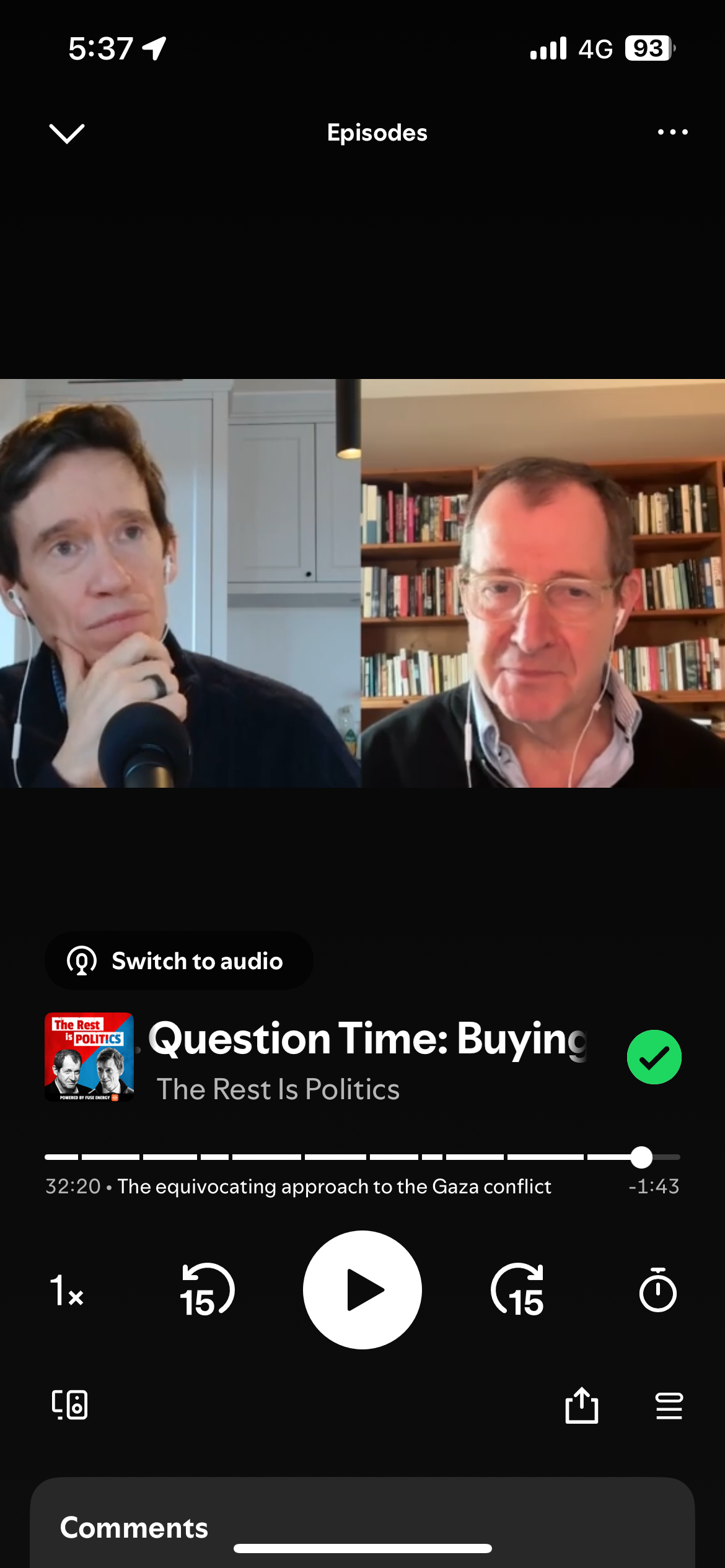
The availability of the podcast in video form has been surging of late. Most notably on YouTube – where prominent podcasters have been streaming their conversations for a good while now – but also on Spotify, where earlier this year I was surprised to see Alistair and Rory of the popular The Rest is Politics podcast pop-up within my Spotify app in video form.
Spotify pivoting to become a video streaming channel is just one part of a wider – and sizable – convergence into the video format, which in many ways represents one of most significant shifts in media and content consumption of recent times.
Forces of Fragmentation and Consolidation
When the industry initially debated fragmentation in the media landscape it was, generally, in reference to channels. Back in olden days when I started planning you basically had TV, print (both newspapers and magazines no less), radio, outdoor – plus something we called ambient media (out of home contextual ideas that popped up to generally surprise and delight urban audiences).
Digital was nascent, and streaming was still way over the horizon (I still have the presentation I gave to a major UK TV broadcaster client in around 2005 communicating the existence of a website I thought they should be paying attention to, called YouTube).
Since then, one of the seismic forces shaping media planning and strategy has been fragmentation. But it wasn’t channel fragmentation – which has been more than countered by consolidation within digital platforms over the last two decades.
2024 global advertising revenues surpassed $1 trillion. Major technology companies—specifically Alphabet (Google), Meta (Facebook), Amazon, Alibaba, and ByteDance — collectively accounted for over half of this expenditure source. EMarketer reports that in the US, Amazon, Apple, Meta, Microsoft, and Alphabet last year attracted nearly two-thirds of digital advertising dollars. The media landscape has many issues, platform fragmentation is not one of them.
What has fragmented is attention. The platforms that now dominate media have distributed audiences – which poses an ongoing challenge for brands looking to leverage Ehrenberg Bassian principles to reach as many light and non-buyers of their products in advance of an many purchase occasions as possible.
Advertisers are chasing, and demanding, scale … which is where Netflix’s potential foray into podcasts comes in. The streamer announced last year that it would stop reporting quarterly subscriber numbers from Q1 2025 – a sign interpreted by many in the industry that future growth from more subscribers was expected to plateau. Growth for Netflix must come next from driving increased time spent on the platform: in particular amongst subscribers to the ad-tier where a consistent source of advertiser-friendly audiences in a strategic priority.
Netflix’s Podcast Move
Enter podcasts … a potentially dreamy next step in their ongoing conquering of the video landscape. Let us count the ways in which Netflix must be salivating over the potential of the video podcast:
• Low barriers to entry and production costs
• In-built reach from influencer hosts (I find it significantly more useful to think of – and plan – podcasters as influencers and creators, rather than hosts) – which at the head drives scale, and into the tail offers relevance for selling on to advertisers
• Long dwell times, creating consistent high volumes of impressions and platform engagement (remember some podcast episodes are longer than the average movie run time).
Netflix are uniquely placed to take advantage of the opportunity. Video content platforms have always largely divided along two lines: professionally-created content (Netflix, legacy broadcasters offering BVOD etc, legacy conglomerates such as Disney+ and Paramount+ etc), and creator content (such as YouTube and the majority of video on social platforms). The former have never really wanted to do the latter, and the latter have struggled to do the former.
Netflix can genuinely move to deliver both professionally-created, and now premium creator content via high-reaching quality podcasts. I’d be stunned if Kara Swisher and Scott Galloway – who are currently in renewal negotiations with Vox Media for the home of their wildly successful Pivot podcast – weren’t talking to Netflix about taking the show to the streamer … opening the opportunities for the Pivot brand itself to expand into a range of video formats and series on the platform.

What This Means for Marketers
For marketers – this is all upside. Yes, it will mean more of that fragmented attention being sucked behind the Netflix walled garden, but if packaged up right it opens large swathes of addressable audiences in one targetable place – as well as scale, along with depth and diversity, of those audiences.
To succeed, marketers will need big proprietary data sets to create effective audiences to buy from Netflix, the agency support to build significant and meaningful partnerships and JVPs with the streamer (as well and others) that gets access to the best talent on the platform, and – most importantly – have an idea that can travel.
Because my hunch is that if Netflix push the podcast video door open, and if they can scale it and commercialise the audiences, then it’s the brands with clear, big (sorry) ideas that can be co-owned and co-created with Netflix’s creator community – that will be the brands that succeed. It would be such a shame for Netflix to sit astride a converged platform offering video podcast shows created by such talented influencers – only for brands to spot-buy their way into the party.
 MEDIATION