so jumped out to grab a smoothie this afternoon and caught some awesomness happening at The Galeries Victoria at Town Hall. the Galeries have teamed up with Warner to promote Man of Steel by letting people fly over Sydney like Superman, courtesy of Google Earth technology.
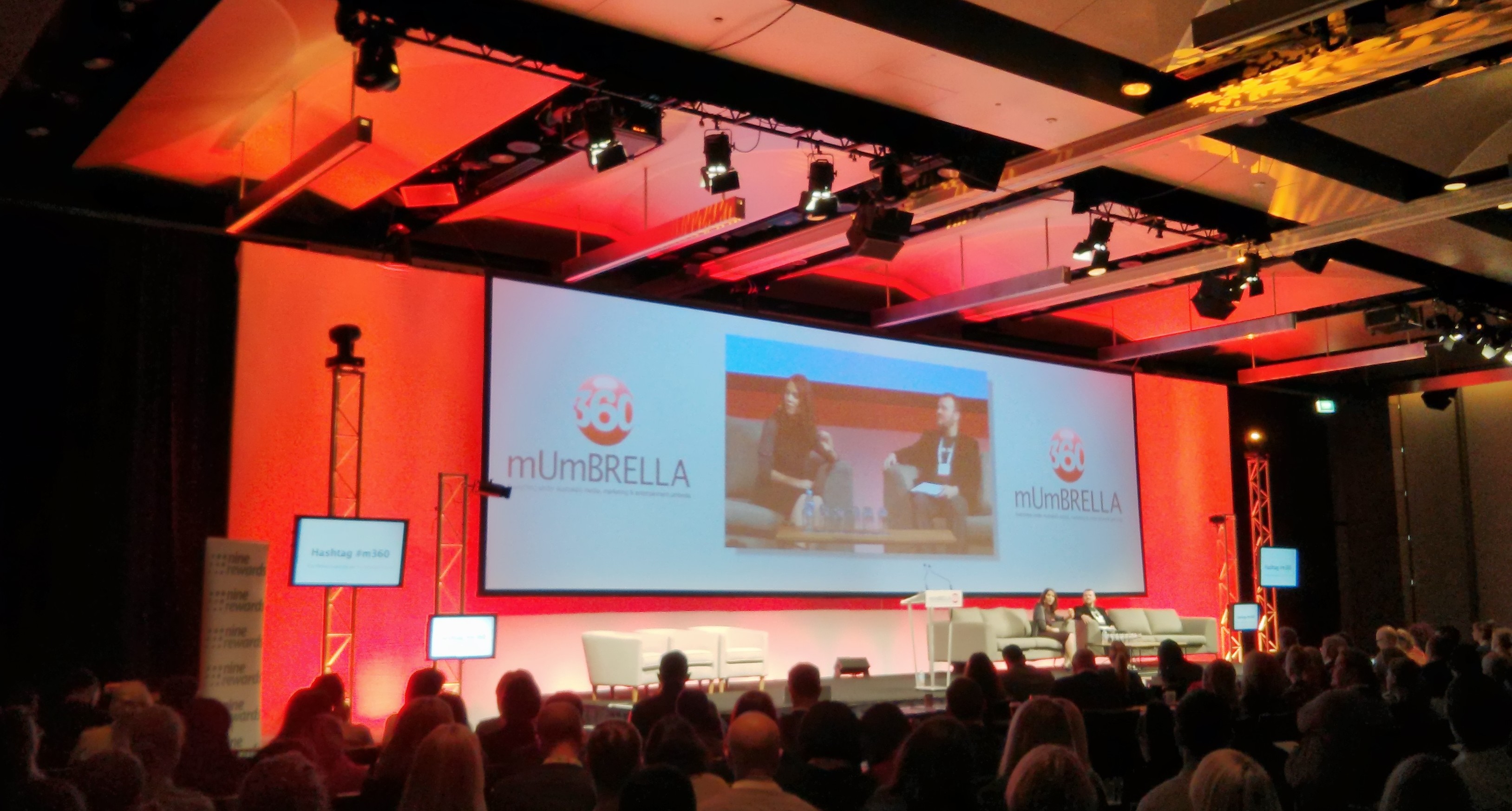
so this week PHDcast regulars myself and Stew were joined by PHD’s Director of Analytics Marcus Lewis and General Manager Martin Hadley to discuss all the reports, debates and dilemmas from Mumbrellaland – the annual Mumbrella360 conference.
I’ve written up my commentaries of days one and two already, which cover my takes on lots of the content. the PHDcast was about getting a bit deeper and debating some of the specific topics and issues from the event.
Marcus gets straight into (big, of course) data, sharing the opinion that whilst its great to see Mumbrella covering the issue, we perhaps need to work harder to get beyond the thinking and theory into practicalities and tangibles. the opinion was shared by Stew, who suggested that for the data session (and many others besides) there’s a sense of ‘I know this already’ … we need more follow through and ‘so now what?’
Stew also noted that for all the debate around content, data and relationships, there’s a gap between theory and practice: “I really hope that we don’t believe our rhetoric too much … there’s no follow through, no real understanding of taking those issues and making them tangible.” Martin agreed, suggesting that Mumbrella360 2014 would benefit from a greater proportion of workshop and masterclass sessions.
on the state of the media session about which I wrote about previously, Martin noted that “the big issue is a disconnectedness between clients, agencies and the media … the marketeer is the one who’s driving the relationship”. it comes down though to briefing and also (I noted) remuneration – citing Rob Dingwall “ideas may not be paid for but they are valued”. Stew added that collaboration is important, but this is something that also comes down to remuneration, with clients needing to be prepared to “pay for the time,the resource and the ability or us to do that.”
the debate also covers Channel Ten and the retreat to the relative safety of live event TV, multi-channel / screen storytelling, branded content (and Stew’s frustrations with the term), and integration, whatever that means any more.
there’s also a quick hello to Nic who is holidaying in Fiji and a shout outs to Vicki and Rob for their birthdays. you can listen to the PHDcast below … would love your comments and feedback either here or at PHD Australia’s Facebook page or via twitter. the PHDcast will be back next week with a TV special.
so I jumped to the cinema not too long ago with Dan (hey Dan) to see Gatsby (awesome but started to dread someone saying “let’s go to New York” as eight minutes of pointless car shots would follow … amazing soundtrack though) and caught the above trailer. its a great example of a perfect collaboration that produces relevant content, yet doesn’t fall into the trap of failure to amplify.
Australia’s tourism communications are consistently some of best the country produces. they have to be. in 2010/11 tourism represented 2.5% ($35bn) to the national economy (source), and getting a share of that is a serious business. the domestic competition is feisty enough, add to that cost-efficient South East Asian holiday options on our doorstep, and you get a situation where you need to stand out from the crowd.
that was the challenge to Sapient Nitro, the agency from whence previously emerged the ‘best job in the world’ idea back in 2009.
“The challenge to 20 of Australia’s most exciting filmmakers was to create quality content and authentic human stories that engage and create desire, and redefine what it means to be in ‘paradise’.”
Ralph Barnett, creative director SapientNitro
as collaborators go, GoPro are a perfect choice for the tech and attitude to showcase the region – they’re no strangers to content themselves, their website is a masterclass in how to use and integrate YouTube into a brand’s own site.
but the real smarts is in the amplification … playing a trailer for the project in cinemas may seem obvious in retrospect but never-the-less represents a smart marriage of audience targeting and the cinema environment and format; and with pop up screenings planned for the eastern seaboard, there’s plenty of amplification yet to come.
so big day two of Mumbrella360 kicked off with an awesome presentation from Twitter’s Head of Agency and Brand Advocacy Melissa Barnes.
essentially a ‘best of’ how brands are using the Twitter platform, Barnes more than delivered on her job title, as I suspect there were a great many more advocates for Twitter in the room at the end of her session than there were at the start.
I’ll save the content and examples up for a separate post, but its worth capturing here one of the key points that Barnes was making – that you have to approach and use Twitter differently, and with an understanding of what the platform offers and what its users expect.
she noted that she see’s lots of brands approach Twitter with a ‘display’ mentality, which just doesn’t work. the best examples on offer were cases where a brand had something to say, something entertaining and / or interesting to share, or, interesting, a crisis to manage. one fascinating chart in particular showed how a calm, human, humourous individual in chart of a mobile phone company’s Twitter account in the aftermath of a network outage was able to mitigate the anticipated ‘hate’ emotion you would typically see in sentiment analysis of an outage event.
… as an aside, huge thanks to Melissa who was generous enough to pop into PHD last Friday and share and discuss some of the examples with the agency … we loved the session, and I think someone may have actually swooned 😉
up next was the less swooney Hamish McLennan on turning around Network Ten
in a frank and fascinating discussion with the Burrowes, the boss of the struggling network discussed a strategy designed to focus on an older demo and live TV (as the latter is more easily and readily monetised) … saying that what the channel most wants to be known for is ‘the home of great event TV’.
he was frank that Ten was hurt by the advent of digital channels, and should have launched ist digital channel (11) earlier than in did, and arguably before launching One. the strategy is designed to get a fair(er) share of FTA’s $2.8bn by getting a fair(er) share of an aging demographic.
this would seem to represent nothing short of a full-scale retreat from a younger audience who, in McLennan’s own words “aren’t engaging with TV as much”. the network is looking to beat Seven and Nine by joining them in a fight for an older and more easily monetised audience. the strategy is to back off from digital channels, let alone digital platforms – which are (I suppose not wrongly) seen as the place for programme marketing more than anything else.
PHD Chief Exec Mark Coad asked about the network’s digital strategy, given the NBN (national broadband network) roll-out, but not much was forthcoming. it took a second delegate to ask a similar question to elicit the response that McLennan saw post-NBN as a “big opportunity”, the citing of the example of creating subscription channels evidence that there’s more than a little NewsCorp left in this boy yet.
I jumped into a session on The Encore Score and after lunch joined the debate on the State of the Media.
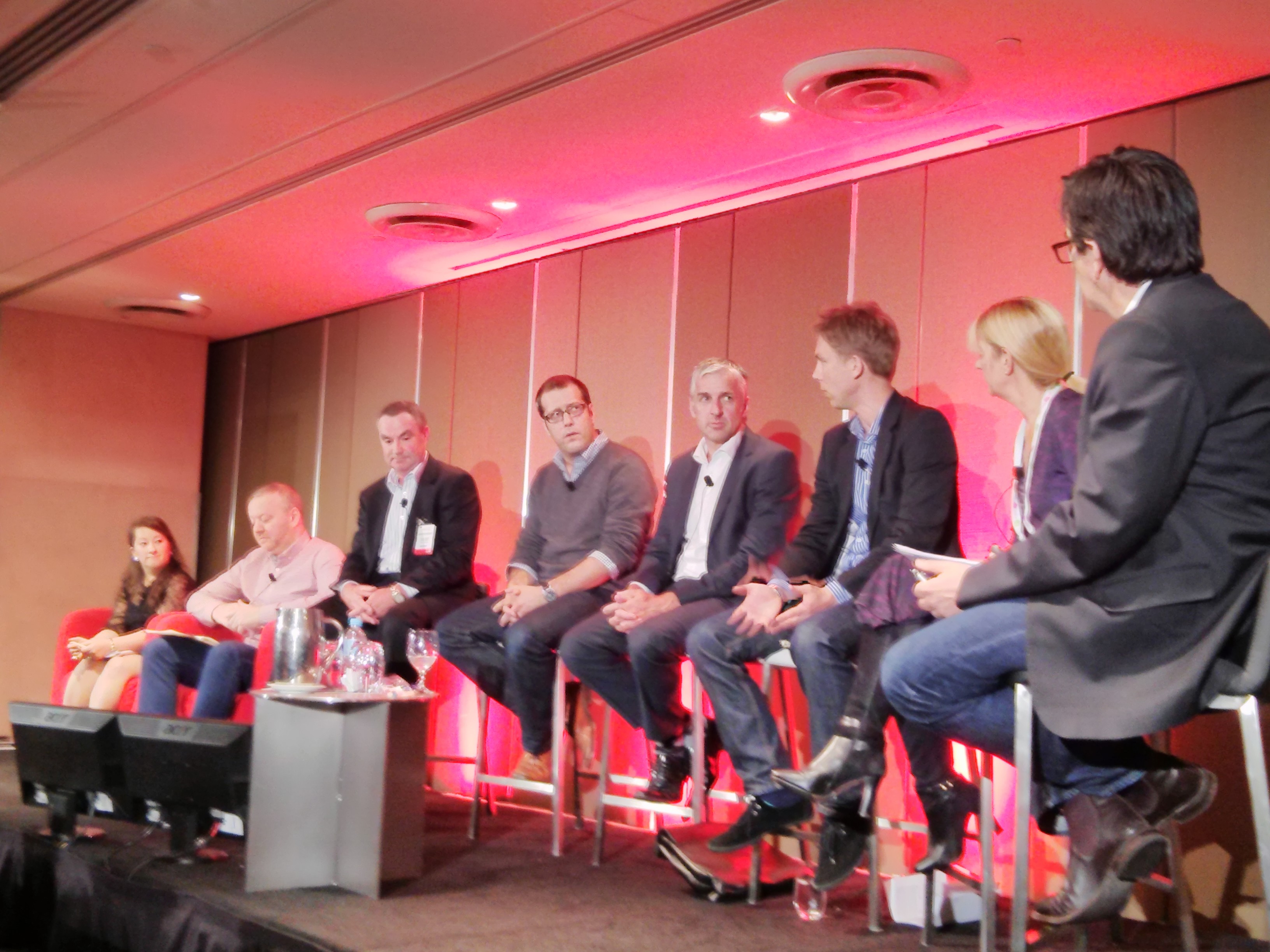
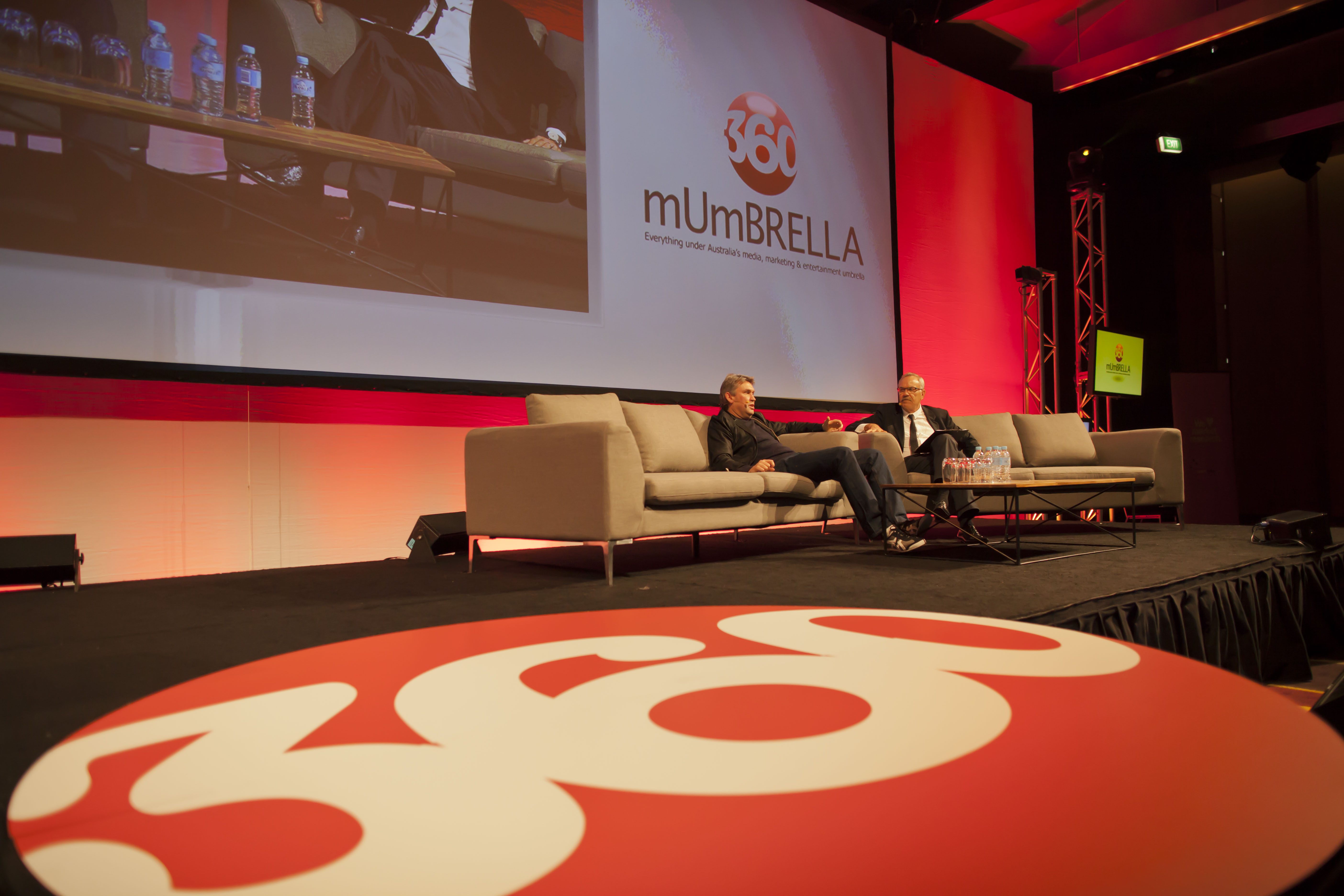
Moderated by Darren Woolley, MD at TrinityP3 and Denise Shrivell, MD of MediaScope (on the right above), the panel consisted of (left to right) Lynda Pallone, marketing services and integration manager, Blackmores; Rob Dingwall, media & marketing operations manager, Kellogg’s Australia; Chris Mort, CEO, TMS Australia; Toby Hack, MD Australia, PHD Media (woop); Tony Kendall, director of sales, Bauer; and Zac Zavos, co-founder and managing director, Conversant Media.
this was the first of two plus ça change sessions, with the debate eventually getting to some of the elephants hovering in the back of the room.
On industry relations, TH said that “industry collaboration has improved” with ZZ adding that [media owners] “don’t get enough feedback from clients and campaigns”. CM was clear that “it’s a high pressured business … If you can’t do the job with the tools you have you need to step up” [or get out]. TH on people development noted that have “a choice … to invest in people or not.”
a debate on programmatic buying led to some predictable places, most notably concern from ZZ that automation leads to commoditisation of media (which it does, because much of the time media is a commodity). TH described the two emerging centres of gravity in agencies around creativity / innovation and automation / analytics – which RD slightly misinterpreted as an agency split, which admittedly at this stage would seem a rather drastic solution.
this session also saw the revelation that industry-wide plans for a move to electronic trading have been shelved. this was first debated at last year’s 360 conference, with a panel consisting of senior agency and media owner representatives debating the subject of automation.
whilst the panel wasn’t the most warmly received (media man unmasked commented that “When you put 9 of the most senior executives in our industry in front of a room full of people who look to them for inspiration and leadership and all you get is a school yard argument it doesn’t bode well”), the point was that something was being done.
this now doesn’t seem to be the case.
one suspects that the shelving was brought to you by the letters M F and A and the numbers 7, 9 and 10 … but I won’t pre-judge. I’ll do some digging and write up anything I land on.
anyhow, back to the state of the media session … where there were a many more questions than answers. so much so that I was moved to ask a question of my own – specifically after this debate is over what happens next? who’s responsibility is it to drive the necessary change?
Darren Woolley reiterated his Golden Rule … that “the man with the gold makes the rules” … and what is the rule made by those with the gold? in a refreshingly honest comment Kellogg’s Rob Dingwall illuminated us with the admission that “ideas may not be paid for but they are valued – if you are valuable you will see money coming.”
and this is essentially the muddle we are now in … media is commoditising but clients won’t (generally) pay for the skill of planning and innovating with media. it’s seen as added value. but there’s less and less value because client procurement teams are driving down margins, so agencies seek additional revenue streams which leads to accusations of lack of transparency. and on we go.
in perhaps the most disheartening comment of the session, Blackmore’s Lynda Pallone actually said “see you all next year for the same conversation” …
… I really rather hope not.
to lift one’s spirits and to finish I’ll share some of the awesomness that is some of the great work coming out of Asia at the moment. in a session entitled ‘Unleashing the Tiger’, Peter Wilson, the retail planning director at Cheil Australia, discussed how “there is a massive step-change taking place in our industry … a new trend, where agency groups based in non-traditional markets lead the new paradigm, led by technology rather than traditional advertising.”
Wilson described the idea of Tu Hon, I’ll let the video do the talking …
Wilson suggested that central to Asia’s current creative success is down to tapping into emotion, and shared three examples. the first genuinely moved me, the second one actually elicited a tear, and the third one made me very jealous that I didn’t come up with it when I was working on a similar project a few years back:
SAMSUNG CAMERA video coming soon 😉
all brilliant examples of how, in Wilson’s words, “a happy marriage between creativity and technology are becoming the norm” … lovely stuff.
another year and another gathering at Mumbrellaland (I still think they should call it that) for the annual 360 conference. I’ll sum up later but for now just capturing the notes and the content from the sessions I jumped into during day one.
up first was Simon McDowell of Coles, them of the down down, Status Quo, Dawn Frenchness and now biggest-boyband-in-the-world-ness.
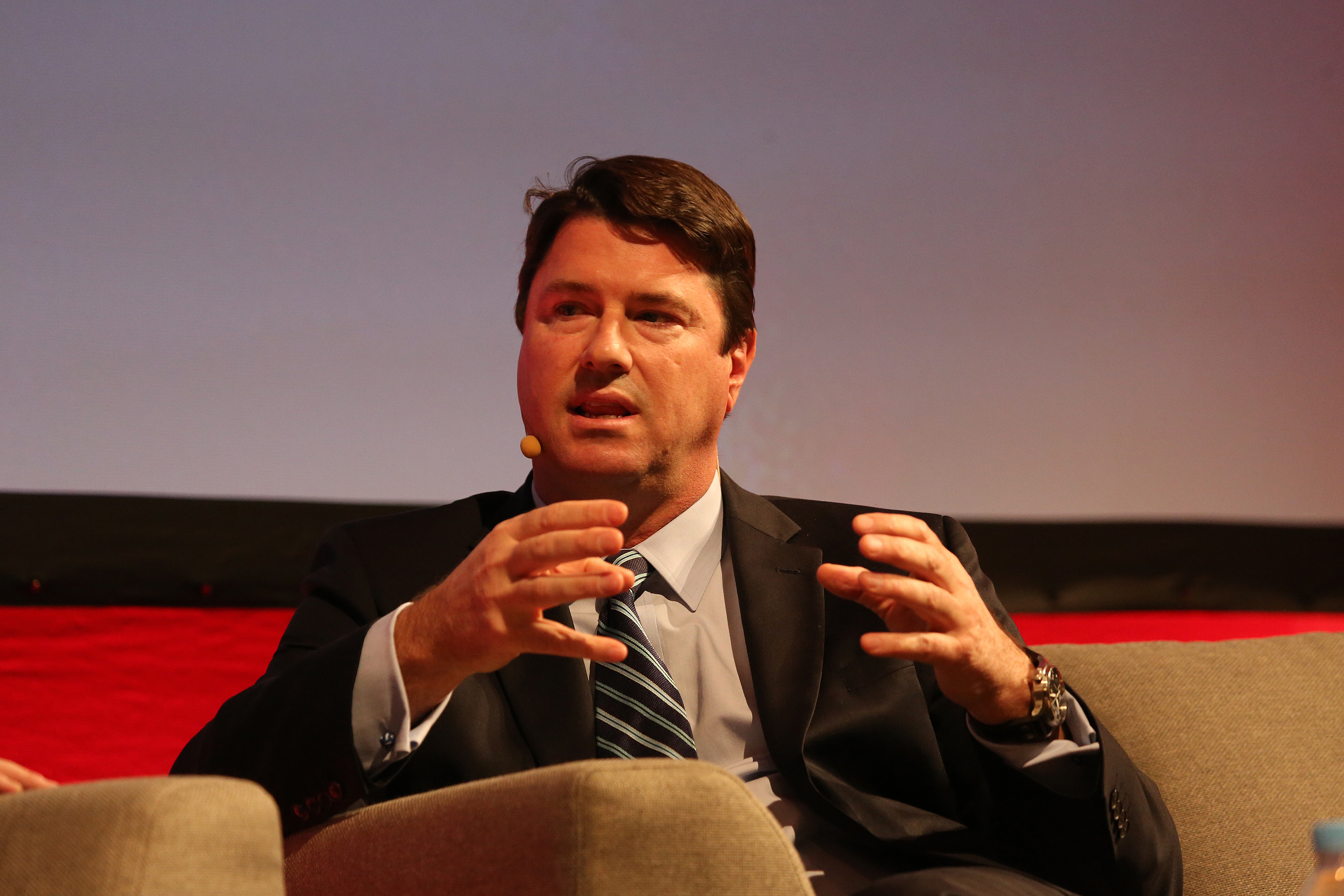
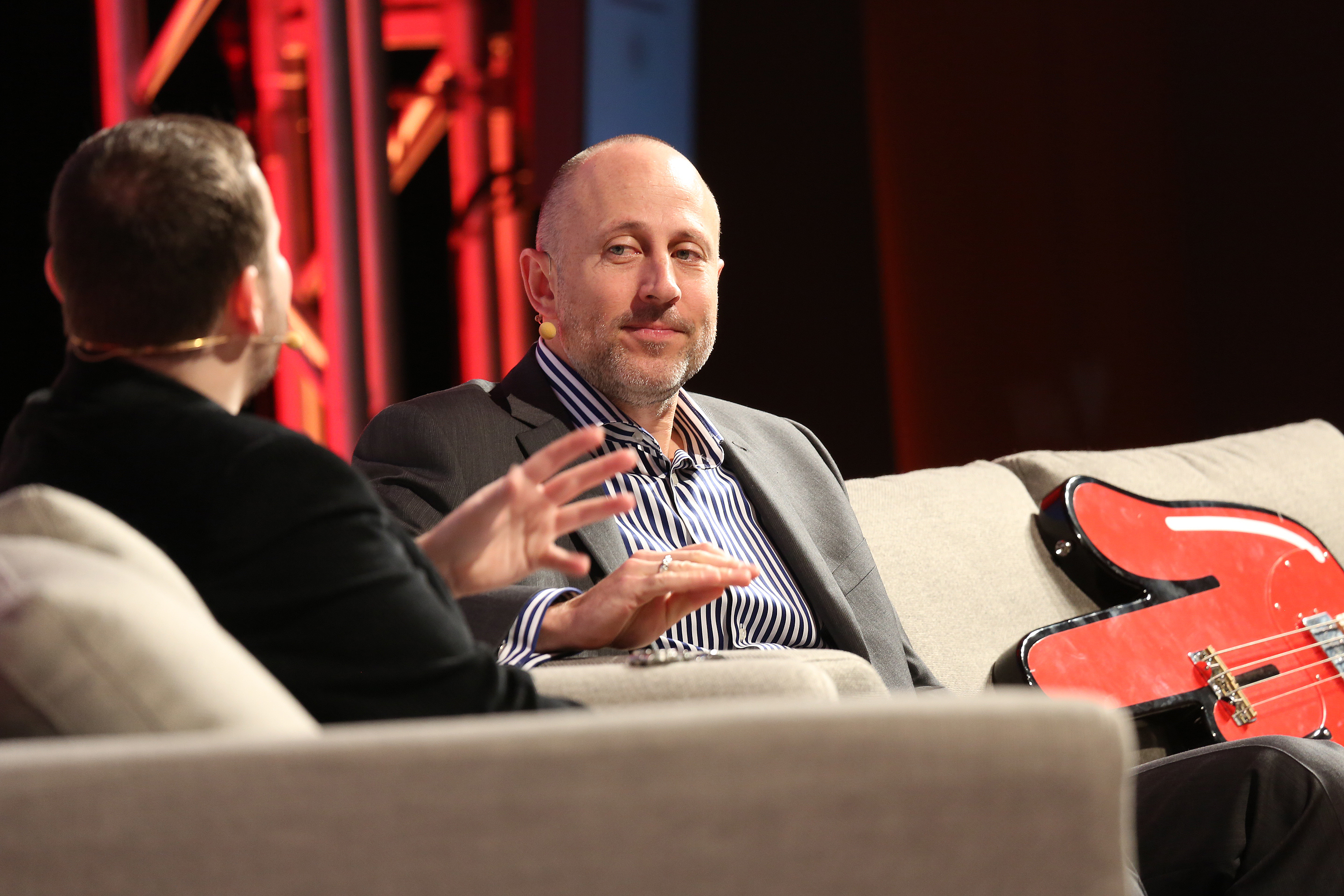
Simon McDowell at Mumbrella 360, picture source: Mumbrella
McDowell discussed the approach to marketing at Coles, describing it as “a bit of a creative hot spot, a melting pot … we’ve got a thousand ideas a day and we’re going at this hard.” by this he means making life better for Aussie Families, a picked this up because he mentioned the phrase ‘Aussie Families’ about forty three times, that’s almost one a minute. this seems to mean (1) bringing prices down and (2) making ads for them, and not adland.
he repeated asked us not to “be fooled by the sizzle on the sausage … we’ve invested hundreds of millions of dollars in bringing prices down … It’s a fundamental part of what we’re about … But how do people know you’ve done it when sales [messages] are everywhere? … Is all just blah … Were really trying to be unique.”
Tom Donald asked about the negative response in the industry to some of the Coles ads. “Do I care what adland thinks? Not a bit. The Coles business is in a turnaround, we have more customers spending more money [with us] than ever before. Were trying to build the most famous and compelling brand in Australia.” (and, wait for it) “… we’re trying to create something that resonates with Aussie families”. cue One Direction …
on the more serious matter of supplier pressure, McDowell was firm but clearly less comfortable. asked if Coles was doing the right thing by farmers, he replied that “[all the] discounts are funded by Coles, the more milk we sell the better off farmers are. Prices are too high in Australia, we have to take care of Aussie families … at the end I’d the day we have to look after Aussie families where the cost of living is going up … we want to sell more. it’s a serious business looking after Aussie families and that’s what we’re about.”
just in case you’re not clear, its about Aussie families.
next up was Group M’s John Steedman in discussion with Nine’s CEO David Gyngell
its been a big year for the network, and the discussion covered a range of subjects …
on positioning Nine and investment in drama: “You have to stand for something. your audience has to know what you stand for … we’ll keep investing in Australian drama, [it] delivers against an audience that will watch linear TV for a long time to come”
that investment is based on an optimism about the future, saying that we are “heading into a purple patch for Australian drama – expect production to double.”
on the evolution of media, and the sale of the magazine business to Bauer, Gyngell was clear, saying that newspapers and magazines “won’t be as profitable as they were. quality magazines won’t go anywhere. the magazine business will be smaller and more nimble. newspapers will go online – less profitable but just as relevant. the fin review may lose $10m a year but you couldn’t buy it for $100m because its relevant.”
as far as digitisation of Nine goes, when asked when will Nine become a digital first company, he answered when you can make more on digital than we can at the moment. “we’re still nimble enough to be able to move when we want to. we’re not a digital company, we’re a marketing and content creation and distribution company.”
on advice for Seven and Ten: “Tim knows what he’s doing, and has Stokes around him. Seven won’t break because Tim won’t let it. Hamish is an accomplished marketer. if he gets a good programme he’ll know what to do with it. they need to get lucky … keep your head down and pray for some luck.”
its fair to say that Steady gave him a pretty easy ride as interviews go … it was left to a delegate to bring up Tom Waterhouse and the recent over-stepping the mark on programme integration and live odds. to which he commented that Nine, and broadcasters per se, have “a moral compass to provide to the country, but we’re not in the businesses of telling people what they can and can’t do. Tom Waterhouse was a lightning rod. we have a government that reacts quickly to any negative press. his competitors had a go – when the mafia start saying how bad the triads are you know what’s going on. we pushed it too far – we know that. did we overstep the mark? perhaps at the start when Tom was with the commentators. we’ve pulled back from that now and its the right balance.”
after that went to a cracking session with Rob Pyne of X or Y Decisions, about why businesses, and marketing teams in particular, make bad decisions. great insights and advice based on understanding and mitigating biases we inherently have when we’re making decision.
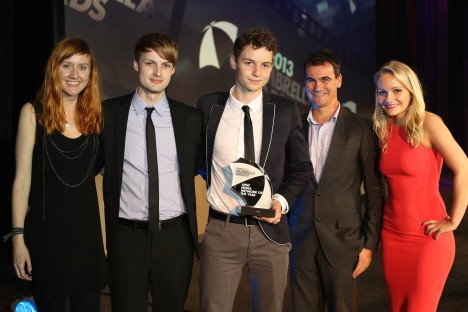
then Coady and I presented to a judging panel for Network Agency of the Year (which we won – yey!) … after which I jumped into Tom Donald‘s brilliantly fun session on fads – of which I hope there will be a future download / follow-up. and that (PHD’s session on gamification and evening drinks aside) was day one. here’s a pic of the guys collecting that Network of the Year award. whoo hoo.
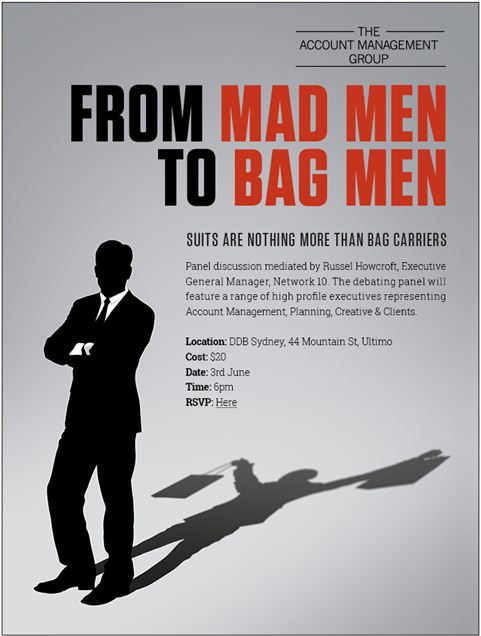
have advertising agency suits become nothing more than bag carriers?
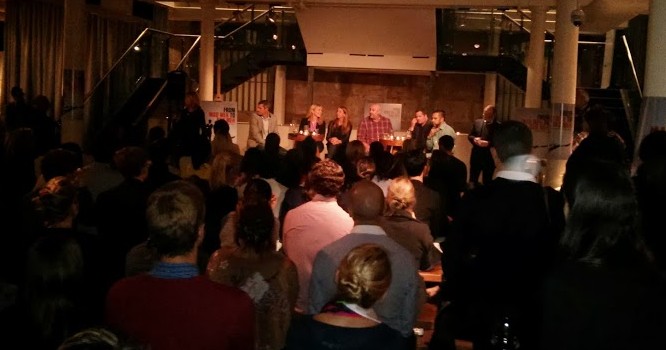
this was the somewhat provocative proposition of last night’s inaugural Account Management Group meeting.
the panel, kept in order by Russel Howcroft, were Ian Perrin CEO ZenithOptimedia, Chantal Walker marketing director Foxtel, Nitsa Lotus GM TBWA, Steve Back CCO Ogilvy Australia, Bryan Jones technology director R/GA and Sudeep Gohil CEO of Droga5.
a degree of Howcroft-style order-keeping was necessary, as the debate ranged from a pocket history of agency evolution (“The main thing that happened is that having one agency wasn’t good enough so we split it up … the account people, who were the glue, have been diminished and no one is managing the business” – Perrin) to more sporting analogies than I can recount.
much debate centered around two issues … selling the work and understanding clients’ business.
Back’s accusation that Account Management have “an inability to sell work” was countered by Lotus assertion that Account Managers were the driving force in getting great work out of the door; “great ideas have died and suits pumped the life back into them.” Gohill made the astute observation that the role of Account Management is “not about selling ideas [because] great ideas sell themselves.”
Gohill went on to add that “what’s changed is that agencies are fragmented and [there’s] no understanding of what keeps clients awake at night”, a sentiment echoed by the client on the panel, with Walker adding that “everyone needs to understand my business … clients want someone, anyone, who understands what the pressures are.”
don’t we all Chantal, don’t we all?
this was all followed by a quick foray into process, with Perrin making the (very correct IMHO) observation that “there’s so much focus on quality control that we’ve lost the ability to move quickly … we over-engineer everything in this industry. it takes six months to get a campaign out, the world has probably moved on by then.” … to which, hilariously (if I captured this correctly – and huge apologies if I didn’t) Lotus replied “it does take a long time but you need processes that protect the process.” genius.
some of the habits of awesomely successful Account Management according to the panel (who referenced the best account people they’d worked with):
Perrin, who worked with a geek who understood the tech that IBM were trying to sell, cited fit of skill sets and passion for a clients business. Walker noted great AM was “resilient and persistent, always calm, trust them to be calm when I (the client) wasn’t.” Lotus noted that great AM doesn’t sell ideas, rather they sell bravery, and added that they’re new businesses and people- focused.
commenting in B&T today, the AMG NSW chairman, Naren Sanghrajka, said: “The volume of interest goes to show that this group and our focus is both needed and appreciated among the NSW community … the role of account managers has undoubtedly changed but, as last night proved, there is still a lot of confusion and contention around what that new identity is.”
quite. and this is perhaps what lies at the heart of the matter.
implicit in the Madmen to BagMen assertion is that the very discipline of Account Management has eroded – and I do suspect that this is the case. a lot of last night’s debate felt like a lot of rather self-satisfied justification for the existence of Account Management in ad agencies.
There is of course a genuine and real value in having people who understand clients’ business and galvanize action, but in which other industry would you have the indulgence of a whole bunch of people who’s job it is just to sit between the agency product and the client?
the industry has changed more than a bit since the invention of Account Management. this may be the most obvious of suggestions, but perhaps we should all of us take responsibility for understanding our clients’ business and selling our work. plenty of other industries, including very creative ones, manage without a layer in the business to ‘manage an account’.
I say this with full respect (some of my best friends are Account Management), but perhaps the elephant in the room last night was Account Management itself?
big thanks to everyone who organised last night and made it happen – after all, its having the debate in the first place that counts.
lots of fun on the PHDcast last week as Stew and Nic and I were joined by some awesome people from PHD Australia’s team digital. Peter Hunter and Lauren Oldham joined us to talk everything from programmatic buying to Gillette’s YouTubey Man Of Steel activation.
first up, programmatic buying. B&T quotes eMarketer who suggest that: “more than a quarter of all display-ad spending in the U.S. will occur via real-time auctions by 2016. Spending is predicted to increase from US$1.9bn in 2012 to more than US$7bn to make up 28% of total display-ad buying by the end of that year.”
great debate from the team, the main upshot of which was that programmatic buying will soon be how we predominantly buy ‘traditional’ online, with content moving even further up the online food chain, becoming of fundamental importance as online real-estate for brands.
a key implication is that it allows the conversations we have with our media owner partners to move on and focus on what, arguably, is the core point of those relationships – ideas, collaboration and creative use of media.
the other main implication is for those big traditional (broadcast) media owners who, as they mediate the future of their own media platforms, will see PB encroach on how they trade with agencies. whilst some broadcasters are already experimenting with DSP technology, its something that is unlikely to happen overnight. inertia aside, I genuinely believe that as revenues fragment across different channels, making PB work will become a strategic imperative, rather than an interesting inconvenience to broadcasters.
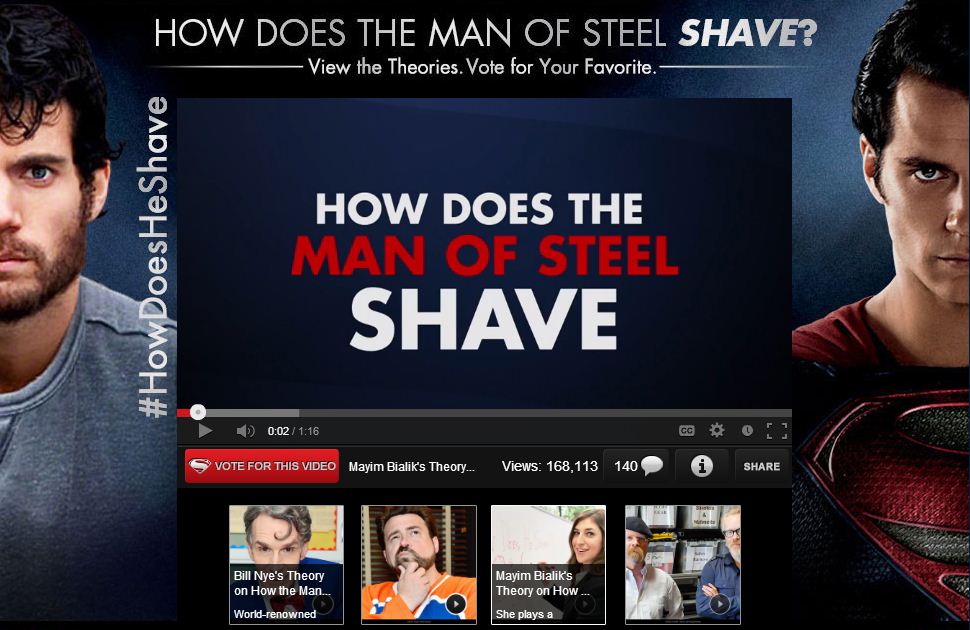
also this week, Gillette are exploring how exactly Superman shaves? a great activation on the brands’ YouTube channel has geeky celebrities proposing how they think the Man Of Steel shaves. awesome activation – will be even more so if the team involved find a way to amplify the content into broadcast.
oh, and that US$1.1bn purchase by Yahoo! of Tumblr. The Hunter observes that, when looked at from a data perspective, Yahoo! have essentially paid $4 each for the records of 300,000,000 active users – which makes it quite the bargain. whether it’s enough for the somewhat ailing Yahoo! remains to be seen.


 so jumped out to grab a smoothie this afternoon and caught some awesomness happening at The Galeries Victoria at Town Hall. the Galeries have teamed up with Warner to promote Man of Steel by letting people fly over Sydney like Superman, courtesy of Google Earth technology.


 MEDIATION