
I evaluated in my previous post some media and marketing predictions I made in late 2014. Netflix had announced their arrival in Australia for the following March. My expectation that content would win out over channel, that ability to deliver on desire for choice on-demand would determine growth, and that programmatic would swallow huge swathes of the industry – have all proved I think, largely, true.
My prediction however that the industry would largely fall out of love with the ‘ad’ didn’t come to pass as expected. Adverts have remained the predominant unit of currency for paid branded messaging.
Instead, the group that capitalised on the opportunity as I saw it – to create “platform-neutral content strategies that can adapt to platform and context more quickly – generating more relevance for brands’ comms” were not brands, but creators. The “native content in video form” that I foresaw becoming predominant in video did come to pass, but with a generation of content creators – rather than brands – at the helm.
For many brands and marketers, success is now dependent on engaging and fuelling this generation of content creators – who intermediate between products and services on one hand, and customers and consumers on the other.
Last week saw two awesome examples of this now established marketing model in practice.
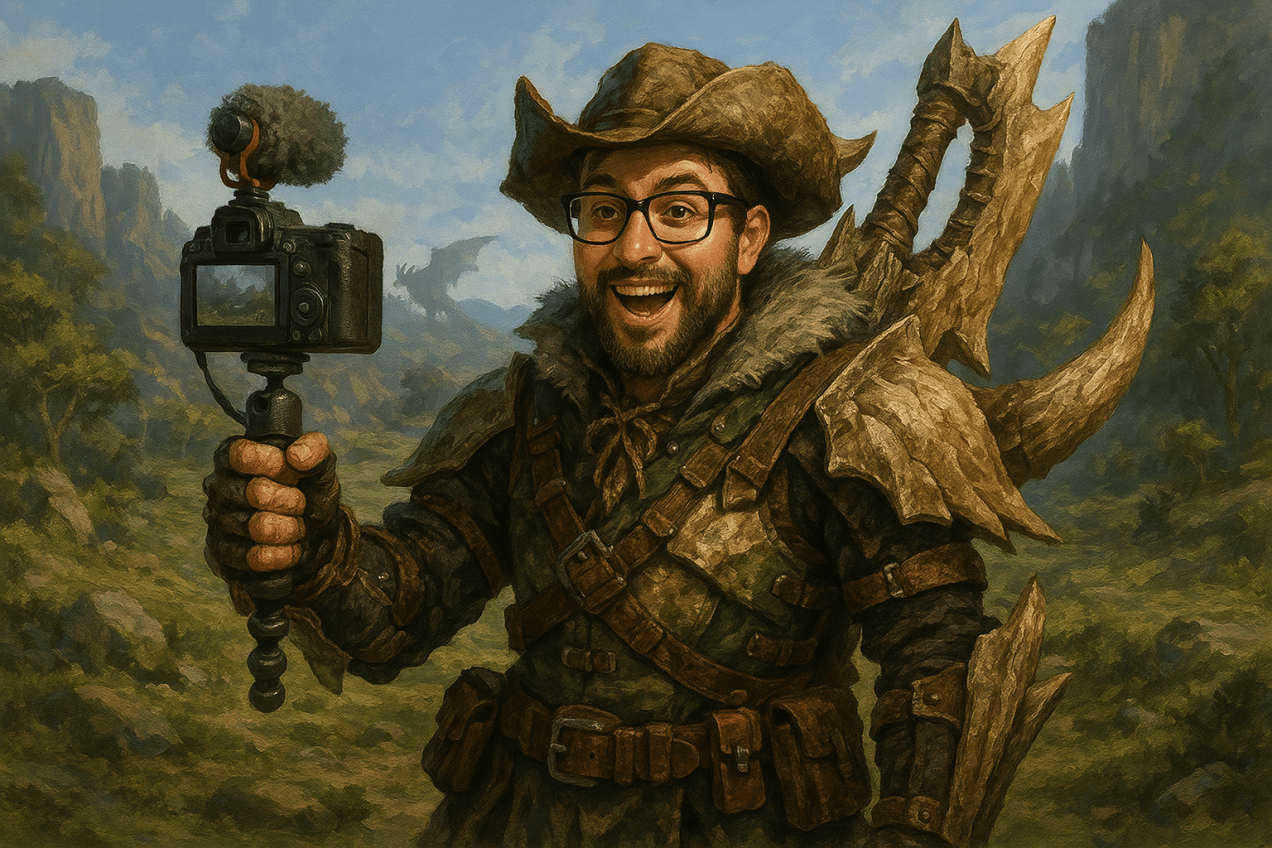
How Capcom Inspire an Army of Creators to Fuel Monster-Hunting
Monster Hunter Wilds, which released worldwide on February 28, has had a great launch. Within the first three days, the game sold over 8 million copies (it’s now over 10m), setting a record as Capcom’s fastest-selling title. On Steam it attracted more than 1.3 million concurrent players shortly after launch, securing a position among the platform’s top 10 most-played games by concurrent users.
Whilst this success wouldn’t be possible without a great product – Wilds has been critically well-received, earning 90 out of 100 on Metacritic with reviewers praising engaging combat, impressive creature design, and innovative gameplay features – its success is also down to a determined effort to engage audiences thru the game’s affiliated army of creators.
Last Tuesday’s Monster Hunter Wilds Showcase, hosted by producer Ryozo Tsujimoto, revealed the first free update, which is scheduled for this coming Friday. The content is relevant of course for people who play the game (declaration: I’m 49 hours in and counting), but I’d suggest that’s not the primary audience for this content.
Rather, Tuesday’s content was designed and deployed not primarily for the game’s 10m players, but for creators. The update had more than enough new information to fuel new content, but enough details held-back and teased to allow room for all-important speculation and prediction. This video from the awesome Khraze Gaming channel is a great example.
There’s now a very established – and mutually beneficial – relationship between the Monster Hunter Wilds dev team and the game’s content creators. The game’s owners are supporting their community of content creators, who in turn are producing content to build their community of subscribers.
This isn’t all one-way. There’s been plenty of pushback from hardcore fans of the series, critical that the game is too easy. But the devs aren’t shying away from this. They are embracing this community feedback, in an open letter this week announcing that:
“We would also like to thank you for the many comments, thoughts and feedback we have received since the game was released.
The development team has been reading your feedback, and we are encouraged by it. We are also using the comments and feedback we have received to help us plan our future actions.
Future updates will see more Tempered Monsters (★8) added to the game … And for even more of a challenge, Arch-tempered monsters will make an appearance. These are even stronger versions of tempered monsters.”
Another masterful example of a marketing team engaging and fuelling content creators was from Marvel.
How Marvel Inspired Creators to Create with a Five-Hour Plus Livestream
In this even more astonishing and finely-tuned example of the marketing-to-creators model, Marvel revealed the cast of the now-in-production Avengers Doomsday via a five hour plus live-stream – with a new cast member being revealed on the back of a director’s chair every 12 minutes. The announcement concluded with Robert Downey Jr. – who will play Doom in the strategically crucial film for Marvel – walking out to sit in the final chair and asking the audience to be quiet on set.
Just to reiterate in case you read that quickly – the Avengers Doomsday cast reveal announcement video was a panning shot of 27 director’s chairs … which lasted five and a half hours.
This clearly is content designed not to be watched by audiences. Rather – just like Monster Hunter Wilds – its content precision-made for creators. Content machine-tooled to be poured-over in crazy detail in real-time by an army of creators (many of whom are of course huge fans).
Creators like The Breakroom team, who scrambled into their studio to livestream their discussions and reactions to the Avengers announcement video, in real-time. A livestream of a livestream. Marvel designing and deploying content for creators.
This is the new and now established model. Content from brands tailor-made for creators, designed to fuel the production of content for their audiences. Creators are the intermediaries and amplifiers of brand messaging. Communities are maintained and managed not directly by brands, but by a team of creators the literal job of who is to drive engagement with audiences for brands; either because they are fans, or their income depends on it – and in reality, usually and probably both.
This is what will underpin brand success over the next decade of video.
This is a model about to be supercharged by next-generation AI production capabilities.
This is what marketing precision at scale really looks like.

 MEDIATION