yey, another week another PHDcast from the good people of PHD Australia. this week we’re focusing on TV – the last few weeks having seen the finale of The Voice, and the return of Masterchef and The Block. we talk formats, performance and the current state and future of big reality format TV.
we also talk about Ten’s back to the future audience strategy and the challenges faced by the broadcaster. they want to be seen as the home of event TV … but to what extent can the recent cricket deal, existing content and formats deliver this for the network?
and if that wasn’t enough there’s a quick run around the future of TV … connected TVs, on demand and IPTV, second (and third) screening, addressable advertising and social TV.
enjoy.
PS. if you haven’t seen it totes check out our very own worldwide executive planning director Mark Holden on the future of TV. it rocks.
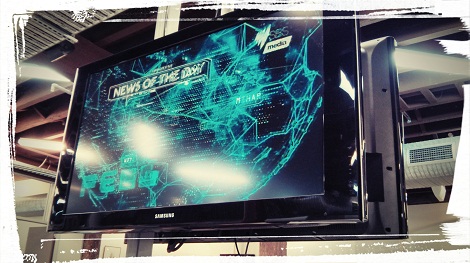
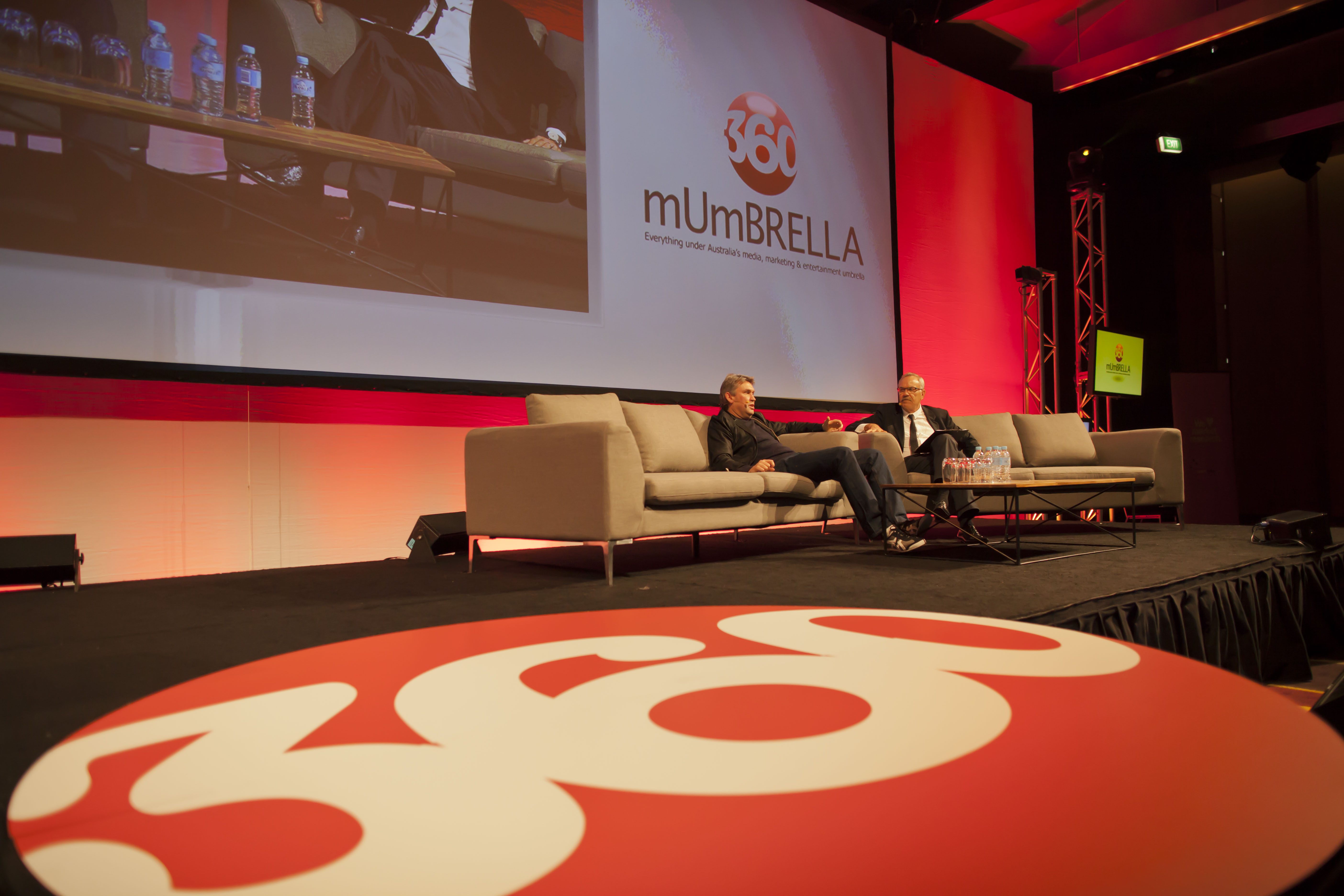
featured image: iMedia screen, featuring an SBS promotion
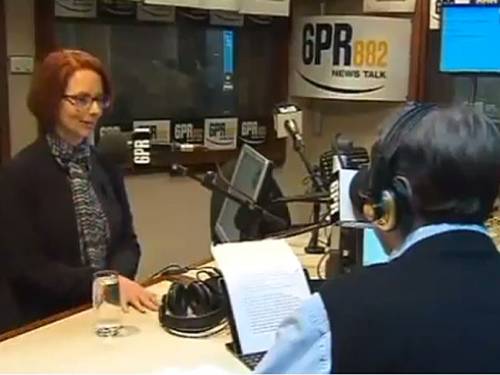
on Thursday Howard Sattler, a radio presented on 6PR radio in Perth, asked the Prime Minister of Australia if her partner was gay. on Friday afternoon he was sacked by Fairfax. the question is not whether Sattler should have been sacked, rather it’s why Fairfax took almost 24 hours to do it.
the interview really does beggar belief. that the presenter of a radio station can think it appropriate to put to a serving prime minister that their partner ‘must be’ gay as he is a hairdresser, would be beyond conceivable had it not already happened.
the incident landed in the same week that reports and comments in both the UK and Australia Guardian that raise I think broader questions about the evolving role of the media in politics. in the UK an article by Steve Richards on the pessimism he is observing in politicians across the political spectrum prompted CiF contributor ratherbered to comment:
“… I blame the modern media and the way that this influences what people believe. The media more and more have a short term focus and simplistic dumbed down approach to presenting the issues we face. Small wonder that the politicians appear to be clueless when the questions they are asked change every hour and smart interviewers are constantly trying to trip them up and exploit a gaffe.”
I rather think that ratherbered has a point. a commented on an Aussie article in the wake of the Sattler interview attributed the whole incident to the ‘death throes’ of the traditional media.
modern society has from very early on relied on the broadcast media to report the activities of our politicians, provide a forum for debate, and hold their actions to account. from the earliest print titles to today’s cable channels, media has danced a dance with politicians – frenemies that played with each other for mutual benefit, but always wary of their respective influence on each other.
it is in that context that the ‘traditional’ (I use that word with care) media is now conducting a whole new negotiation – a negotiation in which this blog aims to mediate. it is the negotiation for what their future looks like. that negotiation is tricky. it involves lower margins, more diverse revenue streams, less resource, the requirement for more content creation and an increasingly fraught battle for human attention.
the potential problem is that the last of these is measured and largely remunerated based on volume of people reached – viewers, readership, subscribers, pageviews … at that means that, with less human and financial resource, the traditional media are in an arms race for impacts.
I think you can see where I’m going.
at what point does the financial and business pressure for viewers / listeners / readers begin to compromise the forum in which our politics is debated? where is the line in sand that defines and describes the places we need for our politicians’ policies and actions to be discussed and assessed? what if there isn’t one.
the Sattler interview could represent one bad call. or it could represent a crisis in the level of available resource and therefore capability of a modern and transforming commercial media to credibly and reliably be the forum for our political representatives that we need.
I hope that its the former. I’m not sure there is, as yet, a plan B.
so big day two of Mumbrella360 kicked off with an awesome presentation from Twitter’s Head of Agency and Brand Advocacy Melissa Barnes.
essentially a ‘best of’ how brands are using the Twitter platform, Barnes more than delivered on her job title, as I suspect there were a great many more advocates for Twitter in the room at the end of her session than there were at the start.
I’ll save the content and examples up for a separate post, but its worth capturing here one of the key points that Barnes was making – that you have to approach and use Twitter differently, and with an understanding of what the platform offers and what its users expect.
she noted that she see’s lots of brands approach Twitter with a ‘display’ mentality, which just doesn’t work. the best examples on offer were cases where a brand had something to say, something entertaining and / or interesting to share, or, interesting, a crisis to manage. one fascinating chart in particular showed how a calm, human, humourous individual in chart of a mobile phone company’s Twitter account in the aftermath of a network outage was able to mitigate the anticipated ‘hate’ emotion you would typically see in sentiment analysis of an outage event.
… as an aside, huge thanks to Melissa who was generous enough to pop into PHD last Friday and share and discuss some of the examples with the agency … we loved the session, and I think someone may have actually swooned 😉
up next was the less swooney Hamish McLennan on turning around Network Ten
in a frank and fascinating discussion with the Burrowes, the boss of the struggling network discussed a strategy designed to focus on an older demo and live TV (as the latter is more easily and readily monetised) … saying that what the channel most wants to be known for is ‘the home of great event TV’.
he was frank that Ten was hurt by the advent of digital channels, and should have launched ist digital channel (11) earlier than in did, and arguably before launching One. the strategy is designed to get a fair(er) share of FTA’s $2.8bn by getting a fair(er) share of an aging demographic.
this would seem to represent nothing short of a full-scale retreat from a younger audience who, in McLennan’s own words “aren’t engaging with TV as much”. the network is looking to beat Seven and Nine by joining them in a fight for an older and more easily monetised audience. the strategy is to back off from digital channels, let alone digital platforms – which are (I suppose not wrongly) seen as the place for programme marketing more than anything else.
PHD Chief Exec Mark Coad asked about the network’s digital strategy, given the NBN (national broadband network) roll-out, but not much was forthcoming. it took a second delegate to ask a similar question to elicit the response that McLennan saw post-NBN as a “big opportunity”, the citing of the example of creating subscription channels evidence that there’s more than a little NewsCorp left in this boy yet.
I jumped into a session on The Encore Score and after lunch joined the debate on the State of the Media.
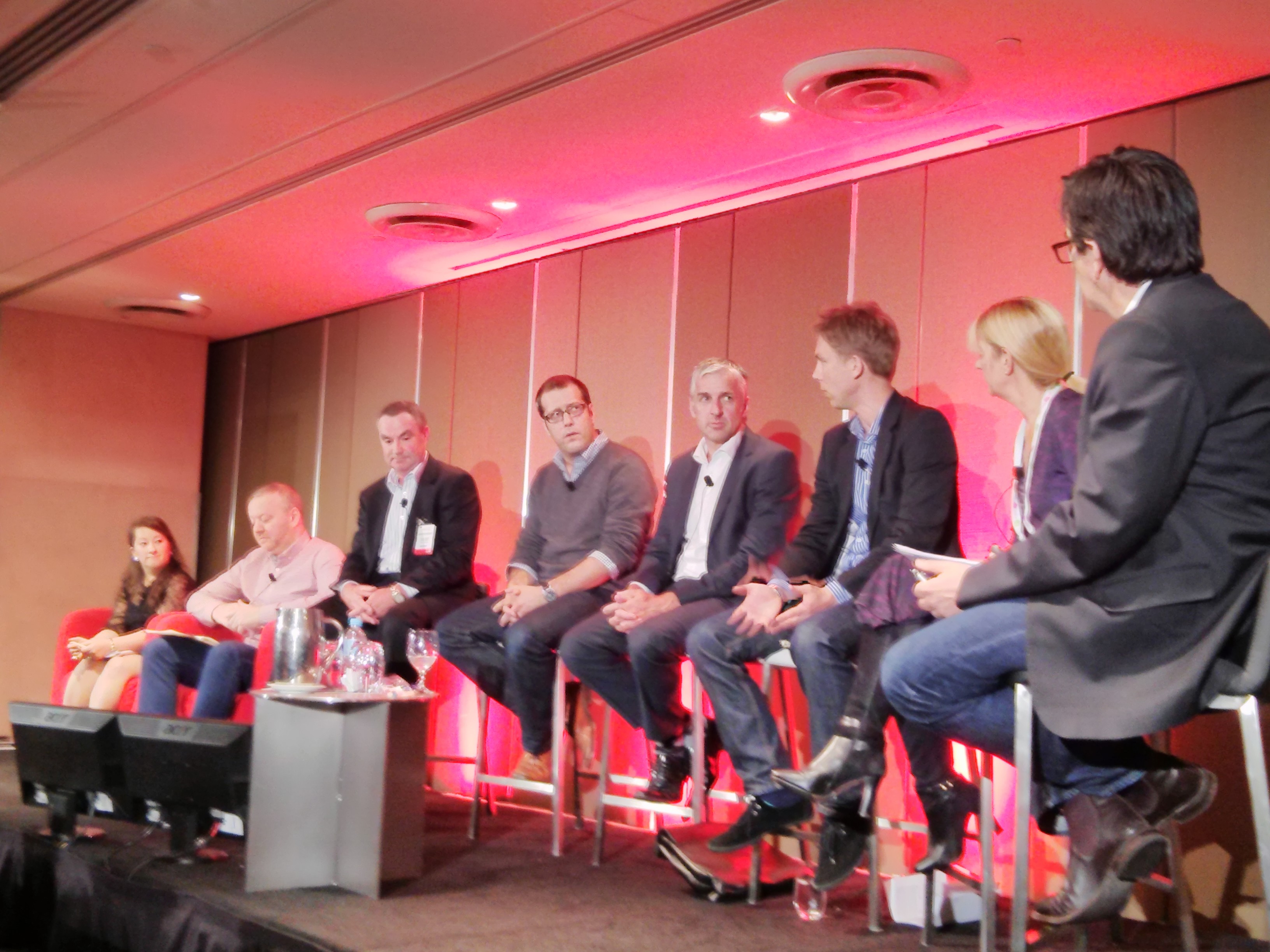
Moderated by Darren Woolley, MD at TrinityP3 and Denise Shrivell, MD of MediaScope (on the right above), the panel consisted of (left to right) Lynda Pallone, marketing services and integration manager, Blackmores; Rob Dingwall, media & marketing operations manager, Kellogg’s Australia; Chris Mort, CEO, TMS Australia; Toby Hack, MD Australia, PHD Media (woop); Tony Kendall, director of sales, Bauer; and Zac Zavos, co-founder and managing director, Conversant Media.
this was the first of two plus ça change sessions, with the debate eventually getting to some of the elephants hovering in the back of the room.
On industry relations, TH said that “industry collaboration has improved” with ZZ adding that [media owners] “don’t get enough feedback from clients and campaigns”. CM was clear that “it’s a high pressured business … If you can’t do the job with the tools you have you need to step up” [or get out]. TH on people development noted that have “a choice … to invest in people or not.”
a debate on programmatic buying led to some predictable places, most notably concern from ZZ that automation leads to commoditisation of media (which it does, because much of the time media is a commodity). TH described the two emerging centres of gravity in agencies around creativity / innovation and automation / analytics – which RD slightly misinterpreted as an agency split, which admittedly at this stage would seem a rather drastic solution.
this session also saw the revelation that industry-wide plans for a move to electronic trading have been shelved. this was first debated at last year’s 360 conference, with a panel consisting of senior agency and media owner representatives debating the subject of automation.
whilst the panel wasn’t the most warmly received (media man unmasked commented that “When you put 9 of the most senior executives in our industry in front of a room full of people who look to them for inspiration and leadership and all you get is a school yard argument it doesn’t bode well”), the point was that something was being done.
this now doesn’t seem to be the case.
one suspects that the shelving was brought to you by the letters M F and A and the numbers 7, 9 and 10 … but I won’t pre-judge. I’ll do some digging and write up anything I land on.
anyhow, back to the state of the media session … where there were a many more questions than answers. so much so that I was moved to ask a question of my own – specifically after this debate is over what happens next? who’s responsibility is it to drive the necessary change?
Darren Woolley reiterated his Golden Rule … that “the man with the gold makes the rules” … and what is the rule made by those with the gold? in a refreshingly honest comment Kellogg’s Rob Dingwall illuminated us with the admission that “ideas may not be paid for but they are valued – if you are valuable you will see money coming.”
and this is essentially the muddle we are now in … media is commoditising but clients won’t (generally) pay for the skill of planning and innovating with media. it’s seen as added value. but there’s less and less value because client procurement teams are driving down margins, so agencies seek additional revenue streams which leads to accusations of lack of transparency. and on we go.
in perhaps the most disheartening comment of the session, Blackmore’s Lynda Pallone actually said “see you all next year for the same conversation” …
… I really rather hope not.
to lift one’s spirits and to finish I’ll share some of the awesomness that is some of the great work coming out of Asia at the moment. in a session entitled ‘Unleashing the Tiger’, Peter Wilson, the retail planning director at Cheil Australia, discussed how “there is a massive step-change taking place in our industry … a new trend, where agency groups based in non-traditional markets lead the new paradigm, led by technology rather than traditional advertising.”
Wilson described the idea of Tu Hon, I’ll let the video do the talking …
Wilson suggested that central to Asia’s current creative success is down to tapping into emotion, and shared three examples. the first genuinely moved me, the second one actually elicited a tear, and the third one made me very jealous that I didn’t come up with it when I was working on a similar project a few years back:
SAMSUNG CAMERA video coming soon 😉
all brilliant examples of how, in Wilson’s words, “a happy marriage between creativity and technology are becoming the norm” … lovely stuff.
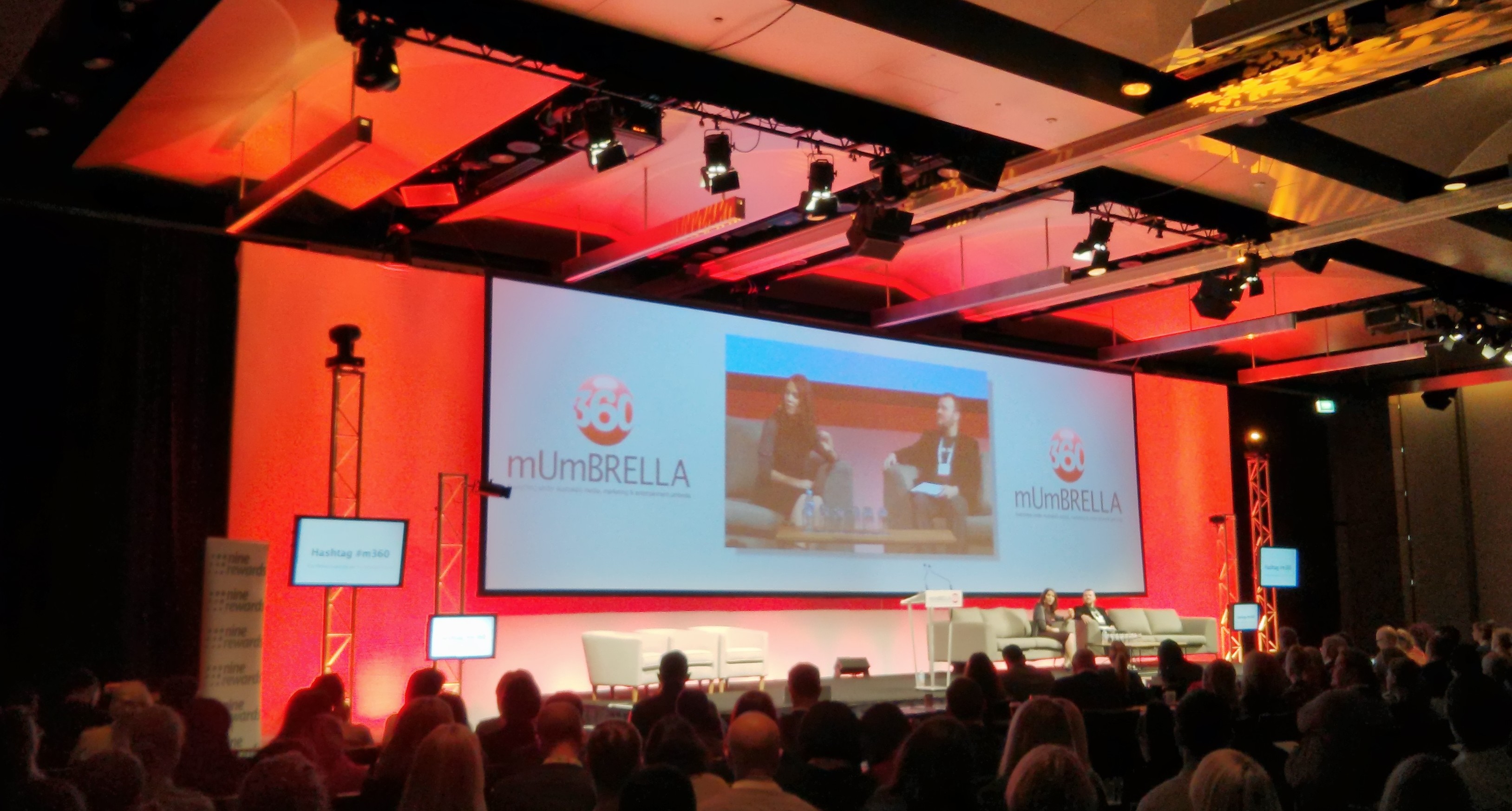
another year and another gathering at Mumbrellaland (I still think they should call it that) for the annual 360 conference. I’ll sum up later but for now just capturing the notes and the content from the sessions I jumped into during day one.
up first was Simon McDowell of Coles, them of the down down, Status Quo, Dawn Frenchness and now biggest-boyband-in-the-world-ness.
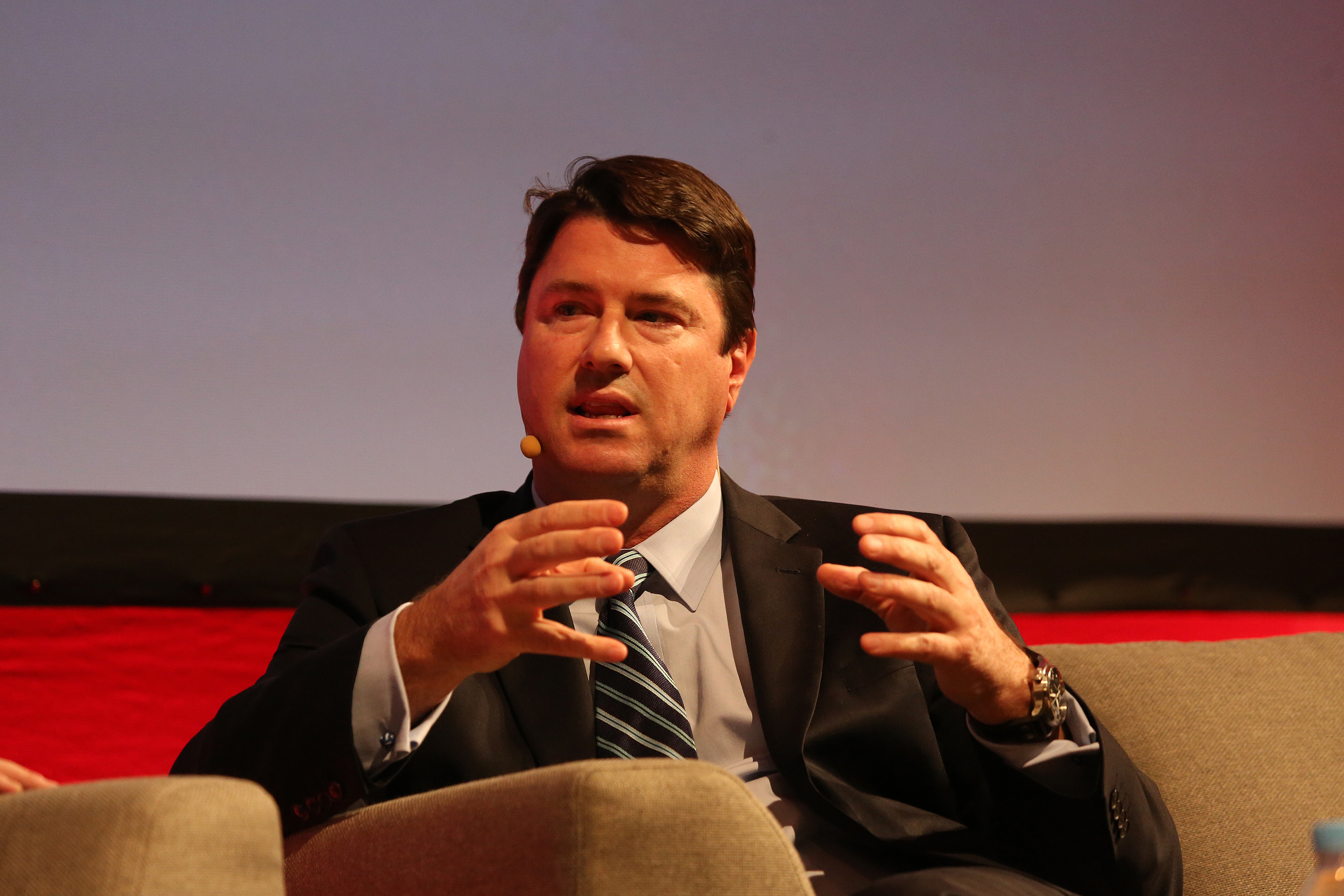
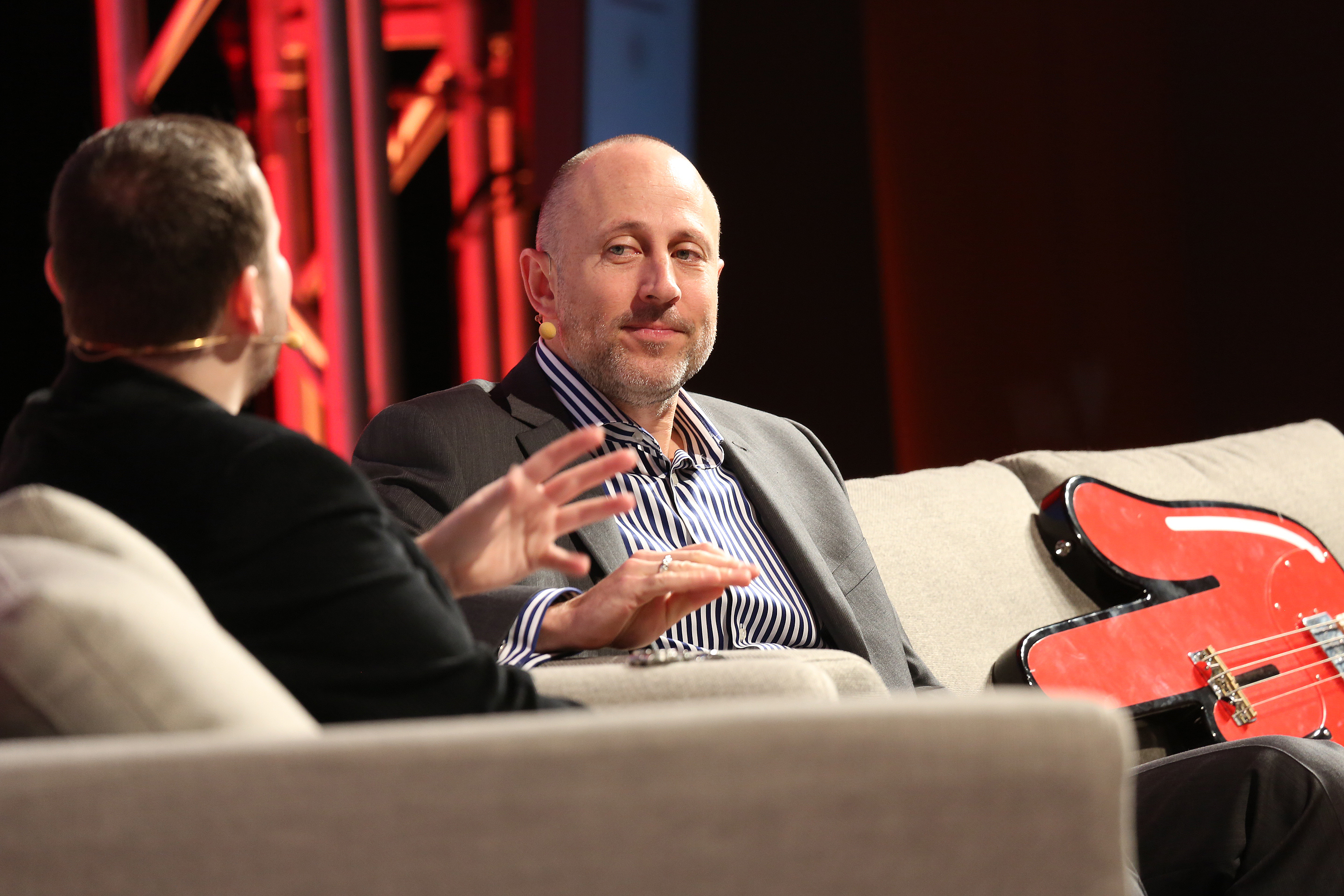
Simon McDowell at Mumbrella 360, picture source: Mumbrella
McDowell discussed the approach to marketing at Coles, describing it as “a bit of a creative hot spot, a melting pot … we’ve got a thousand ideas a day and we’re going at this hard.” by this he means making life better for Aussie Families, a picked this up because he mentioned the phrase ‘Aussie Families’ about forty three times, that’s almost one a minute. this seems to mean (1) bringing prices down and (2) making ads for them, and not adland.
he repeated asked us not to “be fooled by the sizzle on the sausage … we’ve invested hundreds of millions of dollars in bringing prices down … It’s a fundamental part of what we’re about … But how do people know you’ve done it when sales [messages] are everywhere? … Is all just blah … Were really trying to be unique.”
Tom Donald asked about the negative response in the industry to some of the Coles ads. “Do I care what adland thinks? Not a bit. The Coles business is in a turnaround, we have more customers spending more money [with us] than ever before. Were trying to build the most famous and compelling brand in Australia.” (and, wait for it) “… we’re trying to create something that resonates with Aussie families”. cue One Direction …
on the more serious matter of supplier pressure, McDowell was firm but clearly less comfortable. asked if Coles was doing the right thing by farmers, he replied that “[all the] discounts are funded by Coles, the more milk we sell the better off farmers are. Prices are too high in Australia, we have to take care of Aussie families … at the end I’d the day we have to look after Aussie families where the cost of living is going up … we want to sell more. it’s a serious business looking after Aussie families and that’s what we’re about.”
just in case you’re not clear, its about Aussie families.
next up was Group M’s John Steedman in discussion with Nine’s CEO David Gyngell
its been a big year for the network, and the discussion covered a range of subjects …
on positioning Nine and investment in drama: “You have to stand for something. your audience has to know what you stand for … we’ll keep investing in Australian drama, [it] delivers against an audience that will watch linear TV for a long time to come”
that investment is based on an optimism about the future, saying that we are “heading into a purple patch for Australian drama – expect production to double.”
on the evolution of media, and the sale of the magazine business to Bauer, Gyngell was clear, saying that newspapers and magazines “won’t be as profitable as they were. quality magazines won’t go anywhere. the magazine business will be smaller and more nimble. newspapers will go online – less profitable but just as relevant. the fin review may lose $10m a year but you couldn’t buy it for $100m because its relevant.”
as far as digitisation of Nine goes, when asked when will Nine become a digital first company, he answered when you can make more on digital than we can at the moment. “we’re still nimble enough to be able to move when we want to. we’re not a digital company, we’re a marketing and content creation and distribution company.”
on advice for Seven and Ten: “Tim knows what he’s doing, and has Stokes around him. Seven won’t break because Tim won’t let it. Hamish is an accomplished marketer. if he gets a good programme he’ll know what to do with it. they need to get lucky … keep your head down and pray for some luck.”
its fair to say that Steady gave him a pretty easy ride as interviews go … it was left to a delegate to bring up Tom Waterhouse and the recent over-stepping the mark on programme integration and live odds. to which he commented that Nine, and broadcasters per se, have “a moral compass to provide to the country, but we’re not in the businesses of telling people what they can and can’t do. Tom Waterhouse was a lightning rod. we have a government that reacts quickly to any negative press. his competitors had a go – when the mafia start saying how bad the triads are you know what’s going on. we pushed it too far – we know that. did we overstep the mark? perhaps at the start when Tom was with the commentators. we’ve pulled back from that now and its the right balance.”
after that went to a cracking session with Rob Pyne of X or Y Decisions, about why businesses, and marketing teams in particular, make bad decisions. great insights and advice based on understanding and mitigating biases we inherently have when we’re making decision.
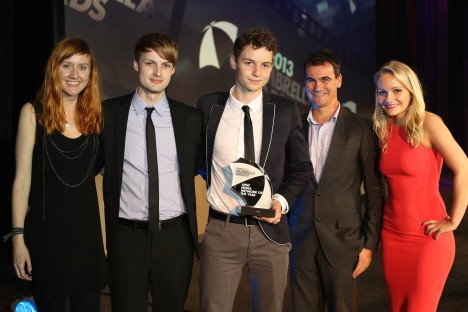
then Coady and I presented to a judging panel for Network Agency of the Year (which we won – yey!) … after which I jumped into Tom Donald‘s brilliantly fun session on fads – of which I hope there will be a future download / follow-up. and that (PHD’s session on gamification and evening drinks aside) was day one. here’s a pic of the guys collecting that Network of the Year award. whoo hoo.
we've been warned: Paul Gilding, Naomi Oreskes, Curt Stager discuss acting on Climate change as Sam Mostyn facilitates
so Friday evening was spent at the brilliant Sydney Writers Festival at Sydney's Town Hall. the two sessions, 'who's afraid of Wikileaks?' and the climate-change-themed 'you've been warned' had illuminating things to say on a diversity of subjects but I was particularly struck by what they had to say, explicitly or otherwise, on the subject on media.
a key element in the first session was a specific question posed to the panel on whether Wikileaks is a media organisation or a political organisation. the panel were agreed in the main that Wikileaks is a media organisation… that they exist to aggregate, organise and make available information for distribution.
the panel were of the opinion that Wikileaks is non-political in the sense that what happens as a result of the information they release is up not to Wikileaks but rather to those who consume its content. Wikileaks were, the panel argued, political only in the sense that Assange is a fervent believer in transparency of information, and its ability to hold corrupt organisations and governments to account.
it occured to me that the idea of 'becomng a media organistion' wasn't limited to Wikileaks… the model – of aggregating useful information and then distributing it – is essentially an owned and then earned media combo. and any organisation could adopt it…
The greatest sneaker archiving project is about to begin; Footlocker's SneakerPedia
there are parallels to what Footlocker are doing with the rather glorious Sneakerpedia; aggregate information – with utility – into an owned media space. then use that to stimulate earned media (3,300 Twitter followers and counting) … bought media could come later – amplifying Sneakerpedia's greatest hits or rarest items in print ads, or short form sneaker documentary content on TV, but it doesn't necessarily have to. Sneakerpedia, like Wikipedia, is an owned and earned media combo – and that's all it has to be: the mechanics of media now not only permit that but in many ways favour it…
because bought media is developing a serious credibilty issue. the rise of owned media and emergence of tangible earned media has put bought media – as exemplified by the ad – into the spotlight, and the glare seems to be hurting it…
in the second session of the writers festival, a wonderful panel consisting of Paul Gilding, Naomi Oreskes, Curt Stager, Sam Mostyn discussed the hard choices we have to make now to preserve our planet. Oreskes described how the climate change movement had been undermined (like the anti-smoking lobby before it) by an argument of credible doubt. the proponents had used bought media to amplify their message to a broad audience.
Oreskes was asked why the pro-climate camp hadn't adopted the same tactics? her response was stark: "advertising exists to sell people things they don't need, scientists reject that [advertising] can be used to sell climate solutions" … the message is clear, bought media lacks the credibility of owned and earned.
this should come as no surprise to anyone familiar with our industry – the reality is that we have shouted our messages to people for over half a century. we have created as a result several generations of ambivalence towards our branded messaging, the result of which is now not only passive resilience from audiences, but outright rejection of not only the message but the media delivery channels themselves…
this point is important. Channel 4 Chief Executive David Abraham noted in his RTS speech this week that according to Channel 4 research, "about two-thirds of all 'TV audiovisual content' viewing time – across TV, PC and mobile – will be 'tracked intelligently' in some way by 2020"… our working assumption should be that such tracking will only be able to be utilised if people permit us to use it. if they are similarly minded to Oreskes, that may set up a tricky negotiation between our industry and our audiences.
Groupons new ad … geotargeted realtime promotions never sounded so straight-forward
Priscilla, who sends tweets from @thoughtcloud, (thanks Priscilla) pointed me in the direction the above video from Groupon, which – as she neatly points out – can be described as mobile + scheduled coupons + mobile micropayments = awesomeness.
the whole proposition, of aggregating local promotions which are geotargeted and delivered in realtime, is in many ways the culmination of a host of recent developments in the mobile space… a culmination that Groupon – with a view to IPOness – are keen to amplify as much as possible. it's for perhaps this reason that the company – which has been built from a connections perspective hereto on peer-demanded communications and word of mouth, has put together … an ad.
both regular readers will be familiar with this blog's attitude towards 'the ad' – that 20th Century invention which came to be synonymous with advertising. our continued reliance on the broadcast interruption model that forms the media basis for adverts remains one of the key limiting factors in brands and marketers embracing a communications age of user-centricity, community and utility.
but Groupon's effort is perhaps a reminder that 'the ad' does have it's place in a 21st Century communications ecosystem. I can't imagine a neater or more compelling way to communicate realtime geotargeted promotions and offers… a simple, neat encapsulation of a message and a reminder of what made 'the ad' so predominant in 20th Century marketing communications.
and Groupon aren't alone. Starbucks have for several years now adopted a community and reward-based marketing approach. this blog noted in April 2009 that Starbucks were offering free syrup shots for life when you signed up to a Starbucks Card … why? because – and this was a direct paraphrase from the Bucks' call centre – the brand was looking to what it could, given the (then) current economic climate, for its existing customers.
the last two years have seen a plethora of offers and bonuses for existing customers be deployed in store. all of which are communicated on regular emails that I'm happy to receive. like this one that I got today…
one of the regular eDM's I receive from the Bucks
the mail contains the usual offers and updates, but also invites me to 'watch their new ad' and note that "We're excited that Frappuccino® is on the big screen" …which struck me as an unusual turn of phrase. excited that they're on the screen. they're Starbucks. that pretty big company that turned themselves around with a focus on customer service and involvement in their brand. why the excitement over an ad?
Starbucks' have a new frappuccino ad … and they're excited
but I guess that it's precisely that focus on daily delivery of quality and service that makes their presence in the broadcast stream an exception. it's a rarity and therefore a novelty for the brand. even one as big as Starbucks. and the way I see it both Groupon and Starbucks have this exactly the right way around…
for them, broadcast ads aren't the rule, they are the exception. and those ads are therefore all the better and more valuable for it. not for these brands the shout at the millions whether they're listening or not. not for these brands is broadcast interruption the modus operandi.
rather, daily delivery of value and service and utility and innovation … and when there is something genuinely new, or different, or compelling, they permit themselves to broadcast and interrupt. only then. conversation first and as default. adverts when, and only when, what they have to say is of sufficient value to those on the receiving end. if only all brands had their priorities in this so very correct order…
FOX8's Snag a Simpson initiative … creating viewer engagement or bribe to increase viewer minutage?
so I returned home last night to find one of Pelican's number playing the above game on FOX8. the channel invites you to try and 'Snag a Simpson' … this involves you pressing select to play, and when you see a Simpsons character on the screen you snag them by pressing Red on your FOXTEL remote.
I know for a fact that you can do this because I watched said person do it.
only you need to 'Snag' 10 Simpsons in 15 minutes for your reward. the guide explains that it's free and you can play as many times as you want. I bet you can.
the generous interpretation is that FOX8 is genuinely looking to create viewer engagement and reward consistent viewing. the less generous interpretation is that the channel is blatantly attempting to bribe you from switching channels during the ads breaks (or shows for that matter) and at the same time increase their minutage amongst the measurement panel.
I fear that it may be the latter.
but I also fear that its another worrying sign that the implicit contract between channels and viewers (and advertisers) is broken. the contract states that you get the programmes for free (or for less if you're on subscription) and all you have to do is watch the ads…
only people don't buy that any more. in fact the contract seems a great deal less attractive than it once did… why? (1) a lot of people pay for their TV now, so they're not getting their content for free (2) the amount of choice available makes switching all too attractive (3) we're increasingly trained to consume micro-content – small packages of TV or otherwise that can be consumed in a couple or minutes (or seconds if you're browsing your Tweetdeck) – this makes catching even only a scene on an another channel preferable to sticking to an ad break (and even if you miss the rest of the show you caught the first half so what the hell) and (4) the ads in most ad breaks are pretty crap … I've taken time to watch a few ad breaks of late and I really really have been stunned by the general drivel that advertisers and agencies seem to think passes for an ad…
we made the contract together and I guess that we'll break it together; everyone involved will have been complicit in it's cancellation:
the viewers got impatient and became happy to flick around ubiquitous content.
the advertisers only cared that a small but big enough fraction of people who saw an ad responded, ignoring the fact that the vast vast majority of people who saw it were either ambivalent (neutral brand equity effect) or disliked it (negative brand equity effect) or hated it (super-negative brand equity effect and potentially damaging WOM.
channels continued to print money and fight for petty share wins, ignoring the fact that overall viewing was in decline and that viewers were distracted, multitasking and ambivalent to the efforts of the advertisers from whom they were taking money.
and what of agencies? perhaps agencies will become the most culpable of all. we failed to ask the networks the questions we should be asking, going along with their playground share battles, whilst all the time taking micro-payments in the form of a commission from every ad that we placed. agencies sat like market stall traders at the base of a dam that was about to burst; not investing in an ark but instead telling their customers that everything was fine … that the dam would hold … that the flood would never come.
we may come to see a great deal more endeavours to encourage viewers to 'Snag a Simpson", or a Robinson, or heaven forbid a Grimshaw. it's cheating. we can do better. whether or not we choose to accept our fate of SImpson-Snagging is up to us.
Zaac pointed me in the direction of the above this morning. it's the trailer for MTV America's remake of the UK's beloved Skins. as someone who watched and loved the show it makes for strange viewing. on one hand the new cast and setting looks strikingly different. but after a while the similarities between the above and the original UK version become not just clear but blindingly obvious.
the car going into the water. the quick edit phone conversation. taking to one's own genitals. even the back garden (yard now) trampoline. all conspire to indicate that this is a clean remake of the show. something which, if true, presents not only a missed opportunity but a huge failing of producing.
a missed opportunity, in that the best adaptations of shows for US audiences haven't been remakes but remixes. same show, different culture. think about how The Office transferred from Slough to Scranton, or how the boys from Manchester evolved into a very different Queer as Folk Baltimore. great remakes, or should I say remixes, protect and nurture the truth of a show whilst mixing in a new culture and society's perspectives and nuances.
from Slough to Scranton – same Office, very different culture
from Manchester to Baltimore – same, err, well totally different actually…
that "the remix is the very nature of digital", is of course now so widely held to be true that it's almost too obvious to quote it. but Gibson's elegant maxim is too often ignored. by TV makers and brands alike. just as in the case of TV shows that fail to capitalise on the opportunities that a remix affords, how many global ads do we see land on the screens of shores a far cry from their (often European or American) origins? or worse, dubbed out of their native tongue, so that we are sold to by smiling fresh-faced lip-synced avatars…
the pressure to create ads that can be deployed across a multitude of regions leads to centrally developed, but often locally less-relevant communications. distinctiveness in communications is key – it mitigates misattribution and builds brand cues that extend the return of a media investment out of the short term and into the longer term. simply deploying a global property locally is no guarantee of success.
this presents a problem for TV producers and brands alike … a problem that, for the latter, will only be exacerbated by a shift away from broadcast interruption as the de-facto method for audience reach, towards a two-way content and community-led platform that seeks to engage an audience.
MTV's gamble with Skins – to create what looks like a remake rather than a genuine remix – should give pause for thought for marketers. to what extent are we acting in a brand's best interests by picking up and redeploying content into a country – and culture – for which it wasn't designed? how many opportunities are missed, and investment wasted, by failing to reflect the nuances of a culture with whom you seeking to engage?
last night the X-Factor hit Australia. but despite a huge marketing push by Seven, the launch episode achieved only a disappointing 1.186m, making it the fifth most watched programme of the night behind four news and current affairs efforts. the winner, Nine's A Current Affair, won the ratings battle with – ironically enough – an interview with the family of Matthew Newton, the X-Factor host recently dumped by Seven.
as a big fan of the show in the UK – where it's fair to say it's a bit of a national institution – I've spend much of today (amongst other things) pondering why it is that Australia just doesn't seem to 'get' X …
on paper it should all add up. Australia likes Reality formats (as evidenced by the huge success of Masterchef); there's a gap in the schedule (the aforementioned Chef has just finished); there's a natural audience underserved by reality music shows (Australian Idol is a distant memory); and awareness of the show's imminent arrival was more than apparent.
but even during the day yesterday there were worrying signs. I asked a few people if they were looking forward to X that evening to which the most upbeat response I got was "oh, maybe". in fact the only person with any enthusiasm for rushing home for a night in with the format was another Brit, who assured me that his fellow Brits were similarly excited. but it seems, as judged by the shows performance, it was a decidedly British sentiment. a hangover from the glory of the show in the Motherland.
having watched the show there's clearly some issue with the content. the production quality lacks the shine of the UK version, but this may very much be a result of the hastily re-edited version that Freemantle had to get out of the door following Newton's departure. but the issues don't stop there – the judges lack conviction; Ronan's quiet as a mouse, Guy is far too puppyish and whilst he had valid comments they just weren't packaged; the Imbruglia seemed to be focusing on how attractive the talent was and poor Kyle just seemed to hold an expression of mild boredom before rolling off a pre-prepared put down. the judges, ironically, lacked a confidence that's fundamental to their role.
but the content on the other side of the table didn't fair much better. there was some good but certainly not spectacular singers; if X is hoping for an international recording artist to emerge it better have had more up it's sleeve for the second round of auditions.
but none of this explains the poor performance of last night's show – as none of this would have been apparent until the show went to air, by which time not enough people were watching (and by my straw poll of six they were mainly Brits).
we can only hope and expect that the show gathers pace. the talent needs to come through and the judges need to find their feet, and the production quality of the live finals will surely increase. but in the meantime serious questions must be being asked at Seven… about just why Australia doesn't seem to want the X-Factor; because whilst it's going to be a yes from me, how Australia votes is another matter entirely.
what does advertising say about me? that's the question I'm increasingly asking myself as the broadcast model wanes and targeted advertising becomes the norm. I'm imagining a future where my Glee is interrupted by messages from fat-burning miracle powders, or where my 30 mins with Modern Family is interspersed with messages for help with sex-addiction or an encouragement to buy some oil shares.
you see the ad-serving paradigm – with which anyone who has worked in online advertising will be more than familiar – will in the future spread beyond the computer screen. to hand-held devices and then, as IPTV gains traction, to TV screens.
it's one thing to see niche targeted ads on my computer screen; it will be quite another to see them on my TV… but as the ability to target on TV becomes widespread, niche advertisers will increasingly be able to ad-serve specific messages to targeted audiences at a fraction of the cost of even a small TV campaign today.
on one hand the future is potentially very bright… we engage more with brands that we like and therefore, theoretically, as ads become more targeted and better tailored to our interests and passions, advertising will be more engaging and, theoretically, more engaged with.
at least that's the theory.
but there's a potential downside… the lowering in the cost of entry will allow hundreds of advertisers who previously couldn't, to advertise on TV. the result is inevitable, a lowering in the average quality of the ads that get produced. this is inevitable.
to escape the race to the bottom, we're going to need choice… the only solution to such a wave of ads will be to have choice over which ones we receive. there's a double benefit – for advertisers there will be increased engagement (we do engage more with ads that we've chosen to watch), and for audiences there will be the algorithm…
because unlike broadcast, where we all have to endure the same ads as everyone else, an ad-served model offers the possibility of a world where only content that get engaged with (clicked on, liked etc) gets further propagated. if Google served TV ads (beyond their current very limited scope) they'd use a quality score (based on relevance and preformance of the ads) to propagate ads that are reaching the right people and being engaged with, and suppress ones that aren't. and that can only be a good thing? can't it?
out of interest, what does advertising say about you?


 MEDIATION