awarding, content creating, creator-ing, streaming, trending

The Future’s Behind Us: Dispatches from Cannes Lions 2025

I love the Cannes Lions Festival of Creativity.

There. I said it.

I’ll admit that I’ve had my moments of scepticism over the years, but we need Cannes – perhaps now more than ever.

We need it for the celebration of the work. For the ideas. To shape and focus the industry agenda. We need it to logistically get people in one place at one time. For the opportunities to reconnect with old colleagues and friends – and make some new ones. Because it reminds us of what we do when we’re at our collective best. We need it for all those reasons, and many more besides.

I used also to think that we needed Cannes to show us the future – but I don’t think that’s the case anymore. Because the future has arrived already. We are living inside it.

My take on the vibe at Cannes Lions 2025 was of an industry not bracing for a future to come, but rather one wrestling with the reality of its arrival. It was a thought that dawned on me Tuesday whilst I was talking with a long-time industry acquaintance; that the future has moved from being something rushing towards us – into something that now lies behind us. It simply moved faster than our ability to keep pace with the changes it wrought. And now we’re playing catch up.

And so here we were. Navigating together the shared reality of our transformed world.

There was no better example of this new reality than YouTube’s presentation in the Palais des Festivals cavernous Lumiere Theatre. Less a presentation than a victory lap, the streaming platform’s CEO Neal Mohan shared with the audience that a billion hours of YT are watched daily on television sets – YouTube is the new TV. With Kaizen – the story of Inoxtag’s Everest climb – he suggested that YouTube creators are also now the new Hollywood start-ups.

Alongside creator content’s expanding influence over the industry is the halo of fan content that accompanies it – often in podcast form. Mohan shared that 1bn people watch a podcast every month on YouTube, noting the power of the connection between creators and fans – observing that “fans don’t follow culture, they shape it … fandom itself is a form of creative expression”.

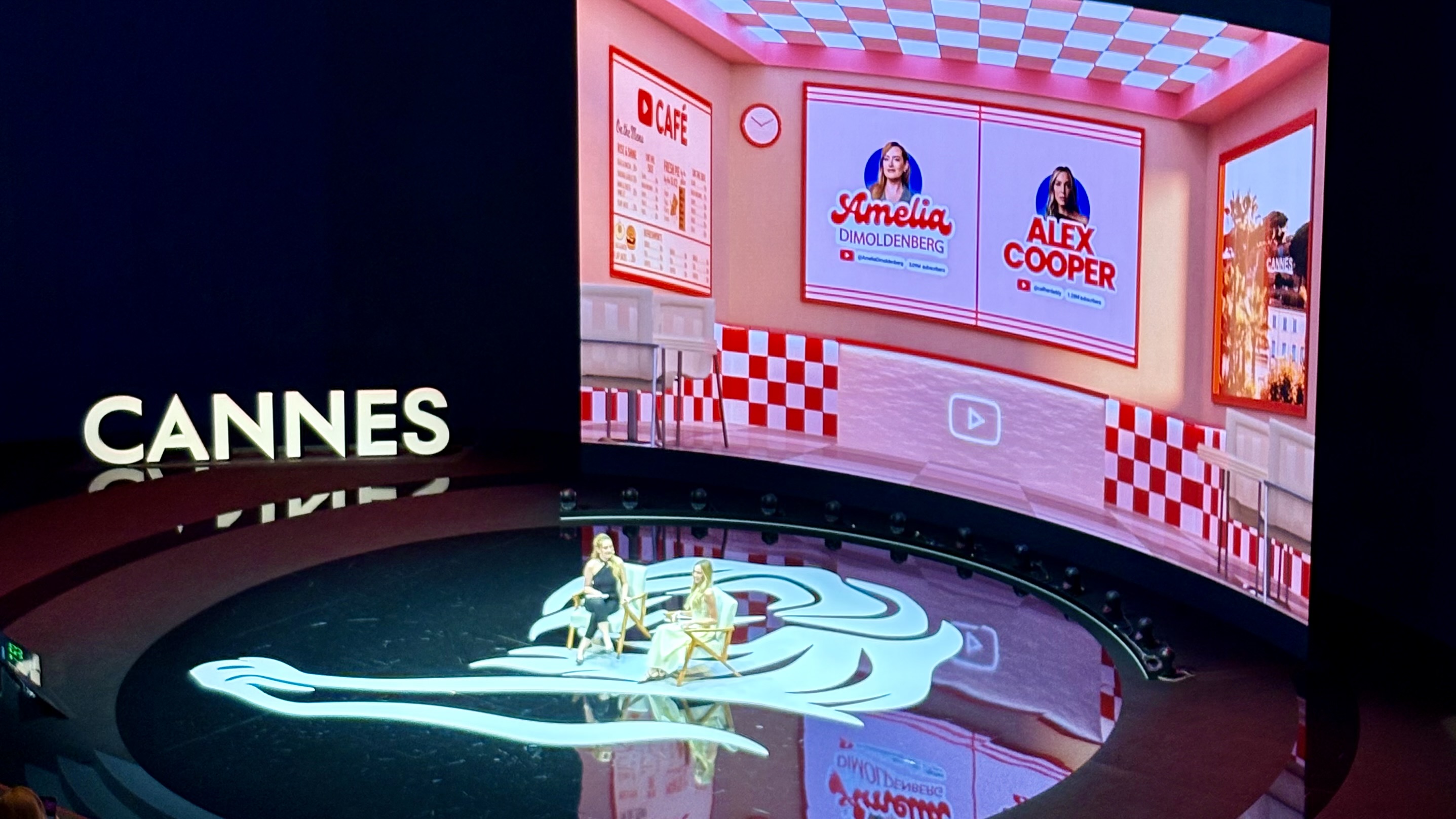
Brands need not miss out on the action. Chicken Shop Date’s Amelia Dimoldenberg and Call Her Daddy host Alexandra Cooper were on hand to announce the launch of ‘open call’ – a new feature powered by YouTube BrandConnect, which enables brands to discover and partner with creators.

In a blog post, YouTube notes that “Open call gives creators of all sizes the opportunity to pursue new relationships with brands. And brands can lean on the relevance and trust of YouTube creators to get more from their social strategy on YouTube.”

Amelia and Alex put it more bluntly: creators can “take the middlemen out” and work directly with brands.
I was left in no doubt about the popularity of creators as the audience began to swell on the Palais’ Terrace Stage Wednesday, not for the excellent daily festival lowdown from Contagious’ Alex Jenkins and Chloe Markowitz – but for the following session featuring TikTok’s Global Head of Business Marketing and Commercial Partnerships Sofia Hernandez in conversation with creators Keith Lee and Logan Moffitt – the latter rocked to fame earlier this year with this viral cucumber salads.

It was bedlam.
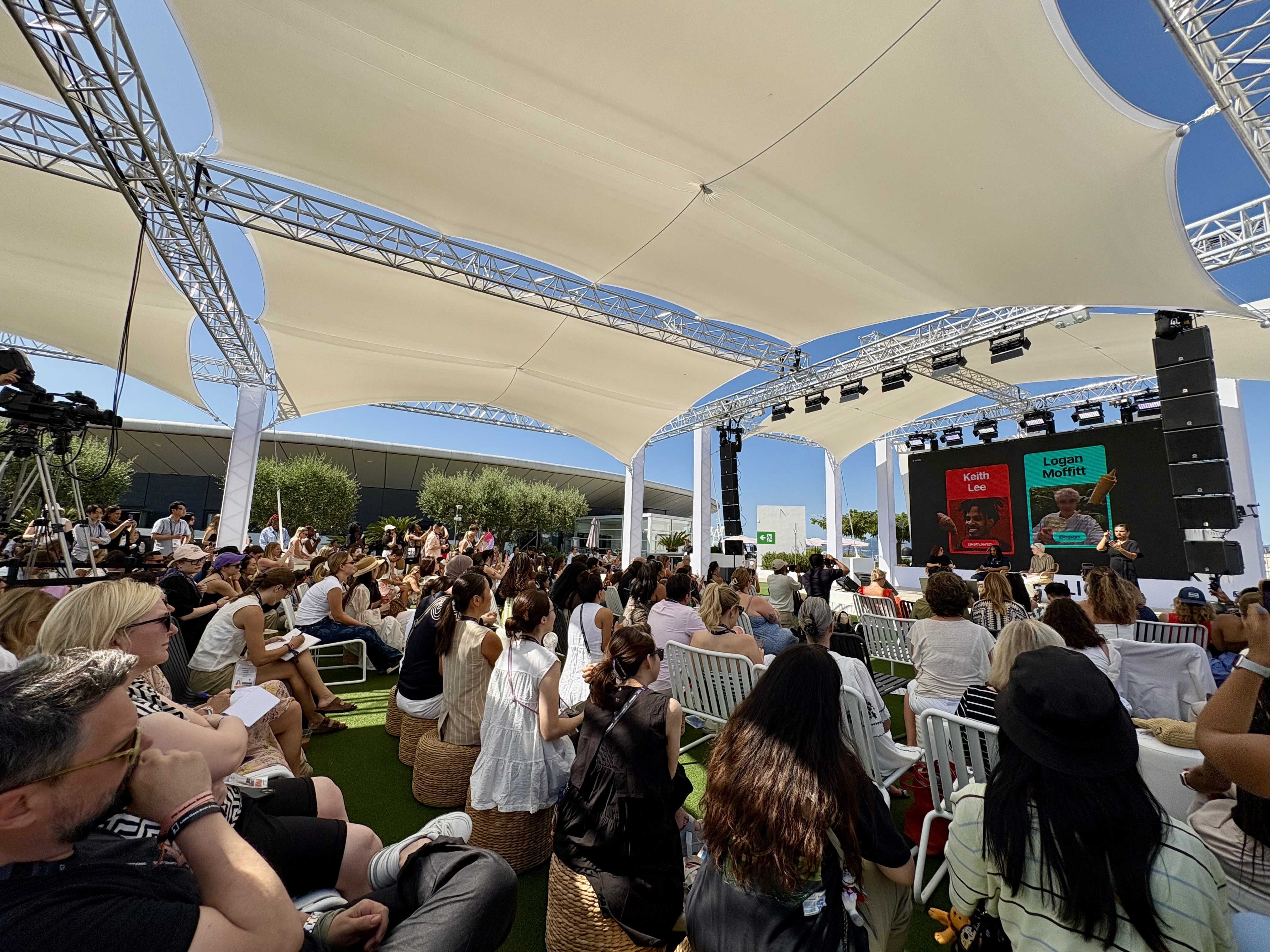
Again, that sense that I was sat in a future that had already arrived.

We’re living and working in a world in which creator culture has supplanted the advertising model, in which streaming distribution has overtaken the broadcast model, in which clicks from search engines are declining as the foundations of search evolves – all of it powered by the invisible hand and accelerating force of AI (I got 650 words in without a mention, people).

In response, brands and marketers have changed their strategies and approaches to media and marketing.

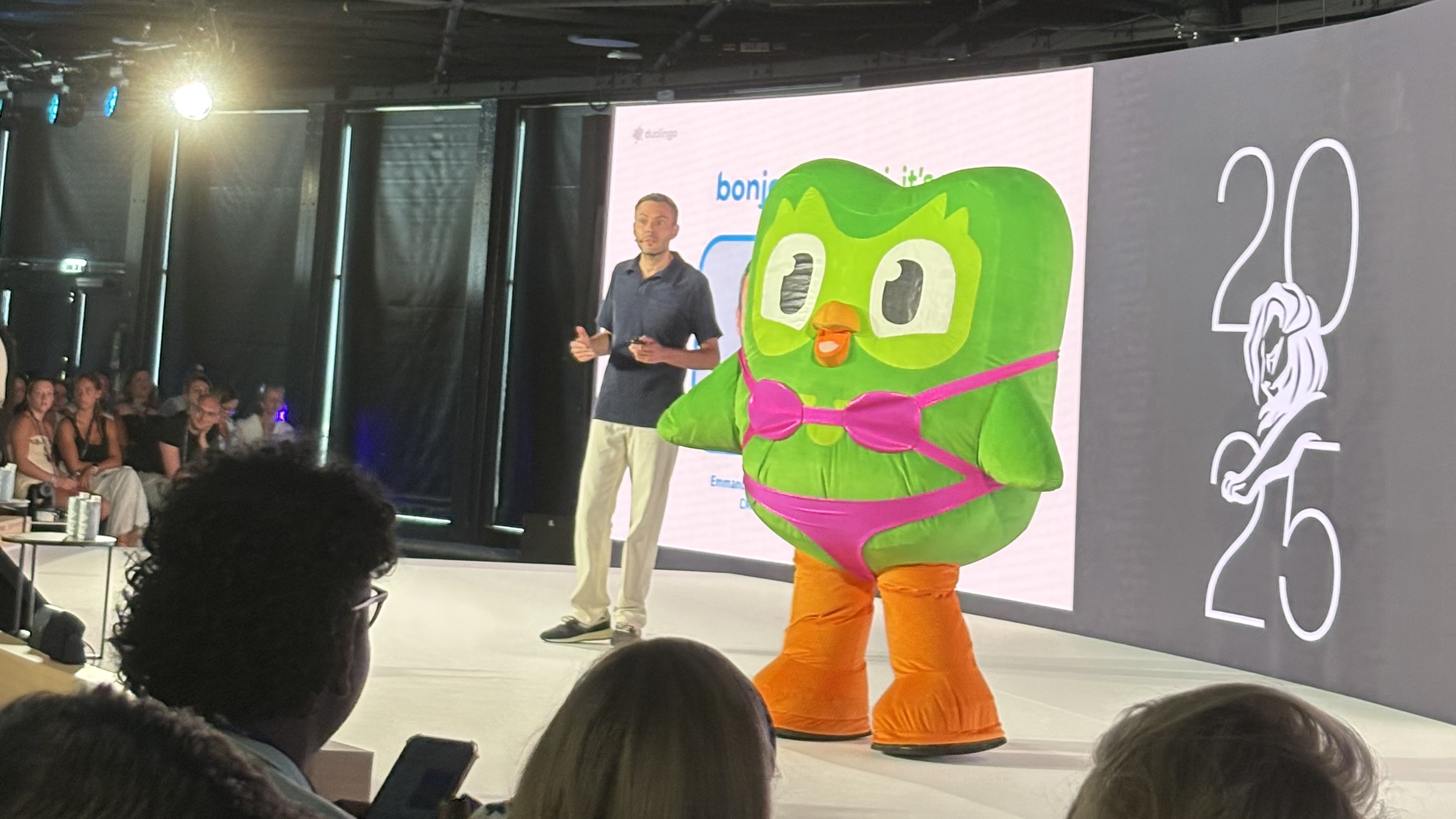
Duolingo’s Emmanuel Orssaud described how the platform eschews the conventional integrated model (too expensive, trying to do too many things, doesn’t get people talking) in favour of a social-first model where 30% of all spend is focussed not on proven effective comms but on “figuring out what else will work”. They’re expanding next into long-form content with a Duolingo Gameshow, and an anime series.
It echoes Liquid Death CEO Mike Cesario’s comments on last year’s Cannes Lions Creative Impact stage in which he shared the brand’s category-redefining approach to marketing. The brand focusses on standing out and being entertaining. The only game in town for Liquid Death is capturing attention, because “if you can get people to stop and look at your product, you’re already ahead of 99% of the market”.

Even the vibe of the awards competition this year felt like a body of work negotiating with itself. The customary smorgasbord of brands’ ideas and innovation were competing with – and often losing out to – their own past body of work.

New campaigns for Apple competed with ten years’ worth of the ‘Shot on iPhone’ campaign’, while Dove’s 2025 entries vied for metal with ‘Real Beauty for Dove’ – a 20-year-long body of work for the brand.

As Contagious’ Alex Jenkins put it – it’s a bit like bringing a gun to a knife fight.

One juror in a post-panel discussion shared with me that brand campaigns competing with the whole back-catalogue of others caused a fair bit of debate. I bet it did. The same juror indicated that they would be referring the issue to Cannes Lions. I can’t imagine it will be allowed to happen again.

So it turns out that the hero of Cannes Lions 2025 wasn’t innovation or ideas, nor was it comms platform vs tactical campaigns, or creativity vs tech or ads vs content or anything vs anything else.

The hero of Cannes 2025 was change itself.

Along La Croisette and in the Palais and everywhere in between was an industry grappling not with the future to come, but with a future that now lies behind us. The current source of unfair advantage is being able to marshal your resources – be they marketing, agency, creator, or anything in between – to leverage better than your competitors the world around you.

It’s tempting to suggest that it was ever thus; but we all know, deep down, that it’s never before been like this.

On stage in the Omnicom Space, Malcolm Gladwell noted that “There is a nobility in failure. [and that] the stories of failure are the most compelling stories that are not being told. The costs of trying crazy shit are not nearly as high as people think. This is exactly the moment to be trying crazy shit and failing!”

Or as Mercado Libre CMO Sean Summers puts it, “The industry is facing a tsunami. The biggest risk, is not taking a risk.”

//

I’ll be publishing more thoughts and perspectives from last week’s festival. Subscribe to catch the rest as soon as it drops.
Standard
advertising, content creating, creator-ing, predicting, streaming

Streaming’s First Decade: Three Predictions I Got Right – and One I Called Totally Wrong

It’s been ten years to the month since Netflix launched in Australia (where I was lucky enough to be working at the time). A decade on, it’s worth reflecting on what’s changed, what I called right, and what caught me (and the industry) off guard.

There’s been some great commentary from Tim Burrowes both via Unmade (paywalled) and on the MediaLand podcast about the impact of the streamers on the broader media landscape down under. In a Mediation post back in 2014, I made some predictions about what the arrival of streaming would mean for marketing in Australia, and the broader media landscape.

I think I mainly called it right.

Three Out of Four Ain’t Bad: Three Predictions That Nailed It (and One That Didn’t)

Prediction one: “In the immediate term there is undoubtedly going to be a firestorm for views and scale – brace for plenty of press releases in the first quarter of 2015 about content deals, views and reach. in the medium term this will play out in a battle for content – with many shows already locked away in local deals, there will be fierce competition between the platforms as distribution rights cycle into play.”

Verdict: Totally called it. The fight for content has not only played out between the streamers, but more broadly across the industry as legacy broadcasters and streaming platforms battled for the content that will drive and retain subscribers. In Australia that battle continues to this day, with the launch of Max on Monday locking HBO’s content library onto the platform – and the arrival of ESPN on Disney+ introducing an additional potential bidder for many of the market’s upcoming sports rights negotiations. Content has, for the last decade, remained king and has been a key defining element of the success – and conversely the struggles – of the streaming platforms.

Prediction two: We’ll see “a radical shift in viewer expectations. more choice, more freedom to choose what we watch and where, how and when we watch it. This future has been a long-time coming and has been with some for much longer than others”.

Verdict: Two for two. If anything has defined streaming’s impact, it’s the expectation of choice, on demand. That expectation has spilled beyond streaming—into podcasts, and even cinema. The streaming age taught many of us that, for the typical movie, it was easier to wait and watch at home – a behaviour reinforced by ever-reducing windows between theatrical and home release.

As the Entertainment Strategy Guy put it in a recent post, we’re drawn to the cinema now for ‘events’; “the actual most popular “genre” isn’t really a genre, but a style: exciting. People go to the movies to see spectacle, which often means action or exciting set pieces …18 of the top 25 films [in the US 2024 box office] have a lot of action set pieces. (Even Wicked ends with one).”

Prediction three: “With increasingly fragmented and diverse platforms and viewing services, advertisers and their agencies will increasingly rely on programmatic solutions to build reach quickly.”

Verdict: Absolutely. Over the past decade, programmatic advertising has transformed the industry by enabling real-time bidding, automating media buying, and enhancing targeting capabilities. On one hand, this shift has driven greater efficiency, has undoubtedly improved ROI, and empowered marketers to deliver more personalised experiences. But it’s also led to concerns about transparency, data privacy, and brand safety – not to mention the broader impact of an over-reliance on short-term, performance-based media on brands and long-term brand-building. It’s all our jobs to ensure we build tech that will serve us better over the next – AI-powered – decade, than we did for the last.

Prediction four: “Many advertisers and ad agencies will finally be forced to break out of the ‘advert’ model – using instead platform-neutral content strategies that can adapt to platform and context more quickly – generating more relevance for brands’ comms. think native content in video form.”

Verdict: So this one is a lot less clear. I genuinely thought back in 2015 that the industry’s long-held affinity for the ‘advert’ would wane. I thought the classic ad, so effective in the broadcast age, wouldn’t survive in a streaming world; a world in which tolerance for content interruption would be significantly reduced.

I was genuinely wrong on that. The power of the ‘ad’ holds sway to this day. The industry didn’t wholesale move on from the ad. It didn’t predominantly leverage more diversified content and ideas-based marketing to create fewer, better, more transformative experiences for audiences.

Too expensive. To difficult to scale and measure. Too hard.

Only it wasn’t.

Because while the industry remained predominantly stuck in ad-land, the last decade has seen a content revolution that has more than delivered on my prediction of ‘native content in video form’.

Native Creators: The Creator Economy Delivered What Marketing Didn’t

In parallel to the growth of streaming over the last ten years, the creator economy had, by 2023, blossomed into a $250 billion industry. This expansion is projected to continue, with estimates suggesting the market could reach $480 billion by 2027.

A report last year (admittedly from YouTube) found that an astonishing 65 percent of Gen Z responders self-identified as video content creators. The number of content creators worldwide has surpassed 200 million, reflecting the increasing appeal of content creation as a profession. The market for global influencer content has more than tripled since 2020, reaching approximately $33 billion in 2025.

It seems trite to point-out that this incredible growth – and it is incredible – is largely down to the fact that creator-made content is typically significantly more engaging than traditional ‘adverts’; it feels authentic, personal, and tailored to specific communities … because it IS authentic, personal, and tailored to specific communities.

Audiences tend to trust creators they follow, viewing their recommendations as more genuine and relatable than polished brand messaging—leading to higher attention, interaction, and emotional connection.

The prediction I made a decade ago suggesting that the industry’s ad-venture would come to an end was correct, it just turned out to be a generation of creators – powered by platforms like YouTube and latterly TikTok – that delivered on that strategic opportunity of ten years ago. The great irony of course is that advertisers did end up being an integral part of this creative content revolution; they were the money.

In other words, it wasn’t the brands who changed the game—it was creators and their audiences. And it’s that shift – from ads to creator-audiences – that will define the next decade of streaming.

Standard
advertising, data planning, debating, marketing, opinionating

The Un-Negotiated Contract: How the model changed, and why the fight for access to data and information has never mattered more

this post first appeared on Mumbrella

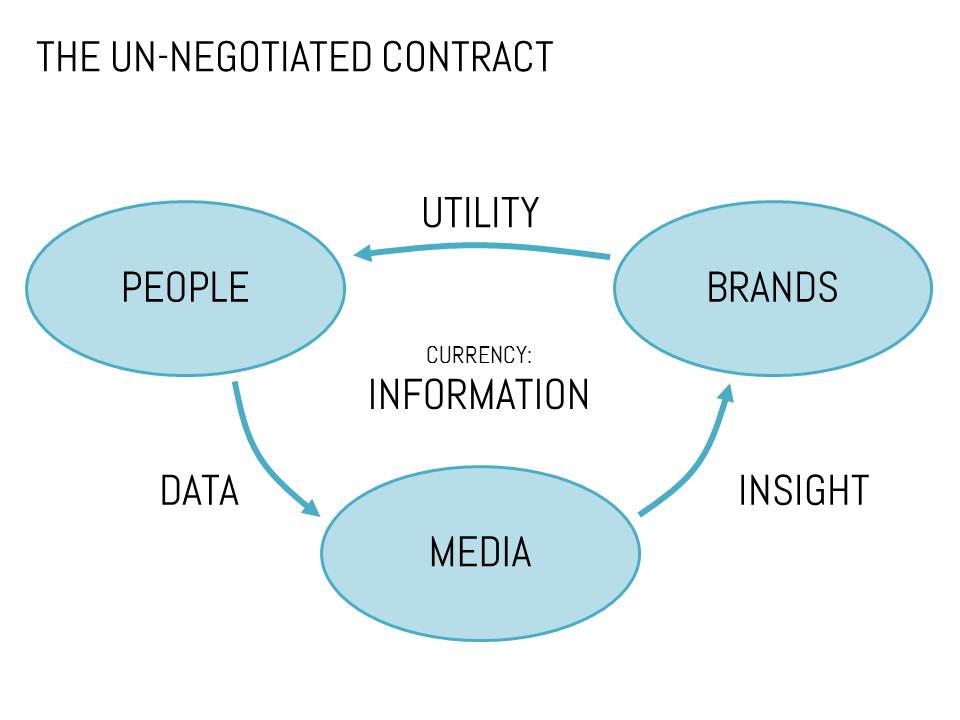
At some point in the last decade a long-established contract between people, media and brands fundamentally changed. What is gradually and incrementally replacing it is an un-negotiated contract – in which information is the new currency, insights and utility are the new value, and the fight for the control of data -whether you realise it or not – is one in which you are already engaged.

The nature of the contract we’re currently negotiating will have huge implications for consumers, brands, media businesses and governments. Whether its the strategies employed by brands, the deals made in market, or the data that’s shared with our governments – how this emerging contract nets out will affect us all, and is already shaping the industry around us.

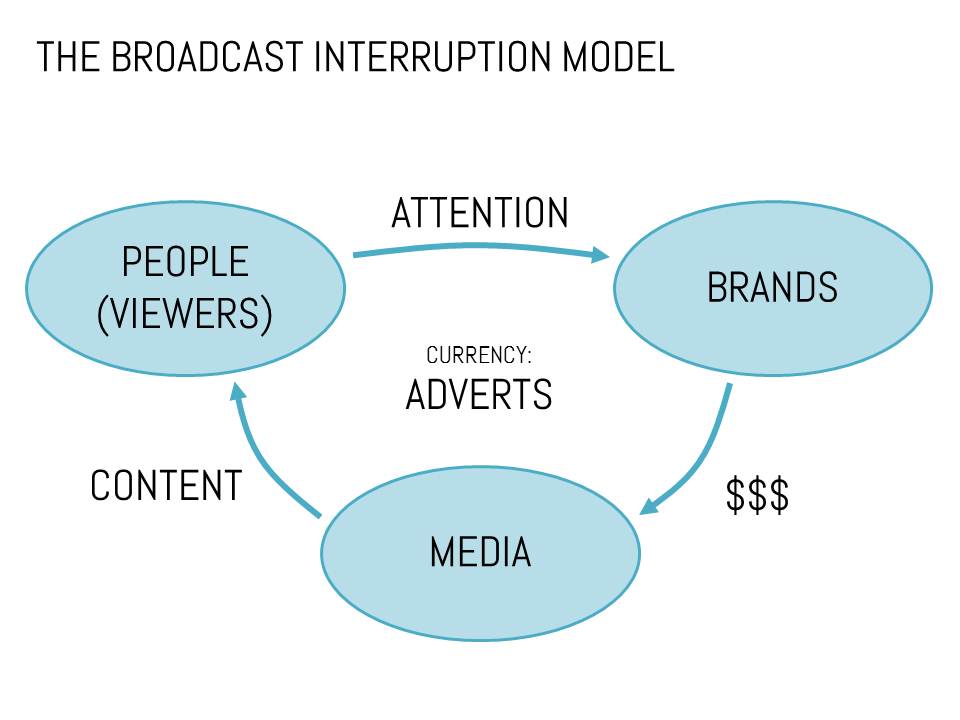
The broadcast interruption model that emerged in the 1950s was a ruthlessly effective and potent means of value exchange. Everyone involved (which was everyone) won. It was ruthlessly simple – brands gave broadcast media dollars which paid for content that people viewed, and which brands interrupted to get people’s attention.

mediation_broadcast_interruption_model

The model was so awesome that it even accommodated channel-neutrality – it worked as well for print and radio as it did for TV, but at some point in the last decade this ruthlessly simple and effective model started to break down. Fragmentation of channels led to fragmented viewing and audiences – necessitating more investment by brands to reach the same number of people. Set-top and on-demand technologies allowed viewers to skip brand messages (although the evidence is that this was largely off-set by higher viewing in PVR households), the internet changed, well, everything … and a new generation of media businesses and brands emerged that weren’t dependent on the broadcast interruption model – or more specifically the currency that drove it.

Because what sat at the heart of that model and the old established contract – its currency – was the ad. Adverts were what media organisations sold, what brands placed and what viewers watched. They were the centre of the contract’s gravity – so much so that the very concept of advertising became synonymous and interchangeable with its most predominant vehicle … the advert.

What has tacitly emerged over the last decade has been a fundamental reworking of the relationships between the various participants in the deal – to the extent that I now think we’re working with something that looks more like this:

mediation_unnegotiated_contract

The emergence of new media businesses built on data – rather than broadcast ad interruption – is one of the key drivers of this new as yet un-negotiated contract. Google, Facebook, Twitter are of course the obvious examples but so too are companies like Amazon and Ebay – they revenue-generate based on the data they accumulate, and the insight this subsequently generates for advertisers. Ads are still of course part of the equation but they are no longer the point of the model … rather information is.

Better information allows and enables brands to have better contacts and connections with people … something Will Collin discussed on Mumbrella back in October in a brilliant piece that made the case for a focus on reciprocity in how brands engage people – I’ve called it utility above but the point is the same. It’s about how data and information fuel better brand ideas – ideas that are not only increasingly necessary in our fragmented cluttered world, but which are also proven to generate disproportionate ROI versus optimisation of the channel plan.

So far so nice theory, but so what? Well, what this affords us is a framework to understand the various terms of engagement being played on in what will probably be come to be understood as the data wars. Early skirmishes and alliances in an emerging contract based not on ads, but on information.

New models are emerging between brands, media owners and agencies based on information and data rather than just ads media spend. For example this case of how Twitter data is delivering new targeting capabilities.

Ads are, of course, still in play but data and information is what the new contract is predicated upon. Expand ‘media’ in the above model to include (media) agencies and you understand why the positionings around Audience Management Platforms and audience data are so vital to those involved – its about who controls the insight (and therefore the revenues).

It’s also why brands are (1) increasingly asking why they shouldn’t retain full control and analysis of their own data and (2) why some brands are looking to cut media out all together and go direct to customers (existing or potential) based on the data and information they own. Nike have used this strategy with Fuel, whilst brands like Burberry use a hugely disproportionate amount of their own media to reach people direct. Its also why media businesses now ruthlessly collect and protect first party data, and why the sharing of that data with frememies to match the demand-scale generated by agency groups makes media owners so nervous.

But its between people and the media where the contract is perhaps most vociferously being negotiated. Between Google and the European Courts with legislation that allows people to force Google to delete their data (or at least the links to their information); Facebook’s privacy settings tidy-up was part of this negotiation, as is any site’s publication of it’s cookie and targeting policy.

The other huge players in this part of the negotiation are the telcos (and I include Apple in this bracket) – whose efforts to win the Triple Play wars were awesomely captured by Nic Christensen here last month. This is important for two reasons … first, the Telcos are emerging as some of the biggest accumulators of data – that makes them significant players in the emerging contract and secondly, like the big Bay Area media companies, the data they accumulate can be appropriated by government agencies without our explicit consent.

The fact is that it has been the emergence of this new model, and the concentration of such vast quantities of people’s data into new media businesses and telecoms companies, that has fueled US, UK and other government agencies desire and demand to acquire that data as part of their ambition to ‘master the internet’.

And yet despite all of this the contract remains un-negotiated.

The conversations and debates required to do so are fragmented and diverse, but there are huge implications for brands, agencies and media businesses depending on just how that negotiation pans-out. Who own’s people’s data? Who gets to sell or target and re-target based on that data? How aggressively should and could brands pursue collection of their own customer data? Should it be made more explicit that someone’s data is being captured for advertising or targeting purposes?

To be absolutely clear, it is my opinion that this new contract is an eminently good thing. It is the emergent data and information-based value model that has given all of us access to search, social media, online marketplaces, and a world of information, education and entertainment.

What the contract promises is awesome – but to deliver, it must first be negotiated.

Standard
advertising, broadcasting, marketing, mediating, opinionating, television

The Myopia of the 2020 Vision: Why we need a whole load more rational when we debate the merits of Television

Think TV, a marketing initiative of Free TV Australia (the body representing all of Australia’s free-to-air metropolitan and regional commercial television broadcasters), have released the latest in their 2020 Vision series. the episode – the first of series three – see’s industry heavy-weights including Jeff Goodby (Goodby, Silverstein and Partners) and Sir John Hegarty (BBH) discuss (in Think TV’s words) “the importance of broadcasting powerful, mass reaching, messages that connect with audiences”.

its a curious beast. but then communications about communications are always the most interesting of creatures … on the surface this is a straight-forward and very well produced piece of content which talks-up the role and power of TV. but take a closer look and a rather all-too defensive agenda emerges:

some highlights:

TV is till 60% of what we buy because it absolutely is the best place to be able to tell stories and connect people with your brand” … “we try to use video and television as a way to understand our customer … television is the only place you can do that” Kevin Mayer (Volkswagen of America Inc)

“the use of television is fundamental in telling a brand story and engaging with the audience in an intriguing and interesting way” Sir John Hegarty

“the great thing about TV … is that it allows you to go around the rational objections to a product … you have to find another emotional road to take people along so that they don’t think about the rational stuff anymore” Jeff Goodby

“if you’ve got the funding to do an ad, [TV is] still the one place you can get the biggest change in perception and appeal for your brand” Kevin Mayer

“there are two things brands have to do; they have to persuade and then they have to promote. digital technology has been brilliant at promotion, but if you’re not out there persuading, you’re not growing your brand … now, you can only do that with broadcast, because you don’t ultimately know where your audience is going to come from” Sir John Hegarty

“advertising expenditure globally is about $500bn a year. about $200bn of that goes on television. now, end of argument, alright?” Sir John Hegarty

“most of the money my clients spend is still on TV. I know that its very popular to think otherwise and go, you know, ‘what’s going on out there, there must be new things that we should be spending money on’ … and we end up spending on TV, just because it turns out to be the way to start something, the way to keep something going, the way to chance people’s minds” Jeff Goodby

“actually the internet kind of operates as an afterthought of the best TV commercials … people run to the internet to talk about them” Jeff Goodby

“as television evolves and becomes more targeted, I think you’re going to see an influx of dollars back into television because now you’re going to have efficiency and you’re going to have scale, and that’s where I think television is going to really see its second coming” Kevin Mayer

“we’re emotional creatures, and television is an emotional medium … it’s the most powerful selling tool advertisers have ever had at their disposal, and that ain’t changing – not for the foreseeable future” Sir John Hegarty

to say that some of those statements are subjective in the extreme is perhaps a bit of an understatement, and you could argue that’s fine if the piece was presenting itself as the subjective opinions of very respected industry professionals … but its not; Think TV’s description of the piece is “forward-thinking industry professionals reveal how television is rising to meet new marketing challenges with great success” (source) … which I actually think gets us into rather dangerous territory … because the success is pretty much ‘people saw my ad’, or ‘we emotionally engaged people’ or ‘lot’s of people spend lots of money on TV so it must work, alright’ …

now it’s easy to say that it’s “just a piece of video” or conversely that “these are the opinions of respected, and very successful, advertising men”, but don’t forget for a second this is just one grenade in an ongoing battle for communications revenues. this is about where brands invest marketing dollars – budgets that are increasingly under scrutiny by the companies that invest that money. and we’re not talking about spare change … the video’s own stats point out that $200bn is spent on TV – I think we’re going to have to do a little better to justify that than because television is “an emotional medium”.

it perhaps is no co-incidence that we receive this gem in the same week that online ad revenues overtook those for free-to-air TV. according to a report by the PwC for the AIB, (available to subscribers here), for the first six months of 2013 our industry in Australia invested $1,883m in online versus $1,805m investment in FTA TV.

the size of your spend isn’t of course everything. but it does count for a lot.

I like television. as a planner I value the role television can play in a plan. it delivers reach, often cost-effectively, and it delivers that scale quickly. and whilst, unlike Kevin Mayer, I probably wouldn’t describe the future of television as a “second coming”, I am excited by the opportunities that critical mass in connected TVs will bring.

but there’s a dangerous myopia in this 2020 Vision. statements like “digital technology has been brilliant at promotion, but if you’re not out there persuading, you’re not growing your brand” (Hegarty) or “the internet kind of operates as an afterthought” Goodby, do far less for TV’s case than embracing and exploring – say – the possibilities presented by digital storytelling and how they will be possible, with scale, in 2020 would have achieved.

a very wise man once told be to never let my strategy show. so when a video selling the benefits of TV says that “the great thing about TV … is that it allows you to go around the rational objections to a product … so that they don’t think about the rational stuff anymore” … I wonder whether we don’t need a whole load more rational as we mediate this ongoing debate.

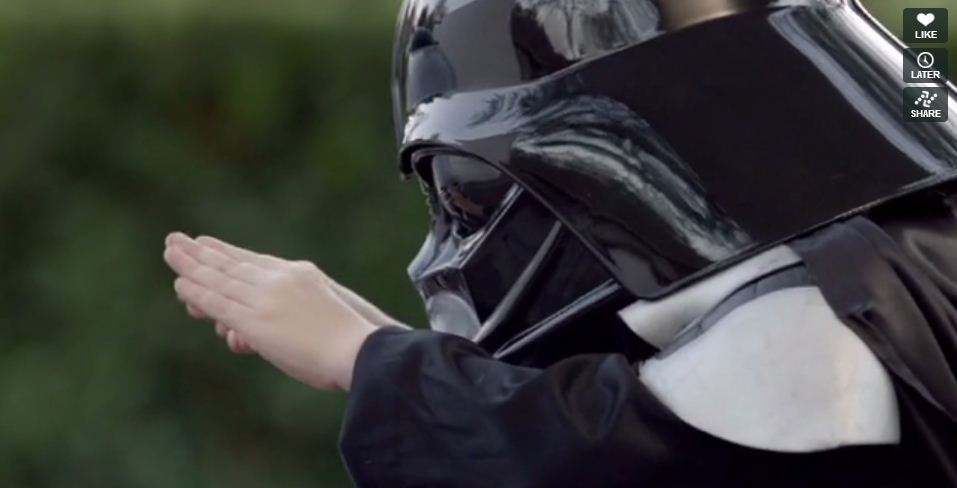
featured image is a still from the above video of Volkswagen’s Darth Vader spot in Super Bowl XLV

Standard
broadcasting, distributing, mediating, television, viewing

Begun, The Distribution Wars Have: How CBS vs Time Warner is only an opening salvo in the long hard battles to come

http://www.youtube.com/watch?v=hpXiz-ymVqI

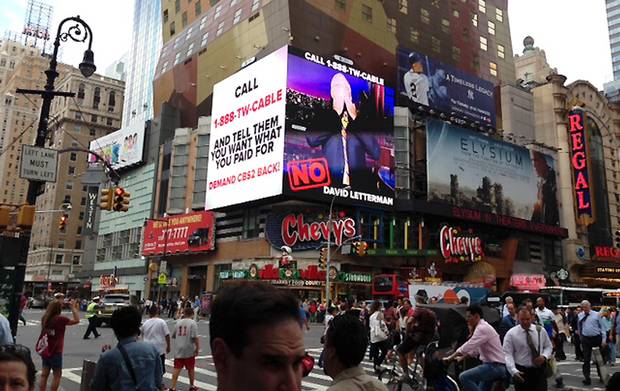
so that’s it. we’re at war.

as day three of the CBS / Time Warner stand off dawns, both sides are maintaining that they’re in the right … meanwhile three and a half million Americans are going without Hawaii Five-0.

oh the humanity.

for both sides the equation is clear … for CBS, how much do I need to extract from TW (and other distribution points) to cover with margin the cost of content. for CBS, how much can I justify paying for content given the revenues I can generate via people paying for access to the channels on my network? what else is clear is that we can expect many more of these battles to come.

there are two constants … content and people. and its the changing and evolving relationships people have with content that’s causing disruption, instability, and war: War between the factions that create content and those that distribute it. the current siege of Time is only the current battle in the early years of a war that has a long way to go.

the origins go way back and the early battles have already been played out. battles like the UK’s independent production sector versus the country’s commercial channels, or the ongoing rumblings between music labels and Spotify. and at the start of last year Rupert Murdoch – via Twitter obvs – dramatically accused Google of being the ‘piracy leader’ of silicon valley.

http://www.youtube.com/watch?v=LVVUUOCKJ8o

the war will only get hotter from here on in. to understand why you need only follow the money. PWC’s annual Global Entertainment and Media Outlook 2013-2017 uses like-for-like, 5-year historical and forecast data across 13 industry segments in 50 countries to compare and contrast regional growth rates and consumer and advertising spend. this is the picture it paints for the coming years:

“Consumer demand for entertainment and media (E&M) experiences, fuelled largely by the adoption of broadband and connected devices, will continue to grow and we expect this growth to follow a similar trend to GDP development across the forecast period 2013-2017. However, given the shift towards digital media — typically lower priced than its physical counterpart — we anticipate spend to lag behind GDP growth.

The global E&M market will grow at a CAGR of 5.6% over the next five years, generating revenues in 2017 of US$2.2tn, up from US$1.6tn in 2012. Within this overall figure, all three sub-categories — advertising, consumer spend on content, and access — will continue to grow, but at varying rates.”

Source PWC Global Entertainment and Media Outlook 2013-2017

two really – really – important points. one, because of the shift to digital media, spend on E&M will lag behind GDP growth – the pot is shrinking in relative terms. two, whilst spending is anticipated to increase, the future isn’t evenly distributed:

“Consumer spend shifts from content to access: The rapid growth in spend on access means that there will be a shift in the share of overall global E&M spend from consumer spend on content (from 47% of the market in 2012 to 41% of the market in 2017) to consumer spend on access (from 24% of the market in 2012 to 30% of the market in 2017).”

Source PWC Global Entertainment and Media Outlook 2013-2017

shift is spending, in real terms, away from content and into access to that content (spend on advertising is holding stable). we’re getting used to paying not for content, but instead for access to that content. whether its Spotify versus iTunes, or HBO’s Emmy and now Cannes credibility, it’s the distributor-networks that are currently strategically placed to gain the most.

but the thing is that the really big changes haven’t even started yet … there’s still a ton of inertia in TV advertising investment – big brands still, I think overly, rely on TV networks to get 30″ messages in front of people. reach is important, but its a necessity not a strategy for communications planning. brands have played for a long time now in being content creators, but they’re only just learning the power of being their own distributors …

new deals, new bargains, new negotiations … emerging between people and how they get access to content. if the old currency was attention through broadcast interruption, then the new currency is data through increasingly direct connections with people. the war was heating up without most major brands shifting even the smallest fraction of resource from broadcast advertising to creating and distributing content directly to people. the dual consequence – more competition for time spent with content and further reduced ad revenues – will see more than the three-day siege of a cable company.

there will be winners and losers, but perhaps the most notable victors in the coming war will be brands. marketing teams that successfully establish and then maintain direct relationships with existing and potential customers by creating and – crucially – distributing compelling and entertainment content.

cry havoc people … the dogs have slipped.

featured image via AP, and the following for no other reason than because I can 😉

Standard
broadcasting, content creating, distributing, experiencing, phdcast, popping up, television

PHDcast 02.08.13 – its not the ooh laa la edition of the PHDcast as we talk TV, The Power Inside and Magnum Pop-Up

Player not working? click here to listen on Audioboo

morning PHDcast listeners. Nic was in the hot seat this week for the not-the-ooh laa la edition of the PHDcast. bien sur 😉 … awesome job Disco

much of the debate this week was in and around TV watching – how it’s changing and what the implications are, especially for brands. I wrote about some of the aspects of this in my post on Friday, but it’s worth dwelling on a point Stew makes at the twenty minute mark around people watching programmes not channels. I think that’s true but I also think its not quite as clean cut as that, and as the CBS / Time Warner stand-off enters it’s second day – leaving 3 million American’s without shows like Hawaii Five-0 (I know) – it’s clear that there is much more to come as the distribution wars heat up.

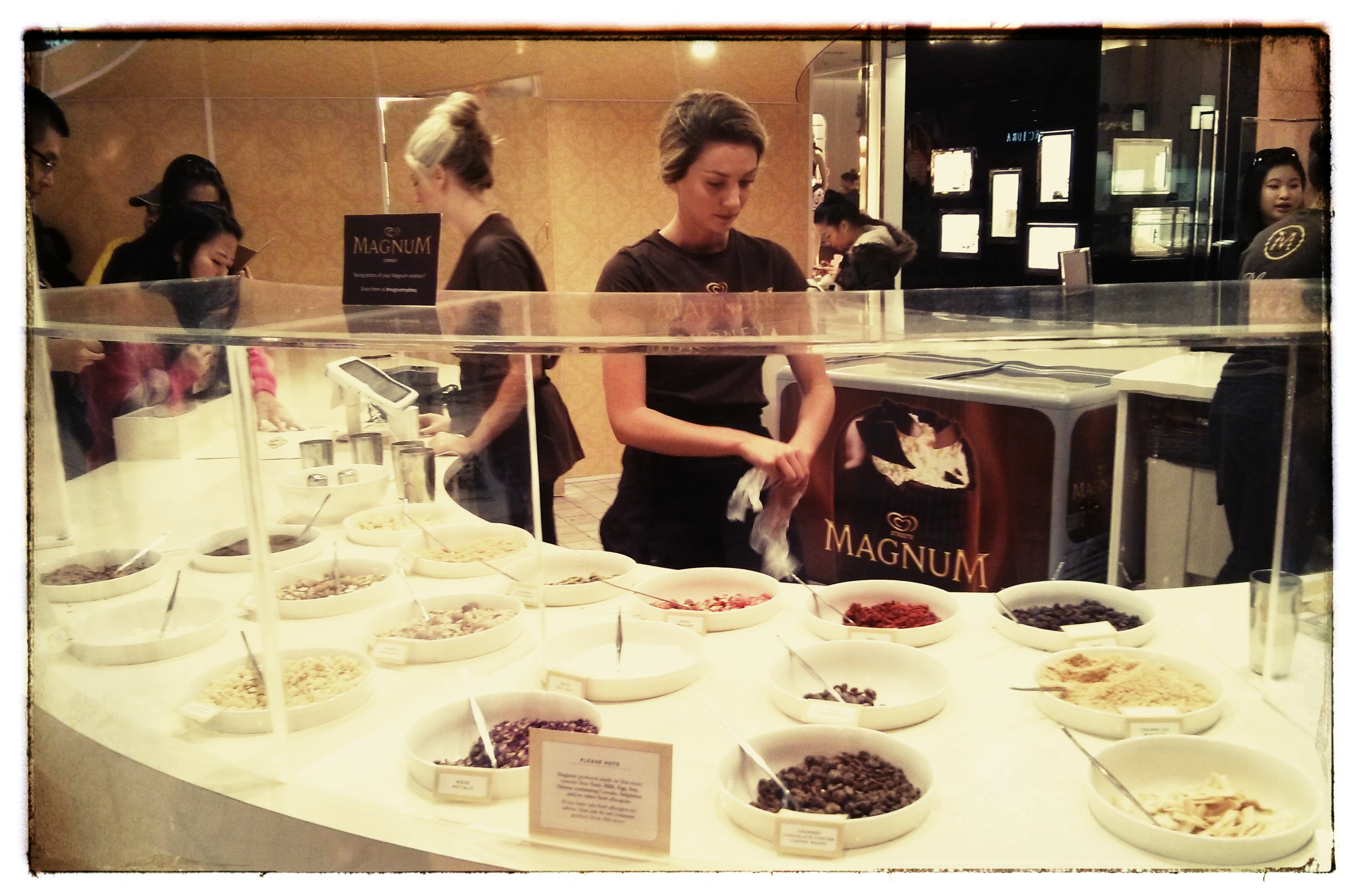
also on the cast we got round to talking about the Magnum Pop-Up Experience hitting Sydney. following the success of the store in other cities, the ground floor of Westfield in Sydney’s CBD has for the last three weeks been the latest place to get the pleasure pop-up. you get to design your own magnum … white, milk or dark chocolate plus plenty of toppings, all for a mere $7.

as I say on the cast, it’s a phenomenal example of a brand pulling the trick of landing marketing that gets people to pay for its own existence. and the fact that people are queuing up for it is proof positive of the indulgence for which the brand is known.

Magnum_pop-up Magnum_pop-up_2 Magnum_pop-up_3

Standard
advertising, broadcasting, marketing

Time for an Ad: How Groupon and Starbucks are doing things the right way around

Groupons new ad … geotargeted realtime promotions never sounded so straight-forward

Priscilla, who sends tweets from @thoughtcloud, (thanks Priscilla) pointed me in the direction the above video from Groupon, which – as she neatly points out – can be described as mobile + scheduled coupons + mobile micropayments = awesomeness.

the whole proposition, of aggregating local promotions which are geotargeted and delivered in realtime, is in many ways the culmination of a host of recent developments in the mobile space…  a culmination that Groupon – with a view to IPOness – are keen to amplify as much as possible.  it's for perhaps this reason that the company – which has been built from a connections perspective hereto on peer-demanded communications and word of mouth, has put together … an ad.

both regular readers will be familiar with this blog's attitude towards 'the ad' – that 20th Century invention which came to be synonymous with advertising.  our continued reliance on the broadcast interruption model that forms the media basis for adverts remains one of the key limiting factors in brands and marketers embracing a communications age of user-centricity, community and utility.

but Groupon's effort is perhaps a reminder that 'the ad' does have it's place in a 21st Century communications ecosystem.  I can't imagine a neater or more compelling way to communicate realtime geotargeted promotions and offers…  a simple, neat encapsulation of a message and a reminder of what made 'the ad' so predominant in 20th Century marketing communications.

and Groupon aren't alone.  Starbucks have for several years now adopted a community and reward-based marketing approach.  this blog noted in April 2009 that Starbucks were offering free syrup shots for life when you signed up to a Starbucks Card … why?  because – and this was a direct paraphrase from the Bucks' call centre – the brand was looking to what it could, given the (then) current economic climate, for its existing customers.

the last two years have seen a plethora of offers and bonuses for existing customers be deployed in store.  all of which are communicated on regular emails that I'm happy to receive.  like this one that I got today…

Starbucks_frap_mail_2one of the regular eDM's I receive from the Bucks

the mail contains the usual offers and updates, but also invites me to 'watch their new ad' and note that "We're excited that Frappuccino® is on the big screen" …which struck me as an unusual turn of phrase.  excited that they're on the screen.  they're Starbucks.  that pretty big company that turned themselves around with a focus on customer service and involvement in their brand.  why the excitement over an ad?

Starbucks_frap_ad_2

Starbucks_frap_ad.jpg

Starbucks_frap_ad_3 Starbucks' have a new frappuccino ad … and they're excited

but I guess that it's precisely that focus on daily delivery of quality and service that makes their presence in the broadcast stream an exception.  it's a rarity and therefore a novelty for the brand.  even one as big as Starbucks.  and the way I see it both Groupon and Starbucks have this exactly the right way around…

for them, broadcast ads aren't the rule, they are the exception.  and those ads are therefore all the better and more valuable for it.  not for these brands the shout at the millions whether they're listening or not.  not for these brands is broadcast interruption the modus operandi.

rather, daily delivery of value and service and utility and innovation … and when there is something genuinely new, or different, or compelling, they permit themselves to broadcast and interrupt.  only then.  conversation first and as default.  adverts when, and only when, what they have to say is of sufficient value to those on the receiving end.  if only all brands had their priorities in this so very correct order…

Standard
innovating, planning, reaching

The inverse relationship between innovation and scale: and the tragedy of smart stuff that simply passes us by

this is good.  really good.  OK so no one is going to disagree with the fact that it's a cracking bit of insight-translated-into-execution.  but here's the thing…  does it reach enough people, and is that important?  and am I a bad planner for even asking that question?

I've written recently about the tyranny of reach and the grip that it holds on Australian marketers.  I observed that reach is, as Admiral Ackbar would say, a trap…  as long as it remains our default method of measurement, our modus enumeri if you like, we will eternally be lamenting our collective inability to stretch fewer resources over more places in more ways.

so I don't for a second give credence to 'reach-based' advertising, but I do suspect that in the main there's probably two kinds of media campaign in the world.  mainstream media campaigns that have scale, and innovative media campaigns that remain niche.  there are of course exceptions to this – those examples of innovative media thinking that break through and deliver scale, but they are the exceptions that prove the rule; by in large – from a media perspective – my bet is that there's an inverse relationship between scale and innovation…  a bit like this…

Scale_innovation_one avoiding the innovation vs. scale envelope into which most media campaigns fall

the challenge for any media effort is to get into the top right quarter, you want to innovate so that you cut-thru / are engaged with / generate earned media / bring down the overall cost-per-impact of your effort.  given these conditions, there are generally therefore only two ways to get top right…  either you attach scale to your innovative efforts or you inject innovation into existing scale.

a comment was made to me earlier in the week that one of the great benefits of using Facebook is the scale it can bring to an idea.  in this context you can rationalise how one of the main reasons Facebook's ad revenues are set to undergo such significant growth is because advertisers increasingly see it as a 'safe' way to bring scale to a schedule.  Facebook is a very good 'scaler'.

the alternative is to take an idea that already has scale and inject
innovation into it – I guess you could argue that efforts to, for
example, bring interactivity to TV sponsorship fit this model.

Scale_innovation_two methods to get you right and top – scalers and innovators

in a perfect world of course you shouldn't have to either attach scale or inject innovation into a plan; both should be inherent – we should be in the business of creating innovative communications ideas that travel.  but these are rare beasts…  and I suspect that whilst no doubt too many conventional solutions fail to innovate, the greater tragedy are the countless innovative media efforts that go to market without sufficient thought into how scale can be generated.  their failure to reach us is ultimately our loss.

Standard