broadcasting, distributing, mediating, television, viewing

Begun, The Distribution Wars Have: How CBS vs Time Warner is only an opening salvo in the long hard battles to come

http://www.youtube.com/watch?v=hpXiz-ymVqI

so that’s it. we’re at war.

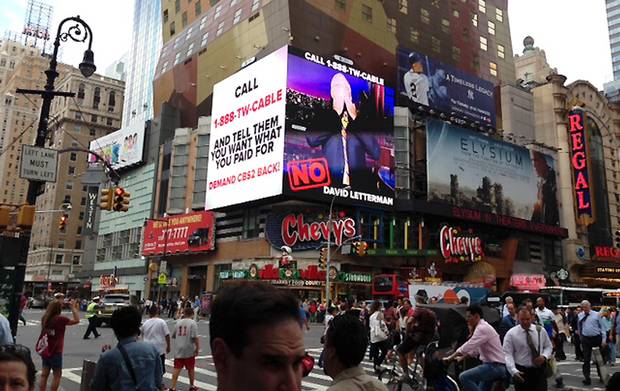
as day three of the CBS / Time Warner stand off dawns, both sides are maintaining that they’re in the right … meanwhile three and a half million Americans are going without Hawaii Five-0.

oh the humanity.

for both sides the equation is clear … for CBS, how much do I need to extract from TW (and other distribution points) to cover with margin the cost of content. for CBS, how much can I justify paying for content given the revenues I can generate via people paying for access to the channels on my network? what else is clear is that we can expect many more of these battles to come.

there are two constants … content and people. and its the changing and evolving relationships people have with content that’s causing disruption, instability, and war: War between the factions that create content and those that distribute it. the current siege of Time is only the current battle in the early years of a war that has a long way to go.

the origins go way back and the early battles have already been played out. battles like the UK’s independent production sector versus the country’s commercial channels, or the ongoing rumblings between music labels and Spotify. and at the start of last year Rupert Murdoch – via Twitter obvs – dramatically accused Google of being the ‘piracy leader’ of silicon valley.

http://www.youtube.com/watch?v=LVVUUOCKJ8o

the war will only get hotter from here on in. to understand why you need only follow the money. PWC’s annual Global Entertainment and Media Outlook 2013-2017 uses like-for-like, 5-year historical and forecast data across 13 industry segments in 50 countries to compare and contrast regional growth rates and consumer and advertising spend. this is the picture it paints for the coming years:

“Consumer demand for entertainment and media (E&M) experiences, fuelled largely by the adoption of broadband and connected devices, will continue to grow and we expect this growth to follow a similar trend to GDP development across the forecast period 2013-2017. However, given the shift towards digital media — typically lower priced than its physical counterpart — we anticipate spend to lag behind GDP growth.

The global E&M market will grow at a CAGR of 5.6% over the next five years, generating revenues in 2017 of US$2.2tn, up from US$1.6tn in 2012. Within this overall figure, all three sub-categories — advertising, consumer spend on content, and access — will continue to grow, but at varying rates.”

Source PWC Global Entertainment and Media Outlook 2013-2017

two really – really – important points. one, because of the shift to digital media, spend on E&M will lag behind GDP growth – the pot is shrinking in relative terms. two, whilst spending is anticipated to increase, the future isn’t evenly distributed:

“Consumer spend shifts from content to access: The rapid growth in spend on access means that there will be a shift in the share of overall global E&M spend from consumer spend on content (from 47% of the market in 2012 to 41% of the market in 2017) to consumer spend on access (from 24% of the market in 2012 to 30% of the market in 2017).”

Source PWC Global Entertainment and Media Outlook 2013-2017

shift is spending, in real terms, away from content and into access to that content (spend on advertising is holding stable). we’re getting used to paying not for content, but instead for access to that content. whether its Spotify versus iTunes, or HBO’s Emmy and now Cannes credibility, it’s the distributor-networks that are currently strategically placed to gain the most.

but the thing is that the really big changes haven’t even started yet … there’s still a ton of inertia in TV advertising investment – big brands still, I think overly, rely on TV networks to get 30″ messages in front of people. reach is important, but its a necessity not a strategy for communications planning. brands have played for a long time now in being content creators, but they’re only just learning the power of being their own distributors …

new deals, new bargains, new negotiations … emerging between people and how they get access to content. if the old currency was attention through broadcast interruption, then the new currency is data through increasingly direct connections with people. the war was heating up without most major brands shifting even the smallest fraction of resource from broadcast advertising to creating and distributing content directly to people. the dual consequence – more competition for time spent with content and further reduced ad revenues – will see more than the three-day siege of a cable company.

there will be winners and losers, but perhaps the most notable victors in the coming war will be brands. marketing teams that successfully establish and then maintain direct relationships with existing and potential customers by creating and – crucially – distributing compelling and entertainment content.

cry havoc people … the dogs have slipped.

featured image via AP, and the following for no other reason than because I can 😉

Standard
broadcasting, content creating, distributing, experiencing, phdcast, popping up, television

PHDcast 02.08.13 – its not the ooh laa la edition of the PHDcast as we talk TV, The Power Inside and Magnum Pop-Up

Player not working? click here to listen on Audioboo

morning PHDcast listeners. Nic was in the hot seat this week for the not-the-ooh laa la edition of the PHDcast. bien sur 😉 … awesome job Disco

much of the debate this week was in and around TV watching – how it’s changing and what the implications are, especially for brands. I wrote about some of the aspects of this in my post on Friday, but it’s worth dwelling on a point Stew makes at the twenty minute mark around people watching programmes not channels. I think that’s true but I also think its not quite as clean cut as that, and as the CBS / Time Warner stand-off enters it’s second day – leaving 3 million American’s without shows like Hawaii Five-0 (I know) – it’s clear that there is much more to come as the distribution wars heat up.

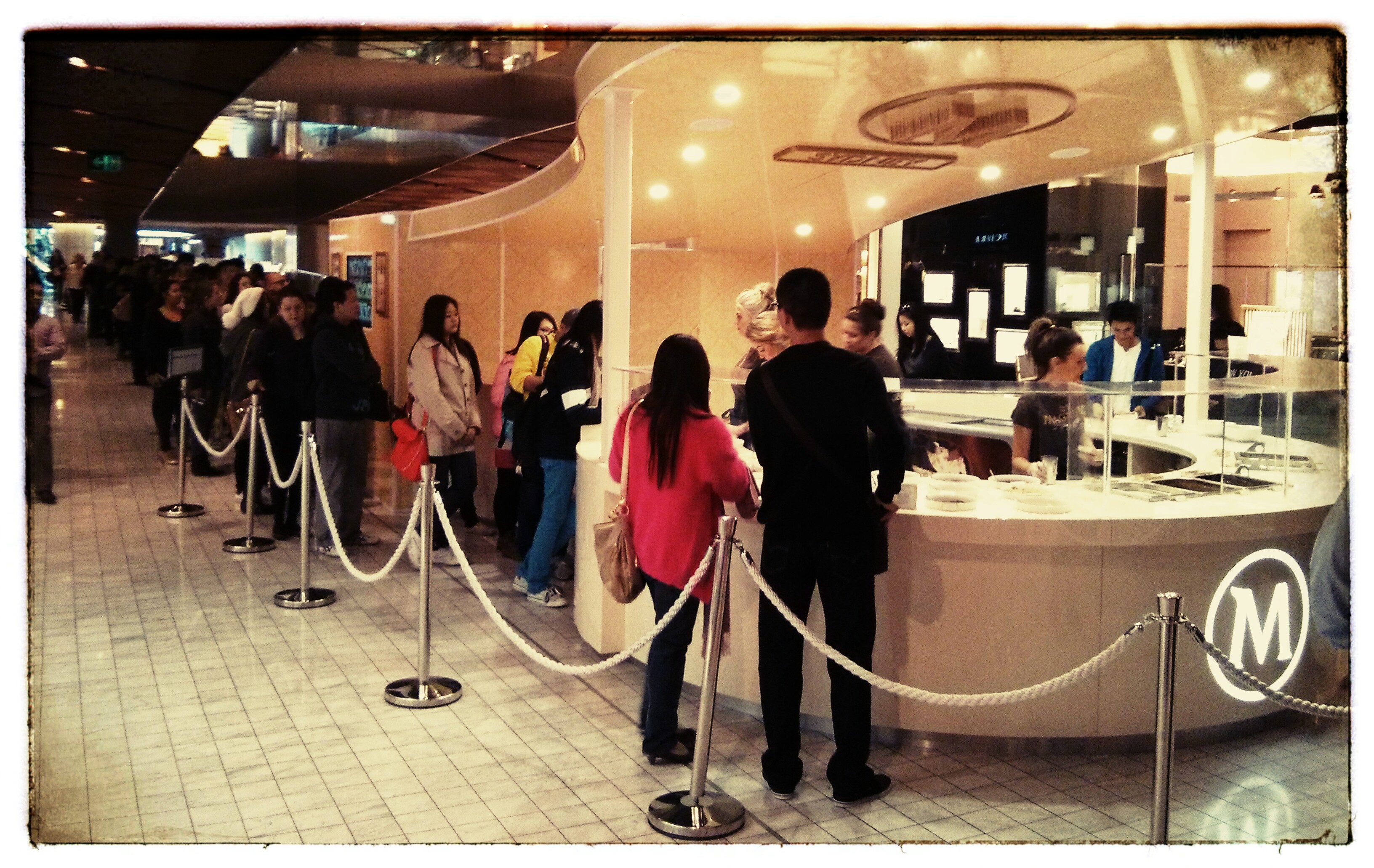
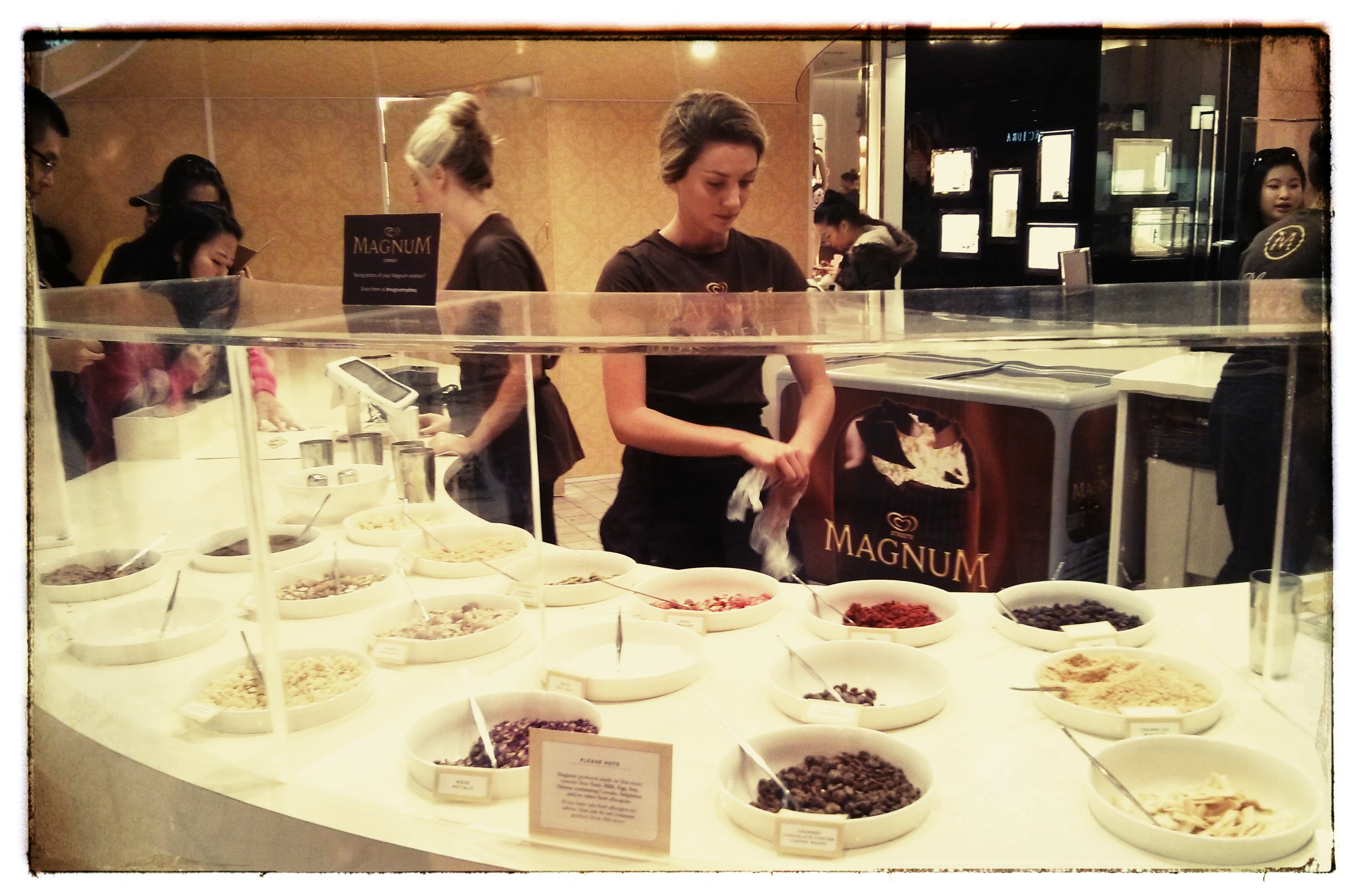
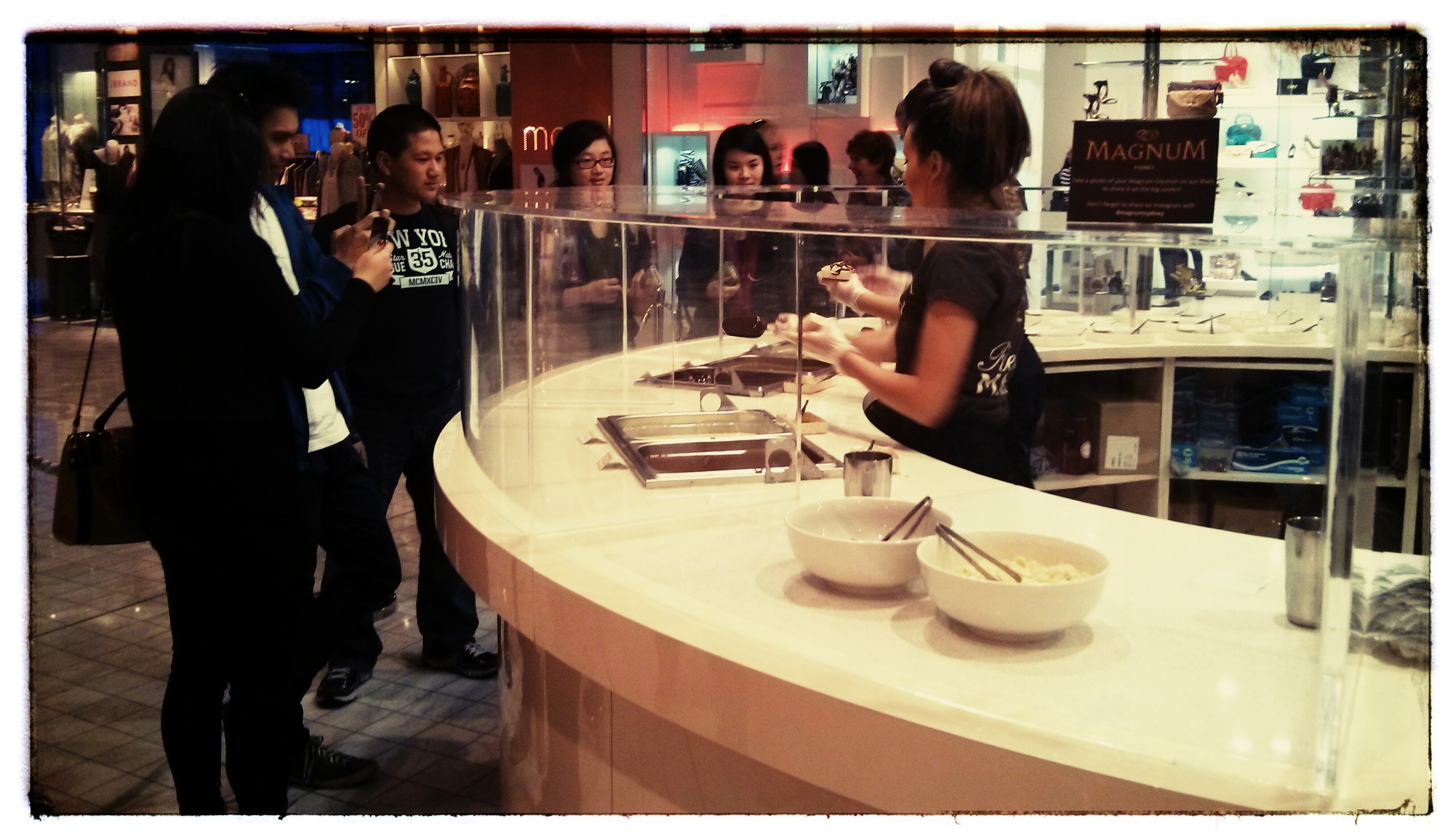
also on the cast we got round to talking about the Magnum Pop-Up Experience hitting Sydney. following the success of the store in other cities, the ground floor of Westfield in Sydney’s CBD has for the last three weeks been the latest place to get the pleasure pop-up. you get to design your own magnum … white, milk or dark chocolate plus plenty of toppings, all for a mere $7.

as I say on the cast, it’s a phenomenal example of a brand pulling the trick of landing marketing that gets people to pay for its own existence. and the fact that people are queuing up for it is proof positive of the indulgence for which the brand is known.

Magnum_pop-up Magnum_pop-up_2 Magnum_pop-up_3

Standard
advertising, broadcasting, television

One Screens to Rule them All: why broadcast TV’s comeback is overplayed and how brand content needs to evolve. fast.

two seemingly contradicting reports landed this week which paint very different pictures of the state of play in the evolving world of screen usage and content watching. they both came via Stew … thanks Stew!

first up, the BBC reports the suggestion by Ofcom (the UK’s Communications regulator) that living room TV is “making a comeback”. if a 3% increase in the number of adults who watch their main TV set once a week (91% up from 88% in 2002) represents a comeback, then yes … its a comeback. well done, nice work, props etc.

also this week Omnicom’s (or Publicis Omnicom Groupe’s I suppose) Media Pulse reported a study by GFK which “suggests that millions are moving to the Internet and free over-the-air (OTA) reception … about six percent of U.S. households have completely dropped cable and satellite TV in favor of streaming-only—a trend that’s been named ‘cutting the cord'” (Source).

a new golden age of broadcast, or a digital multi-screen take-over?

both, obvs.

its no secret that screens are proliferating, Australia is at the vanguard of the changes. an Australian Multi-Screen Report from earlier this year from Oztam, Regional Tam and Nielsen indicated that 27% of Aussie homes now have each of the four screens (TV, PC, tablet and mobile phone), up from 16% last year. Smart phone uptake is up 13% YOY to 61%, tablet penetration doubled 2012-2013 to 31% and PVR penetration now sits above 50%.

despite all that though, the same report calculated that time spent with screens are still massively weighted towards TV. the average Aussie watches 92 hours and 29 mins of TV per month, versus 8 hours and 53 mins on the other three devices. TV’s comeback is perhaps overplayed because there’s nothing to come back from … time spent with TV, despite pretty much a decade of PVRability, has remained pretty much consistent.

so what gives? … lots of TV viewing, lots of increase in penetration of new devices, and a whole lot of multitasking and multi-screening. the real limiting factor in the entire equation is nothing to do with screens or even what’s on them … its human attention. it was Kevin Kelly who observed in Wired magazine that “the only factor becoming scarce in a world of abundance is human attention” (source) … it doesn’t take a huge leap to come to the conclusion that the real victim of screen and content abundance will be not brands per se, but those that rely solely on the broadcast interruption advertising model.

more of that on the PHDcast this week, but what all of this points to is the need for connection planning (on screens and beyond) to be done upstream in any brand planning work. integrated content solutions have to quickly become the modus operandi for how we develop communications. broadcast interruption will remain part of that integrated solution for a long time yet to come, but it can no longer be the totality of the solution.

which is why we’ll be seeing a lot more of this in the future.

I’ll leave you to ponder that, and the thought that, far from living room TV making a comeback, its advertising that needs to make the comeback. in the evolving world of screens, only one screen rules them all – whichever one you happen to be watching at any given time. there’s a clear and present opportunity to bridge attention deficit with a new generation of integrated, connected, device-specific content. it’s time for us all to step up to the plate.

featured image via Fast Company

Standard
phdcast, realtiming, sponsoring, tweeting, viewing

PHDcast 26.07.13: The one with the Hoo Hah’s … Binge TV Viewing, Brands Welcome Baby Prince George and Electroencephalographs, hoo hah!

another week another PHDcast and this week is the hoo hah edition (you’ll see) …

we talk all about binge viewing on TV, from Lost to Game of Thrones; how are programme makers creating (and distributing) content so that we’re encouraged (tricked?) to watch incessantly? how are viewing habits changing and what are the opportunities for brands to monetise the behaviour?

we also talk about how brands welcomed baby Prince George to the world. from Oreos and Starbucks to P&G and the Sun (or Son) … how did brands capitalise on the cultural hoo hah (I know) that was the birth of the third in line to the throne?

all that plus Nestle use electroencepholographs to prove that taking a break is good for you (I know), and new research from MI9 …

here’s Nic channeling Demi Moore, specifically in Ghost … obvs. have a good weekend everyone …

PHDcast Nic 26.07.13

Standard
debating, publishing, thinking

What is your business models? … Because having one may quite simply no longer be enough

loldog_biz_models

so I took some time last night to walk a few yards up Kent St to hear not one but two Tim’s in conversation at one of The Domain’s regular ‘on the couch’ sessions. Tim Addington didn’t hold back in an interviewing with Tim Burrowes that covered the origins of Mumbrella to its existence without Burrowes, taking in trolling, #skyfail and Adnews swiping on the way.

I wanted to ask Tim (B) about one of Mediation’s more recurring themes of late – journalism, news and print media; and more specifically the dangers of continuing to think of them as one and the same thing, especially as shifts in ad media revenues put pressure on the existing business model.

I made the point to Tim that journalism was important (to society), and asked how he thought we could and should protect journalism as news organisation revenues continue to come under threat?

his answer, typically to the point, was that some journalism will go. fact. and that over time – decades not years – the industry will realign and settle as new models emerge. he identified three for starters … (1) the vertical interest model (2) the conversation model and (3) the philanthropy model.

his points, that (one) journalism will survive because new models will emerge and (2) that new models will emerge, got me thinking this morning whilst talking to a senior media executive, as we discussed innovation in businesses esp. with regard to digital. the observation was that business models have to evolve, but it occurred to me that this didn’t have to be at an industry level – what would a business look like with completely different, distinct and differentiated business models working under the same roof, or P&L, or holding company?

perhaps the key question in surviving the ride of change wrought by digitisation isn’t ‘what is your business model? … but what is your business models?

I’ve tried to think of examples close to home and further afield of businesses and companies that deliberately cultivate different businesses models under the same roof. there are examples of companies that take a business model into new categories (Virgin obviously), and examples of parallel business models in different categories (Jetstar and Aldi). you also get examples of very different revenue streams under one roof – media agencies are a great example. but there aren’t a whole load of decent examples (that I can think of) where fundamentally different and potentially opposing models co-exist under the same roof.

it may be that once the most successful business model emerges, a company is crazy not to divert all resources in that direction – but perhaps that’s the trap? perhaps success is in not being single minded? perhaps tolerating lower margins and revenues on one floor this year means being ready to maximizing the potential of new revenues when the world turns in your direction next year?

many media organisations are already doing this by necessity … but how difficult would it be to make it a choice. if you’re lucky enough to have margins that allow you to experiment, why on earth wouldn’t you go as far as you possibly could when doing so?

Tim is right – different models will emerge. winning tomorrow shouldn’t be like a gamble at the races, where you hope your business has done enough of the right research (and a tad of luck) to back the winning horse (model). instead don’t play the game of trying to pick the winning horse, have a stake in every one.

you couldn’t lose right?

featured image lol created here, where you can also vote for it. obvs.

Standard
Uncategorized

PHDcast 19.07.13: The Rambling One, as we talk IAB Awards, Online Measurement, Spotify and Industry Collaboration

player not working? click here to listen on Audioboo

lots of rambling this week, for no apparent reason other than it was rather later on a Friday afternoon than usual when we finally got ourselves into Parker to record the cast. Stew had to jump halfway through, which was fine as Peter jumped in not too long before he went. also on the PHDcast this week is Lauren talking IAB and online measurement and regular Nic.

mobile-medic

this week we’re talking about GPY&R’s success at the IAB Awards with their mobile medic campaign, and discuss the relative success of media versus creative agencies in this and other awards.

we also cover Adnews’ story on Group M’s big boss Dominic Procter, who argued last week that online’s data trail isn’t good enough to beat broadcast yet. we discuss the relative merits of online versus / and broadcast and valuing things because they are measurable.

in the wake of Thom Yorke’s pulling off of the Spotify platform because of the relative low subscription fee’s that make their way back to emerging artists, we discuss the music platform’s obligations and opportunities from a media and marketing perspective.

I also pick up the theme of collaboration following the panel discussion at B&T’s Innovation Afternoon at the start of the week. ramble away people, ramble away …

Standard
campaigning, content creating, creating, engaging, experiencing, marketing

Joy: How Brands are Spreading a Little Love and Happiness, and What This Surprise and Delight Tells Us about the State We’re In

http://www.youtube.com/watch?v=UpCsp1u1i88

the always amazing media update from James, Sisse and the gang brought with it this week a couple of treats which kinda got me thinking … the first is an effort, above, from Virgin Atlantic who transformed a Manhattan park bench into a Virgin flying experience, complete with champagne, food and real life movies.

the other was an effort, below, from Molson, who built fridges full of beer that could only be unlocked by someone with a Canadian passport, much to the delight and joy of the crowds that had gathered for the unlocking.

http://www.youtube.com/watch?feature=player_embedded&v=8gper3YkzMg

these both share a fair bit of DNA. they both are great experiential efforts designed not really to be experiential – but rather content; content designed to be enjoyed, shared and of course land a comms message in the process. and they both rely on the participation of innocent strangers – collateral vantage if you will – to bring realness and credibility to the situation. they’re pretty much givens, but there’s something else they both have in common … something deeper and I think more significant.

but this week our own Mimi, not one to miss a sweet treat, dropped us a note that the Magnum Pleasure store will be opening in Sydney. hurrah. this is off the back of Cadbury’s Joyville effort locally …

http://www.youtube.com/watch?v=aMmlE6Yq748

so what’s going on? well I think we’re seeing a definite increase in the amount of random acts of kindness from brands. we’re witnessing nothing short of a surge in desire and investment into spreading a little love and happiness. the evidence of the brand-inspired Joy is all around. like love, and so the feeling grows. sorry.

now you could argue that this isn’t really anything new; that the last few years (if not decades) are riven with examples of marketing sharing a little love and happiness … be it Coke’s vending machines (or even back to teach the world to sing) or the playful inventiveness of Skittles or T-Mobile from Liverpool Street to Heathrow or insert-your-example-here … you could argue that brands have always been in the business of creating Joy. however I think this is distinct for two reasons:

one, these acts aren’t surprising and delighting the passive massive through broadcast, but rather the more tangible and meaningful individuals on the street. these acts are very deliberately public – that strikes me as significant; the acts are witnessed, at that witness makes them realer, more credible, more meaningful and more potent. and I think this is important.

the other reason is that I think it says something about the state we’re in … I read ages ago (and I honestly can’t remember where) that popular culture generates content opposite to the prevailing mood of the times. Sorkin created Bartlett when America needed him, then post-Obama positivism was countered by darker, less sure-footed heroes like Nicholas Brody. I’m wondering if the same can be said for marketing?

from the collapse of states to environmental insecurity, via PRISM, to economic uncertainty and the realignment from west to eastern dominance … we’re in pretty shaky times – you could say that winter is coming.

perhaps our collective unleashing of marketing Joy is the brand equivalent of the contemporary prevalence of the superhero: shear joy, positive unabashed certainty at a time when our world no longer gives us these for granted.

I’ll leave you with one last little bit of joy … a video from Google celebrating how we have and continue to build the web together. it’s a genuine joy … so, well, … enjoy.

featured image via adweek

Standard
phdcast

PHDcast 13.07.13: It’s PHD Generations as the Interns take-over the PHDcast

player not working? click here to listen on Audioboo

it’s PHD Generations this week as our interns join myself, PHD Chief Exec Mark Coad and podcast regular Stew Gurney. between us we discuss the intern program, our young guns’ perceptions of PHD, agency culture, the current and future state of the media agency, media versus creative and how you solve a problem like Gen Y …

also props to the PHD interns who kicked ass in their presentation back to PHD and OMD over at Pyrmont towers. nice work team, nice work.

PHDcast_interns

Standard
broadcasting, planning, social media-ising, television, viewing

Welcome to Our World: What TV Execs and schedulers have to learn from Media Planners

the-shire-2

so a very good friend of mine would spend his time as a child working out which TV shows should go before and after which other shows. he essentially played scheduling. he was therefore somewhat destined to grow up to be a media planner (he is now the head of planning at a creative agency, but my point stands).

media planners get to play the most awesome game of scheduling in the world … we get to play with who see’s what, where, when, and in which context they see it – and that’s just for starters.

at first it was planned interruption, but now – depending on your situation and or point of view – we plan content / engagement / context / connections … the point is that we have to decide with no small amount of consideration how we plan media and content … and weirdly that is something that TV schedulers are only getting their heads around.

this thought was prompted by a piece by Mark Lawson writing in The Guardian about two recent revelations by Shane Allen, BBC controller of comedy commissioning, to the UK’s Broadcasting Press Guild. one, that Ben Elton’s heavily-panned series The Wright Stuff will not be recommissioned and, much more interestingly, that Peter Kay’s new series will premiere on the BBC’s iPlayer – a platform originally conceived as a catch-up service.

why the online platform play? in the article Lawson observes that “Kay admits he was nervous, fearful of heavy backlash had the BBC unveiled his new show with extended hype” … this is Peter Kay we’re taking about, the creator of the sublime Phoenix Nights, running scared. of social media.

the problem is that social media, especially Twitter, gives such immediate and public feedback that opinions can move and upscale with such speed that public-opinion has moved against a show before the first episode has even aired. but shows sometimes need breathing space to develop (I give you Blackadder as exhibit A) but now there’s just no time.

PHD talked about this in Fluid, one of the books what we wrote. a local example is what happened with the Shire (I knew you were wondering about the pic) … in the crucible of Twitter it was judged and hung out to dry before it had even begun.

now I’m not defending The Shire, but as Lawson observes:

“The question of how best to launch – or, as executives like to say, “get away” – a TV show has become a huge debate now that there are so many ways of watching. It’s the reason drama executives lurch nervously between stripping (running a series on consecutive nights, such as next week’s Run on Channel 4) and playing episodes once a week, such as ITV’s Broadchurch.” (source)

the point is that, all of a sudden, TV schedulers face the same problems, challenges and opportunities that media planners have enjoyed for decades: choosing platform, designing context, sowing seeds or landing large, on-demand or broadcast big, all together or spaced out, OTS calculations, reach builds … the art of programme scheduling is about to be transformed.

welcome to our world TV execs, you’re in for a treat.

Standard
awarding, conferencing, debating, printing, publishing

Celebrating the end of the Party: Why dumping the junket is exactly what The Caxtons needs

hamilton-island

so I’ve just returned from The Guardian Australia’s launch drinks, but before I call it a night I thought tonight’s happy event made it timely to throw some thoughts down about yesterdays shock report in Adnews that “The Caxtons’ famed jamboree to an exotic location will not happen this year. But the awards will. And next year the junket could be back.” … furthermore “Tasmania has been mooted.”

well phew. heaven forbid that in the midst of the biggest systemic shift in print advertising in several generations we miss the chance to junket it up somewhere exotic.

I should declare an interest; I was honoured and privileged to be asked to speak at last year’s Caxtons – on Hamilton Island, above – so last year I very much enjoyed the benefit of giving a presentation in Adnews’ mourned-for sunny climes.

I have to be honest though; I didn’t wholly enjoy my presentation. and I’ve spent a lot of time thinking about why.

the truth is that I wasn’t at my best … it wasn’t the most focused of talks, and that’s my bad. but I think it was also a lot to do with the room; a mix of mainly newspaper staffers, ad agency people, journalists and some flotsam and jetsam like me. you see sometimes when you present the room is with you, and if you’re like me that makes you better. but sometimes the room isn’t with you, and that makes some people stronger, but if you’re like me it makes nagging doubt creep in … perhaps I’m wrong? perhaps I’m a crazy person for even suggesting this!? and when your presentation to a bunch of creatives pivots around your (my) belief that “the worst thing that ever happened to advertising is adverts” you can see how that would affect your (my) performance.

I’ve gotten pretty good at reading rooms, and I think the reality is that whilst I wasn’t, by my full admission, at my best … a lot of people in the room just didn’t want to absorb the message: that the time had come to change.

my audience, perhaps quite rightly, wanted to get on with what the Caxtons are there to do: celebrate creativity in newspaper advertising. who the freak was I to turn up and rain on such a brilliantly orchestrated parade? people’s hearts and souls and time and effort had gone in to organising that celebration. people much better than me had created ingenious and awesome presentations to delight and entertain and stimulate.

the words of Maya Angelou echoed in my head that night and many nights since: “People will forget what you said, People will forget what you did, But people will never forget how you made them feel” (source) … and I think that is why I failed that day on Hamilton Island – when the words and actions were long gone, I had made that room feel no better about the situation I believe press advertising is in. I hadn’t followed-though my dark night to deliver a dawn. I’d attempted, but it hadn’t landed.

so why the confession? well, yesterday’s Adnews report that – essentially – the party was over, filled me with nothing but sheer optimism. because the party is over, and that’s what I so desperately tried but failed to say last year. but the party being over makes it all the more important that the celebration continues. because what I experienced on that island, that energy and passion and creativity shouldn’t be lost because of some crazy perception that the Caxtons is a junket … what I witnessed was much more than that. the Caxtons isn’t living the vida loca in some exotic location, its an idea … an idea shared by some staggeringly creative and passionate people.

the Caxtons, like print advertising, must reinvent itself … and that is a conference (in the truest sense of the word) that has never been more urgent nor necessary. this is the Caxtons’ opportunity to fight for its own future, I believe that it’s more than up to the task.

featured and above image via trip advisor

Standard